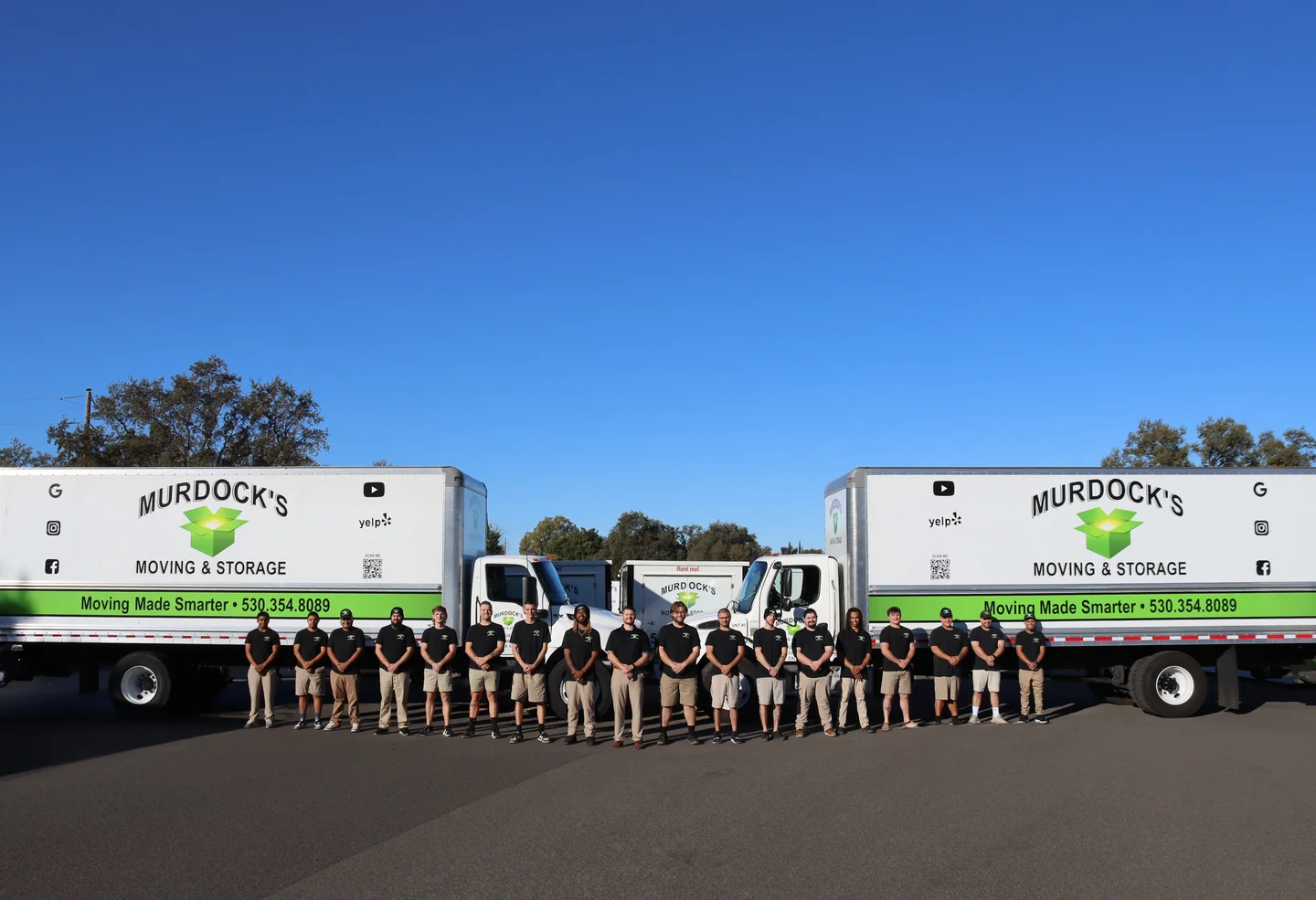
When you’re planning a move, one of the most common questions we hear at Murdock’s Moving & Storage is: “What’s the difference between local and long-distance movers?” Understanding this distinction helps you choose the right service, budget effectively, and avoid unnecessary stress on moving day. Here’s how we break it down for customers across Chico, Yuba City, and the greater Sacramento Valley.
What Is a Local Move?
A local move typically refers to a relocation that happens within the same city, county, or region. Most moving companies define a local move as under 50–100 miles, though the exact distance can vary by company and by California’s own moving regulations.
For example, moving from Yuba City to Chico, or from Roseville to Lincoln, would usually qualify as a local move because of the short travel distance involved.
Key Features of Local Moves
- Short travel distance, usually under 100 miles.
- Priced hourly rather than by weight or mileage.
- Often completed in a single day.
- Minimal need for storage or multiple trucks.
Local moves are ideal for families, students, or professionals relocating within the greater Chico, Yuba City, Sacramento, or Roseville area.
What Is a Long-Distance Move?
A long-distance move covers greater mileage and often crosses county or state lines. These moves require more logistics, planning, and sometimes overnight travel. If you’re moving from the Bay Area to Lincoln, or relocating out of state entirely, that’s considered a long-distance move.
Key Features of Long-Distance Moves
- Distances typically over 100 miles.
- Priced based on weight, volume, and mileage rather than a simple hourly rate.
- May involve multiple days of travel.
- Additional services like storage and staging are often required along the way.
Long-distance movers need to be equipped to handle interstate or cross-region relocations with secure transport and careful route planning — which is why Murdock’s operates under our own USDOT and MC authority for these moves.
How Local and Long-Distance Costs Are Structured Differently
The pricing structure is one of the biggest differences between local and long-distance movers, even before you get to a number.
Local move costs are generally charged by the hour, with the total depending on the number of movers and trucks required. Additional time may be needed for stairs, heavy items, or extra packing.
Long-distance move costs are generally based on the weight and volume of your belongings plus the mileage traveled. Fuel, tolls, and overnight lodging for the crew can also factor into the final number. Because of this, we always recommend a detailed, in-home or virtual walkthrough so your quote reflects your actual move — not a rough guess.
This structural difference means local moves tend to be simpler to estimate, while long-distance moves require more upfront planning to land on an accurate number.
Time & Planning Requirements
Local moves can often be planned on shorter notice since they require less coordination — you can usually book within a few weeks, or even days in some cases, especially outside of peak summer season.
Long-distance moves need more lead time. It’s best to book at least four to eight weeks ahead, particularly if you’re moving during peak summer months or crossing state lines, when trucks and crews book up faster.
Services Offered
Both local and long-distance movers can offer additional services, though the scope may differ:
- Packing and unpacking — available for both types of moves.
- Storage solutions — often necessary for long-distance relocations that need a staging period.
- Specialty items — pianos, antiques, gun safes, or oversized furniture may require extra care regardless of distance.
At Murdock’s Moving & Storage, we offer customized moving packages so you only pay for the help you actually need, whether that’s full-service packing or just muscle on moving day.
Which Type of Mover Is Right for You?
If you’re unsure whether your move counts as local or long-distance, ask yourself:
- Is your new home within 50–100 miles? → Likely local.
- Are you crossing state lines? → Definitely long-distance.
- Will the move take more than one day? → Likely long-distance.
If you’re still not sure, contact Murdock’s Moving and we’ll walk you through the category, the planning timeline, and the best approach for your specific relocation.
Tips for Choosing Between Local and Long-Distance Movers
Regardless of the type of move, choosing the right company makes all the difference:
- Get multiple quotes, but compare service quality — not just the bottom line.
- Ask about licensing, insurance, and years of hands-on experience.
- Check customer reviews and testimonials.
- Confirm whether packing, storage, or specialty-item handling is included.
Murdock’s Moving & Storage provides transparent quoting throughout the process, so there are no surprises on moving day.
Final Thoughts
Understanding the difference between local movers and long-distance movers can save you time, money, and stress. Local moves tend to be quicker, hourly-based, and simpler to schedule, while long-distance moves involve more logistics, more planning, and a different pricing structure entirely.
Whether you’re relocating within Chico or Yuba City, moving from Sacramento to Lincoln, or making a bigger move out of the region, Murdock’s Moving & Storage has you covered.
Ready to book your move? Contact Murdock’s Moving today for a free, no-obligation quote and expert guidance on which type of move fits your situation.
RESEARCH CHECK
Sources & Helpful References.
These official resources support the time-sensitive or regulated details discussed in this guide. Information checked August 2026.
- FMCSA SAFER Company SnapshotOfficial federal carrier and safety-record lookup.
- California Bureau of Household Goods and ServicesCalifornia consumer information for household-goods movers.
- California household-mover permit searchSearch current California household-mover permit records.
- National Weather Service heat safetyHeat-risk and heat-illness prevention guidance.