Every year, families across the Sacramento Valley get burned by moving companies that never should have been trusted with their belongings in the first place. It doesn’t always look like a scam at first. Sometimes it’s a guy with a truck and a Facebook ad who quotes half of everyone else’s price, takes a deposit, and either shows up late with a smaller crew than promised or doesn’t show up at all. Sometimes it’s a company that loads your entire household onto a truck and then holds it hostage, demanding more money than the original estimate before they’ll unload.
The good news is that verifying a moving company’s licensing takes about ten minutes and can save you from all of it. Here’s exactly how to do it.
Why Licensing Isn’t Just Paperwork
It’s tempting to think of licensing as a bureaucratic formality — a box a company checks and then forgets about. In the moving industry, it’s much more than that. A USDOT number and the insurance filings that come with it are the mechanism that makes a moving company accountable if something goes wrong. If your belongings are damaged, if a mover doesn’t deliver on time, or if a dispute arises over your bill, a properly licensed and insured company operates within a regulatory framework that gives you real recourse. An unlicensed operator gives you essentially none — no insurance to file a claim against, no regulatory body to complain to, and often no fixed business address to even track them down.
At Murdock’s, our USDOT number is 3421940 and our MC number is 1416634, and we make a point of being upfront about both because we want customers checking this stuff. A company that’s confident in its standing doesn’t mind you verifying it.
Step One: Get the Company’s USDOT and MC Numbers
Before you book anything, ask directly: “What’s your USDOT number?” A legitimate moving company should be able to give you this instantly, and it should also appear on their website, their estimate paperwork, and often on the moving trucks themselves. If a mover hesitates, gives you a vague answer, or claims they “don’t need one because they’re local,” treat that as a serious warning sign, not a technicality to overlook.
For interstate moves specifically — anything crossing state lines — federal law requires a USDOT number and operating authority (the MC number) issued by the Federal Motor Carrier Safety Administration. For moves staying entirely within California, movers need a household-goods permit administered by the California Department of Consumer Affairs’ Bureau of Household Goods and Services (BHGS); older materials may refer to the permit as a Cal-T number. Companies doing both types of work, which covers most full-service movers in the Sacramento Valley, typically carry both registrations.
Step Two: Verify It Through FMCSA’s SAFER System
Once you have a number, don’t just take it at face value — verify it. The Federal Motor Carrier Safety Administration runs a free, public lookup tool called SAFER (Safety and Fitness Electronic Records) where you can search any USDOT or MC number and pull up:
- The company’s legally registered business name and address
- Whether their operating authority is active, revoked, or under review
- Insurance filing status
- Basic safety history and inspection records
This takes about two minutes and it’s the single most effective way to catch a fraudulent mover before they touch your belongings. If the name that comes up doesn’t match the company you’re talking to, if the authority shows as revoked, or if there’s no insurance on file, walk away regardless of how good the estimate sounded.
Step Three: Confirm Real Cargo and Liability Insurance
A USDOT number alone doesn’t guarantee your belongings are actually covered if something goes wrong — it confirms the company is registered, but you should also ask directly about their cargo insurance and liability coverage. A legitimate moving company carries commercial auto insurance, general liability coverage, and cargo insurance that protects your belongings while they’re in transit. Ask what happens if something is damaged, what the claims process looks like, and whether coverage is included in your estimate or available as an add-on.
Any mover unwilling to answer these questions clearly, or one that gives you a contract with no mention of liability coverage at all, isn’t someone you want handling a house full of your belongings.
Step Four: Watch for the Classic Red Flags
Beyond checking the paperwork, a handful of behavioral patterns show up again and again with unlicensed or predatory movers operating in the Sacramento Valley:
- No in-home or video survey before quoting. A legitimate mover wants to see what they’re actually moving before giving you a number. A company that quotes a whole-house move over the phone with no questions about inventory is often setting up a bait-and-switch, where the “real” price only shows up on moving day.
- Large upfront cash deposits. Some deposit is normal to hold a date. A demand for a large percentage of the total cost in cash, especially with no formal contract, is not.
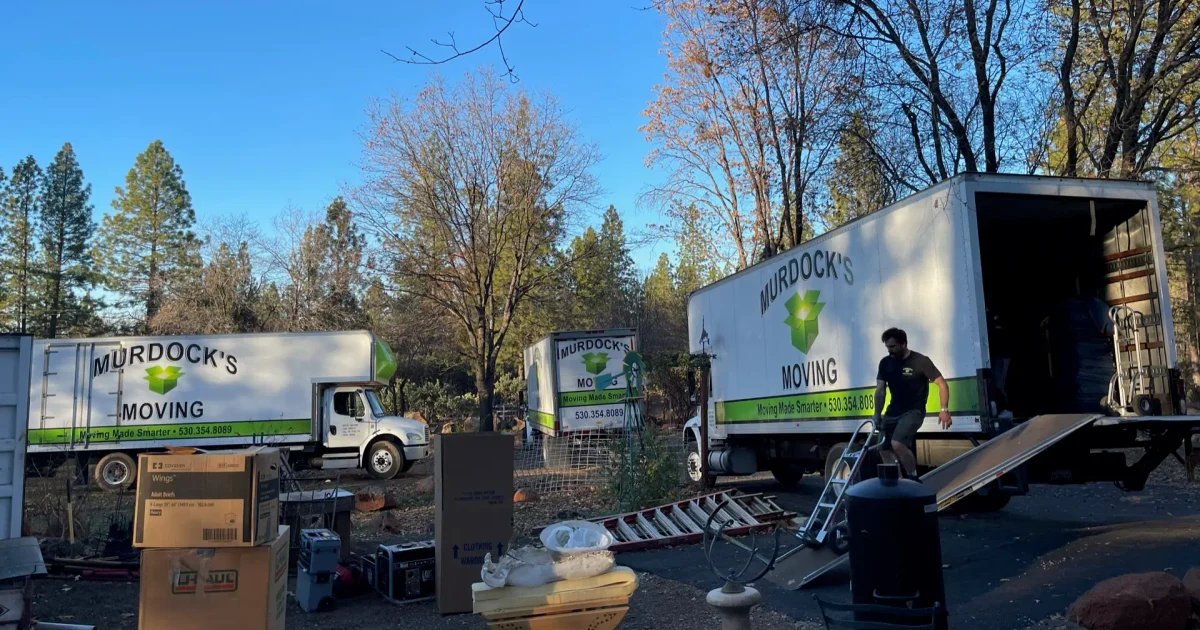
- A generic or rotating company name. Watch for movers who operate under multiple business names, or whose trucks have no company branding or USDOT number displayed at all.
- Reluctance to put anything in writing. A verbal-only estimate with no signed agreement leaves you with no leverage if the final bill doesn’t match what you were told.
- Pressure to sign immediately. Legitimate movers, including ours, expect you to compare quotes and take your time. Heavy pressure to commit on the spot is a classic sign of a company that doesn’t want you to think twice, or check their license.
What to Do If You’ve Already Booked and Something Feels Off
If you’re mid-process with a company and something about this checklist doesn’t add up — an unverifiable USDOT number, no answer on insurance, a contract that keeps changing — it’s not too late to cancel and rebook with a verified company, even close to your move date. It’s a far better outcome than discovering the problem on moving day with your belongings already loaded onto an unfamiliar truck.
Why This Matters More During Certain Seasons
Unlicensed and fraudulent movers tend to spike during high-demand periods, capitalizing on families who are in a rush and skip the verification step because they’re focused on just getting a truck booked. That includes peak summer moving season, but also stretches like the fall shoulder season when families are trying to relocate before the holidays and may feel time pressure. Taking the ten minutes to verify licensing is worth it in any season, but especially when you’re moving on a tighter timeline.
How Murdock’s Approaches This
We’ve built our reputation across Chico, Yuba City, and Sacramento in part by being the company that welcomes this kind of scrutiny rather than avoiding it. Our USDOT number and MC number are posted on our site, printed on our estimates, and visible on our trucks, and we’re glad to walk any customer through our insurance coverage before they commit to anything. Whether you need full residential moving or a smaller job, we’d rather earn your trust with verifiable facts than a rushed sales pitch.
If you want a transparent, no-pressure estimate to compare against anyone else you’re considering, our free moving estimate is a good place to start, with no deposit or commitment required.
Hiring a mover is one of the few times you’re handing a stranger the keys to nearly everything you own. Take the ten minutes to verify who you’re actually hiring. And if you’d rather skip the guesswork entirely, call Murdock’s Moving & Storage at (530) 354-8089 — our licensing checks out, and we’re happy to prove it.
RESEARCH CHECK
Sources & Helpful References.
These official resources support the time-sensitive or regulated details discussed in this guide. Information checked August 2026.
- FMCSA SAFER Company SnapshotOfficial federal carrier and safety-record lookup.
- California Bureau of Household Goods and ServicesCalifornia consumer information for household-goods movers.
- California household-mover permit searchSearch current California household-mover permit records.
- National Weather Service heat safetyHeat-risk and heat-illness prevention guidance.