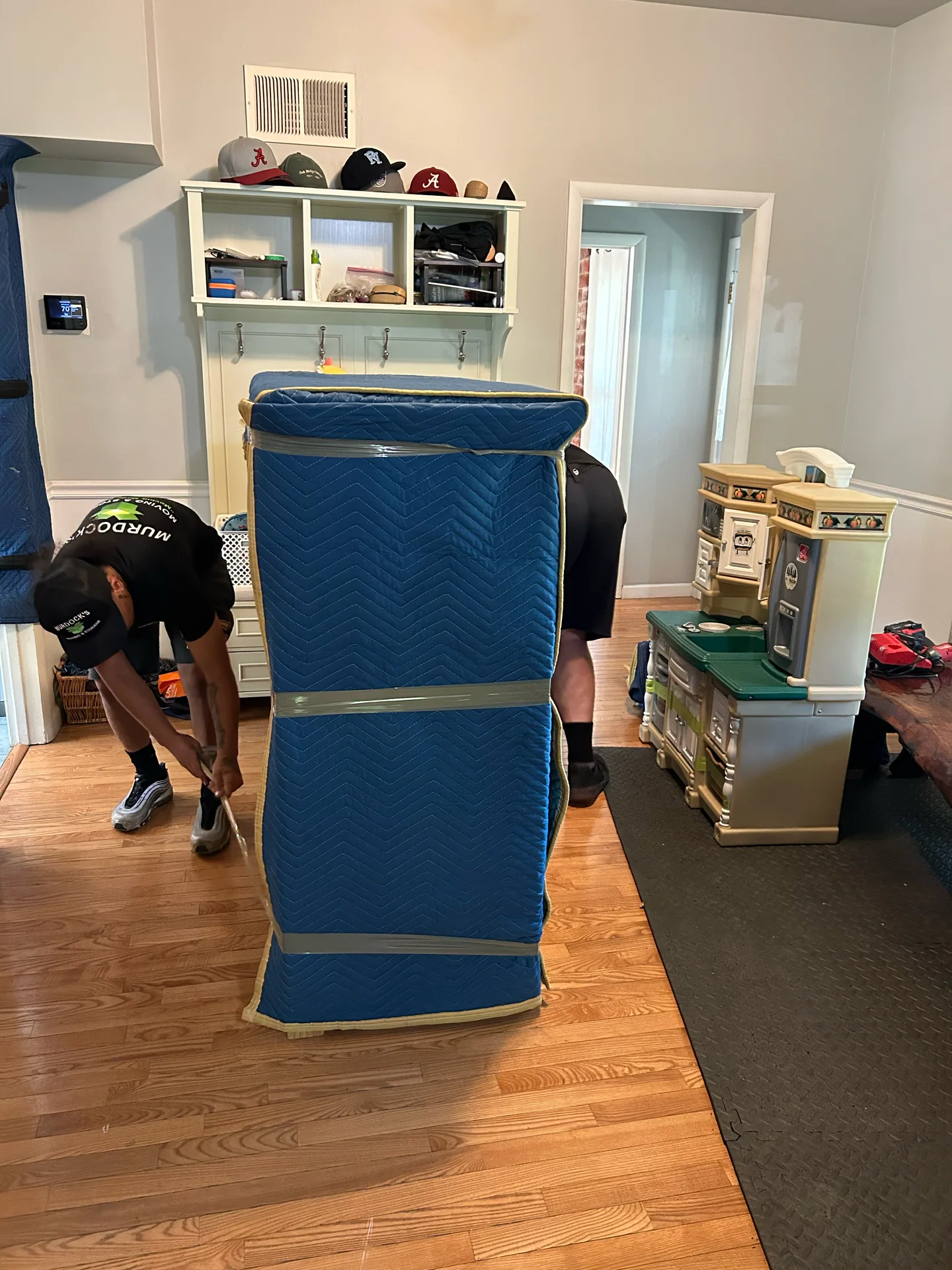
Helping a parent or grandparent leave a long-time home is one of the harder tasks a family takes on — not because the boxes are heavy, but because the decisions are. A house lived in for thirty years holds furniture, paperwork, keepsakes, and a lot of memory, and none of it sorts itself in a weekend. Across the Sacramento Valley, more families are facing this at once: aging parents in Chico and Oroville, adult children scattered around the Bay Area, and assisted-living move-in dates that rarely bend to anyone’s schedule.
This guide covers what senior downsizing and move management involve, how to pace the emotional and practical sides together, and how an owner-operated mover handles these relocations with more patience than a standard job. If you’re weighing options for a parent’s transition, our senior moving service is built for exactly this.
What Senior Move Management Really Means
“Move management” sounds like a corporate term, but for an older adult it comes down to something simple: someone helping carry both the boxes and the decisions. A conventional move assumes the household already knows what’s going where. A senior move usually doesn’t start there — the person relocating is often choosing what to keep for the first time in decades, frequently while also managing a home sale, health considerations, or the loss of a spouse.
So it folds a few extra layers into an ordinary relocation: the sorting, the spatial planning for a much smaller space, and the coordination among people — the senior, adult children who may live hours away, sometimes a realtor or a care facility with its own calendar. Handled well, it all moves at a pace the person can absorb, rather than a race to an empty house.
Building a Downsizing Timeline That Doesn’t Rush Anyone
The single biggest favor you can do for a senior move is start early, because a rushed downsizing forces snap decisions about irreplaceable things. For a long-occupied home, plan on six to eight weeks of gentle progress; if a home sale or a facility move-in anchors the date, give yourself even more room.
Weeks one and two: the easy yeses
Begin with low-stakes zones — the garage, a spare closet, duplicate kitchen gear, the linen cupboard. Nobody agonizes over a third set of measuring cups, and early wins build momentum before you reach the harder rooms.
Weeks three through five: the meaningful middle
Photo albums, correspondence, and inherited furniture belong here, and it’s slow on purpose. Work in short morning sessions rather than marathon days, especially through a Valley summer when afternoon heat drains everyone.
The final stretch: staging and moving
By the last week or two, the keep pile is defined, donations are scheduled, and what remains gets packed and labeled by destination room. Because heat is a real factor from Redding down through Elk Grove, crews stage senior loads for early-morning starts, sparing an older adult the worst of the afternoon sun on move day.
The Sort: Keep, Gift, Donate, Store
Almost every senior downsize resolves into four streams, and naming them out loud makes the process less overwhelming. Keep is anchored by the new floor plan — more on that below. Gift covers the pieces that should stay in the family; inviting children and grandchildren to claim items early turns “getting rid of things” into “passing things on,” a kinder framing for someone letting go of a family home. Donate or sell handles the useful surplus, and the Valley has strong outlets for it, from Chico and Yuba City charities to estate-sale professionals who can manage a whole-house liquidation. Store is the safety valve for anything that can’t be decided yet, because estate coordination rarely runs on a tidy schedule. A will, a probate step, or siblings in different time zones can stall a decision for weeks, and a place to set those items down keeps the move going.
Floor-Planning the Smaller Space First
The most common downsizing mistake is sorting belongings before you know the room they’re going into. Reverse it. Start with the destination — the new condo, the cottage near the grandkids in Rocklin, the assisted-living suite — and let the space set the limits.
Get real measurements. Assisted-living rooms in particular are compact, and a beloved king bed or full dining set often simply won’t fit. Sketching the layout ahead of time answers the hard questions before move day rather than in a hallway with the truck idling outside. Map the big anchors first — where the bed goes, which armchair earns its spot by the window, whether the dresser fits the closet wall — and the smaller keep-or-release calls get easier. Families moving a parent into a Roseville or Folsom community find this also smooths the facility’s own rules about furniture footprint and walking paths.
When the Family Lives Somewhere Else
A large share of Sacramento Valley senior moves are quarterbacked by an adult child who doesn’t live nearby — often in the Bay Area, sometimes out of state. That’s workable, but it runs on communication. Designate one family member as the point of contact so the crew isn’t fielding conflicting instructions from three siblings. Use photos generously; a quick shot of a piece of furniture settles a “keep or donate?” question in seconds across any distance. And share the new floor plan with everyone involved so decisions about what fits are grounded in the same reality. Because Murdock’s dispatches owner-operated crews from our own Chico and Yuba City yards rather than brokering the job out, the person you talk with is connected to the crew doing the work — which keeps a long-distance family in the loop instead of guessing.
Protecting What Matters: Insurance and Valuation
Downsizing loads often carry more sentimental and financial weight per box than an average move — heirloom furniture, a lifetime of framed photographs, fine china that’s been in the family for generations. It’s worth understanding your valuation coverage before move day rather than after, since California movers offer different levels of protection depending on what’s traveling. Take a photo inventory of the higher-value pieces, and agree in advance on how the irreplaceable items are handled in transit. A licensed, insured carrier — Murdock’s operates under USDOT 3421940, MC 1416634, and CPUC Cal-T 0192159, with verified insurance coverage — gives a family real recourse and real peace of mind when the cargo is a parent’s life.
How Murdock’s Handles Senior Moves Gently
A senior relocation isn’t a job to rush, and we don’t crew it like one. The pace is set by the person moving, not the clock. Our teams are used to working alongside an older adult who wants to point out which box holds what, or who needs a minute with a room before it’s emptied — and that patience is the whole point.
Full-service packing takes the physical strain off entirely: the crew wraps, boxes, and labels, so a senior or their family isn’t hauling cartons up from a basement in July. On the other end, we place furniture and unpack to the agreed floor plan, so the new home is functional the same day rather than a maze of boxes — which matters for someone with limited mobility.
And when the calendar refuses to cooperate — the old house sells before the new place is ready, or an assisted-living date shifts — our own storage bridges the gap. MODS, Murdock’s On-Demand Storage, drops a portable container at the home so belongings load on the family’s schedule, and our warehouse and vaulted storage hold furniture securely for as long as a transition takes. Because that storage is ours and not a third party’s, there’s no hand-off and no last-minute scramble for somewhere to put a parent’s things.
We handle these moves across the whole Sacramento Valley — from Chico, Oroville, and Paradise down through Yuba City, Marysville, Sacramento, Roseville, and Elk Grove. With hundreds of verified Google reviews, families tend to find us the way these decisions usually get made: someone they trust went through it first and pointed them our way.
Starting the Conversation
If you’re helping a parent downsize, start with an honest look at the timeline and the destination — when the move needs to happen, and how much space is on the other side. When you’re ready, our senior moving service page is the place to start.
RESEARCH CHECK
Sources & Helpful References.
These official resources support the time-sensitive or regulated details discussed in this guide. Information checked August 2026.
- FMCSA SAFER Company SnapshotOfficial federal carrier and safety-record lookup.
- California Bureau of Household Goods and ServicesCalifornia consumer information for household-goods movers.
- California household-mover permit searchSearch current California household-mover permit records.
- National Weather Service heat safetyHeat-risk and heat-illness prevention guidance.