Warehouse, Ag & Light Industrial

Agricultural Processing Office Moving in the Valley

Your harvest calendar and receiving yard set the route for moving scale-house, lab-office and staff-room contents.

(530) 354-8089
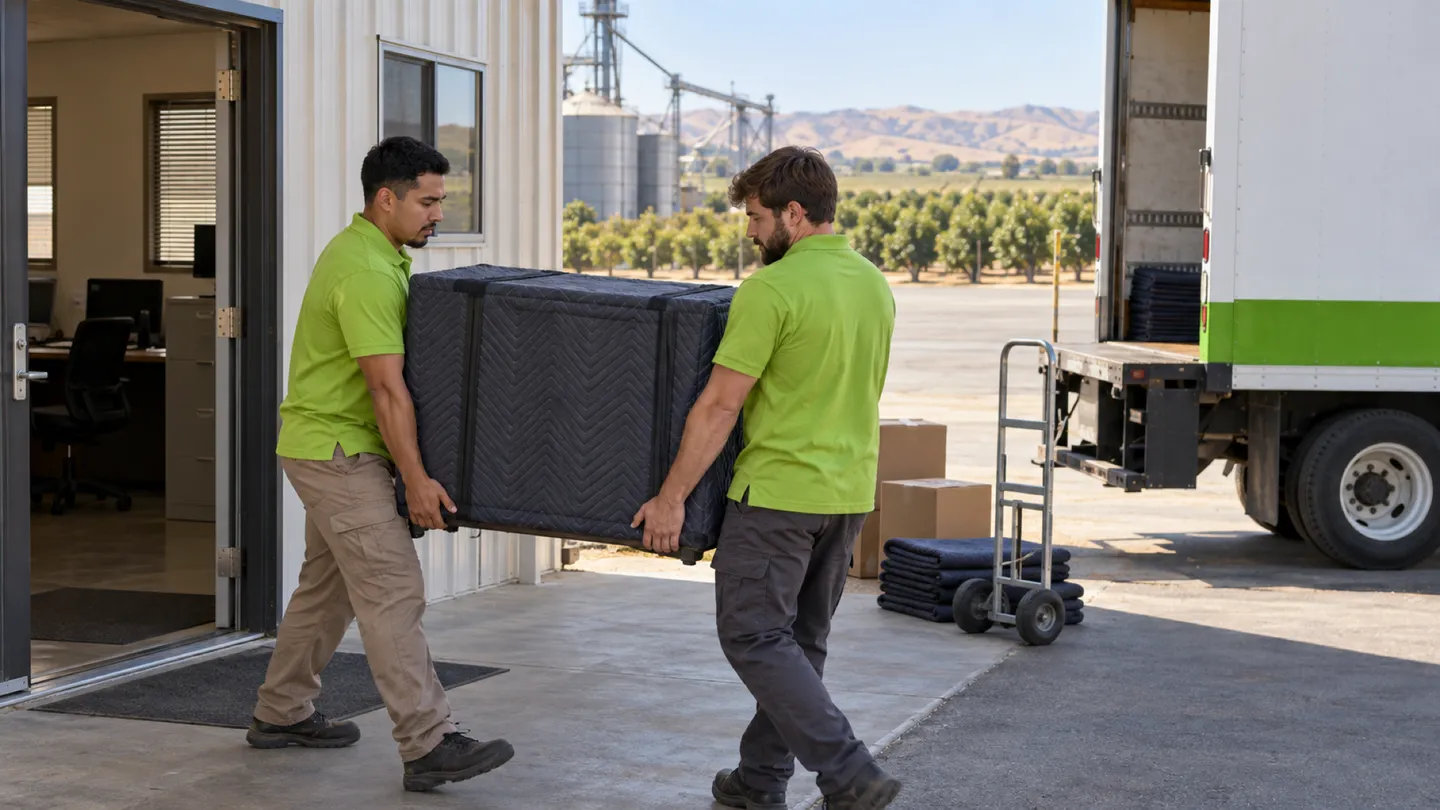
Agricultural Processing Office moving in the Sacramento Valley: Murdock's crew at work
  • Licensed & InsuredUSDOT 3421940 · MC 1416634
  • Locally OperatedChico + Yuba City
  • Sacramento ValleyChico · Yuba City · Sacramento

Start your agricultural processing office move quote

verifiedFor estimate purposes onlycredit_card_offNo credit card required

Planning a Agricultural Processing Office Move

A huller, walnut dryer or rice drying yard in Sutter, Yuba, Butte or Colusa County runs flat out for a few months and then goes quiet. The office wing follows the same rhythm. In receiving season the scale house prints weight tickets for every trailer that crosses it, the lab runs moisture checks on grower lots, and nobody wants a moving truck in the yard. After the last loads, rooms open up.

We plan the move for that quiet stretch. Grower and settlement files, the scale-house counter, the lab-office benches and the crew room are packed as separate groups, each marked for a room on your new floor plan, so the office is working again before the next season's maintenance crews arrive. The hulling, drying and sorting equipment sits outside our work entirely: your maintenance team or the equipment manufacturer handles it.

Who usually signs off
Plant manager or operations manager, with the scale-house lead and quality lead approving room order
Timing that works
The off-season between the last receiving day and pre-harvest maintenance, usually winter into spring. Almonds (Aug–Oct), walnuts (Sep–Nov) and rice (Sep–Oct) make fall the hardest time to move an office wing.

What typically moves

  • Scale-house counter, ticket printer and weigh-ticket filesCurrent-season tickets stay with your weighmaster until settlement closes; archived boxes travel sealed and labeled by crop year.
  • Grower settlement and field-account filesLateral files move locked or emptied into numbered cartons. Your office manager decides which crop years ride along and which go to archive.
  • Lab-office benches, sample shelving and moisture-meter cartsFreestanding benches and carts move once the quality lead has boxed the meters and grading tools separately.
  • Food-safety and audit bindersKept in the order your food-safety coordinator files them, so the shelf is ready if an auditor visits early in the season.
  • Field-rep and plant-manager desksDesks, chairs and plan tables for the people who come in from the orchards, each tagged to its new office.
  • Crew-room tables and emptied lockersWorkers clear their own lockers first. A first-aid cabinet or anything screwed to the wall stays for your maintenance team.
  • Office and scale-station computersWrapped for the yard crossing and hooked up again at the same desk. The ticketing software and its link to the truck scale belong to your scale vendor.

Access and scheduling

Most processing yards are built around trucks, not visitors. Trailers line up at the scale, loaders cross between the receiving pit and the stockpiles, and the office door is often on the far side of that traffic. Ahead of booking we walk the route from each office door to where our truck can stand, and your yard supervisor tells us which lanes to leave open.

When the office is moving across the property rather than across town, it can go in pieces: the crew room one day, the lab another, the scale house last so tickets print until the final hour. Summer moves start at first light, before the pavement heat builds. Saturday loading is available on request. If the plant is leased, the owner can be named on our insurance certificate before the truck comes through the gate.
Protection and handling

Dust is the main hazard in a huller office. Desk equipment and archive cartons are closed and taped before loading so hull and field dust does not settle in them, and upholstered chairs are wrapped. Lab benches travel with their tops padded and drawers taped, and grading tools go in cartons marked for the lab so they never end up mixed with office supplies.

Paper is handled on the office's terms. The weighmaster and office manager decide what moves and in what order; sealed boxes stay sealed and are unloaded to the room and shelf written on the carton. At the new building, heavy files and benches are placed first, then desks, then the crew room, and we walk the rooms with your manager before the truck leaves.

Who does what

Some of this job belongs to other trades. The written plan names each one.

Hullers, shellers, dryers, sorters and conveyors
Your maintenance team or the equipment manufacturer. Our crew does not disconnect, lift or move processing machinery of any size.
Truck scale, scale indicator and ticketing software
Your scale service company handles the indicator and any testing the relocation calls for; your software vendor re-links the ticket station.
Moisture meters and lab grading instruments
Your quality lead packs and carries them, or sends them to the maker for a check before the season starts.

Not part of our work

  • Moving, lifting or rigging any processing line, bin, trailer or piece of yard equipment.
  • Driving or repositioning loaders, forklifts or grower trucks in the yard.
  • Deciding which weight tickets, settlement records or audit files are kept; that stays with your office.

Around Chico, Yuba City and Sacramento

Almond and walnut hullers are spread along Hwy 99 between Chico and Yuba City, rice dryers sit out on the flat ground toward Colusa and the Sutter Basin along Hwy 20, and prune dehydrators are common around Yuba City and Live Oak. Many of these plants are at the end of a county road rather than in a business park, so the truck route and turnaround get checked in advance.

The crew that shows up

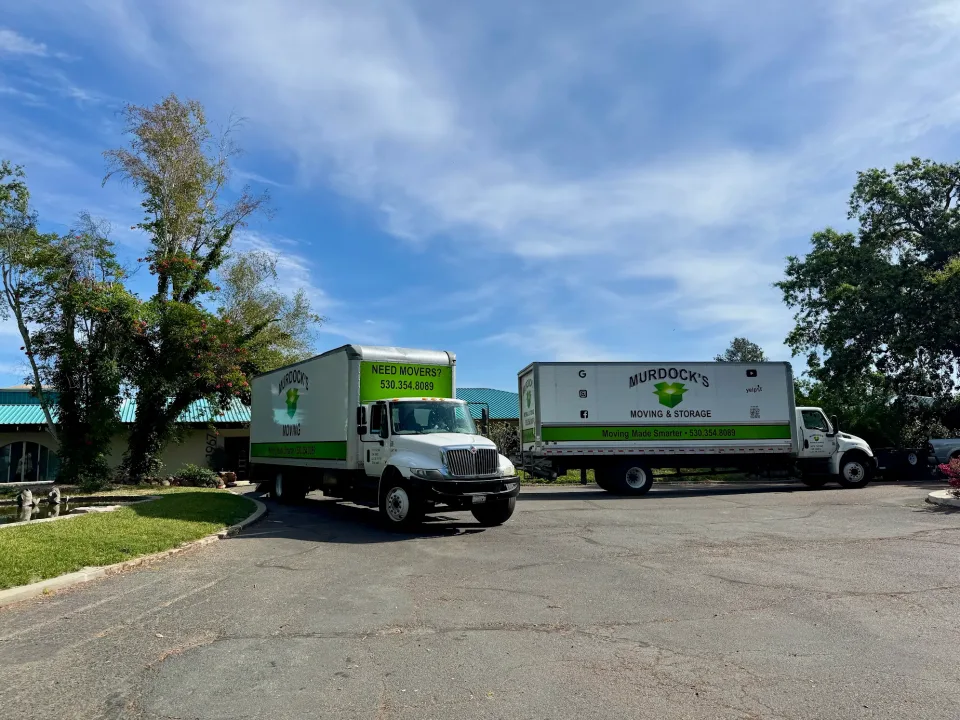
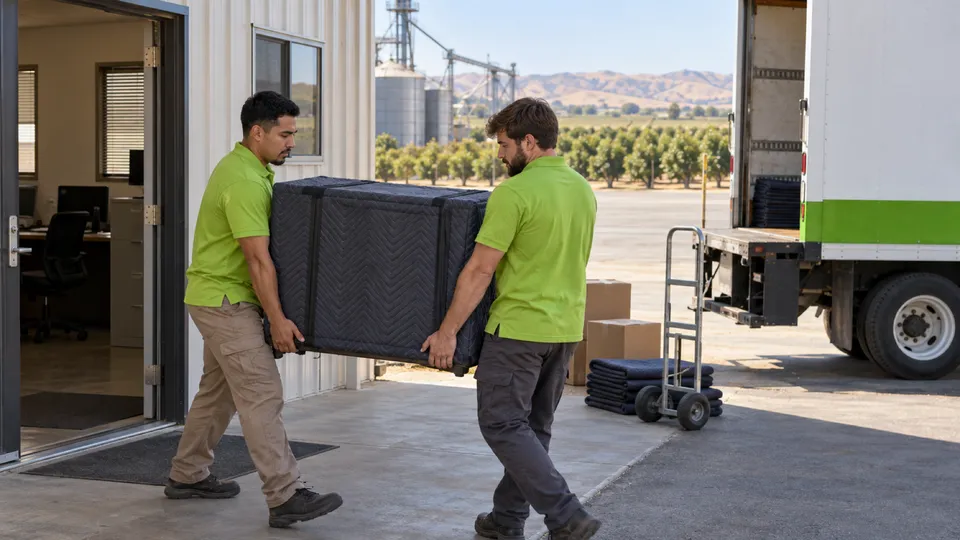
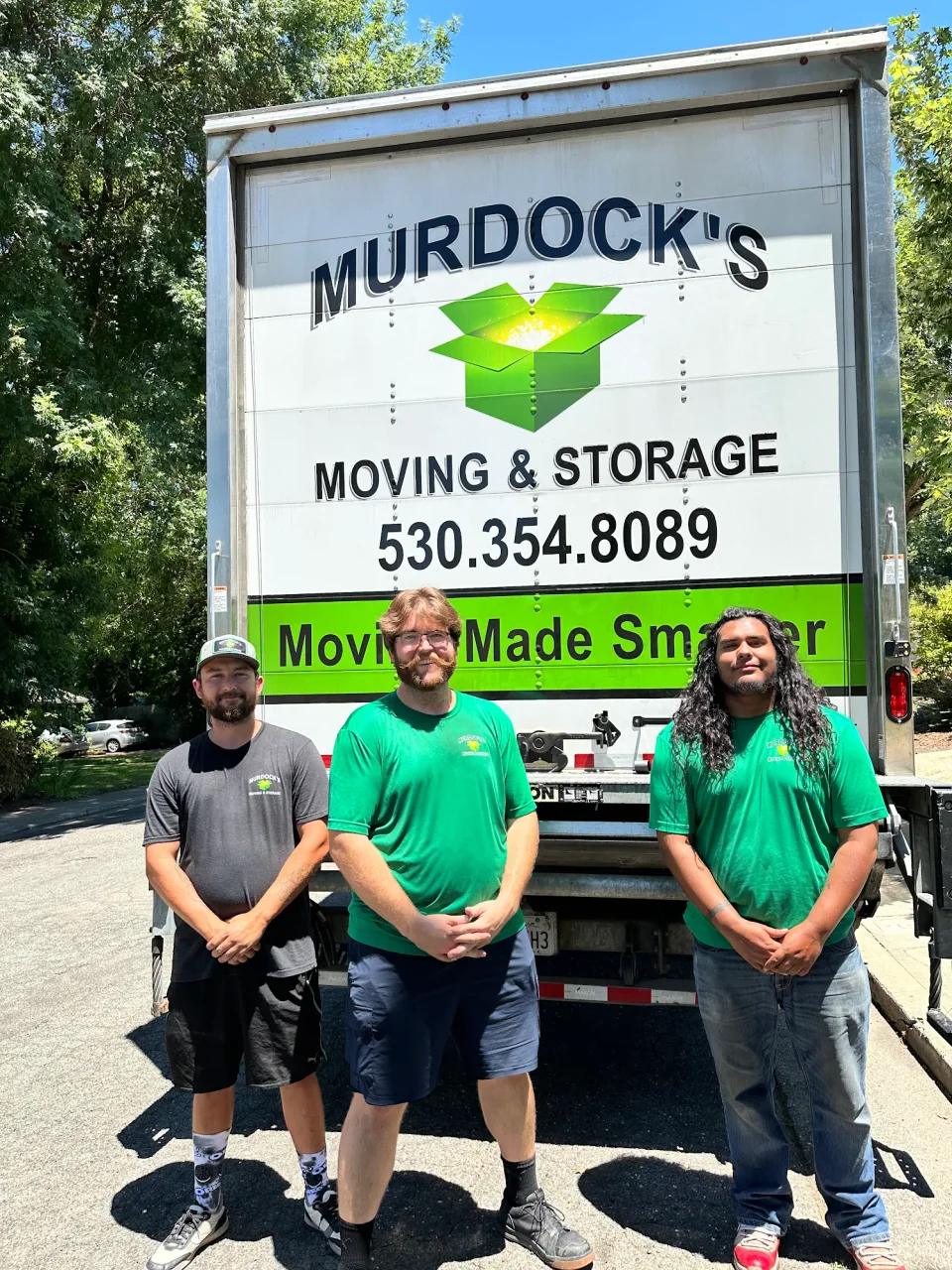
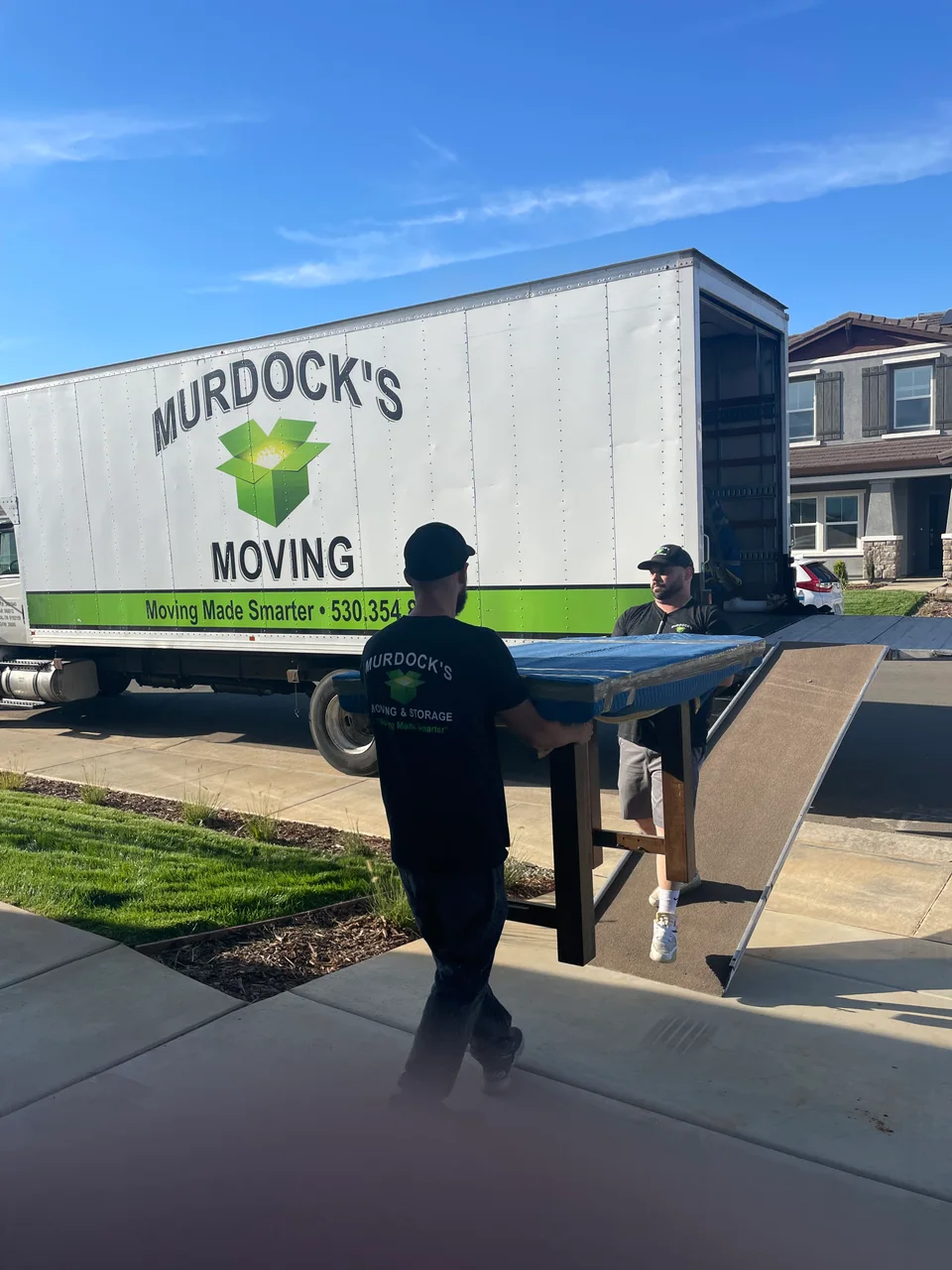
Three Murdock’s crew members at the back of the box truckTwo Murdock’s movers carrying a pad-wrapped table up the truck rampTwo Murdock’s box trucks staged outside a single-story building in the Sacramento Valley

Agricultural Processing Office Moving FAQs

Another question? Call (530) 354-8089.

Can the scale house keep printing tickets until the last load of the season?

Yes. We usually move the crew room, lab and files first and take the scale-house counter last, after your weighmaster closes out the day. The ticket printer and computer go on the final load and are reconnected first at the new office, so your scale vendor can re-link the ticketing software as soon as they arrive.

We have to move offices during walnut receiving. How do you stay out of the trailer traffic?

Your yard supervisor picks the truck position and the hours when the scale lane is quietest, often early morning or after receiving closes. We carry along the route they approve and stop when a trailer needs the lane. It is slower than an off-season move, so we plan fewer rooms per day and leave the scale house for last.

Who moves the moisture meters and grading equipment in our lab?

Your quality lead does, or the instrument maker if a check is due before the next harvest. We move the benches, stools, shelving and carts, and leave the bench tops clear so the instruments can go back in place before sampling starts.

How early should we plan if the office has to be settled before hulling starts?

Talk to us in spring or early summer. That leaves time to walk both buildings, pick a date the yard can live with and finish before hulling starts in August. A July move is possible, but the heat pushes carrying into the early morning, so it takes more days than the same move in April.

Plan your business move

Tell us both addresses, the building rules you know about, and the dates you cannot move. We will send back a written plan and estimate.

Call (530) 354-8089

Mon–Sat 8:00 AM–6:00 PM · Sun 10:00 AM–4:00 PM

Call Nowcall530-354-8089