
Property, Institutional & Government

Assisted Living Facility Moving in the Sacramento Valley

Business office, dining and lounge moves planned around meals and med passes, plus resident-room moves set up the way each family chooses.

(530) 354-8089
Assisted Living Facility moving in the Sacramento Valley: Murdock's crew at work
  • Licensed & InsuredUSDOT 3421940 · MC 1416634
  • Locally OperatedChico + Yuba City
  • Sacramento ValleyChico · Yuba City · Sacramento

Start your assisted living facility move quote

verifiedFor estimate purposes onlycredit_card_offNo credit card required

Planning a Assisted Living Facility Move

Assisted living communities need two kinds of move, often in the same month. The large kind is administrative: the business office, the activity room, a dining room refresh, or a whole community relocating into a new building in Roseville, Chico or Yuba City. The small kind happens constantly: a resident moving to a smaller apartment, into memory care down the hall, or into the community from a family home.

They follow different rules. Shared spaces are the administrator's decision. A resident's room belongs to the resident, and what goes into it is chosen with the family, often from a sketch of the new room with the furniture drawn in. Our crew moves the office, dining and lounge furniture, and the belongings each family has picked, and places them where the plan says. Care stays with care staff throughout.

When a resident is coming from a house, our senior moving service covers the move from home.

Who usually signs off
Community administrator or facilities director for shared spaces; resident and family for personal room belongings
Timing that works
Between meals and away from medication passes and afternoon rest; resident-room moves on a day the family can be there, often midmorning after breakfast.

What typically moves

  • Resident recliners, dressers and bedside tablesThe family picks which pieces come; we check each against the new room and place it so the path from bed to bathroom stays clear for a walker.
  • Family photos, wall art and keepsake shelvesWrapped and boxed under the family's labels; hanging is left to maintenance where community policy asks for that.
  • Business office desks and locked record cabinetsCabinets stay locked and move whole. The executive director's staff keeps the keys.
  • Dining tables, chairs and sideboardsMoved in groups between meals, so the room never runs short of seats when residents come in.
  • Activity-room tables, art supply cabinets and puzzle shelvesBoxed by shelf with the activity director's labels, so the calendar picks up where it left off.
  • Lobby and lounge furnitureSet first, because it is the room families walk through when they visit.
  • Office computers, monitors and printersMoved to the same person's new desk and plugged back in; the charting system, nurse-call software and phones are restored by your IT contact.

Access and scheduling

An assisted living building is where people live, so the move follows the building's day. Meal service, medication passes and afternoon rest set the times when hallways must stay clear. We ask the administrator for those times and for the crew's route, usually a service entrance and staff elevator rather than the front lobby. Memory care wings have secured doors, and staff let the crew through instead of sharing the code.

For resident-room moves, name one family contact and one staff contact. The family confirms what goes. Care staff sign off that the room can be entered and that the resident is settled somewhere comfortable while the crew works. Where the community leases its building, a certificate of insurance can be issued to the owner on request.

Protection and handling

Resident furniture is often old and much loved, so it gets full pads even for a short trip down the hall. The family empties drawers or tapes them shut, and glass tops travel separately. In the new room the bed, chair and dresser go in first, then the crew checks the walking path before cartons come in. A cluttered floor is a fall risk, so an extra box goes home in the family's car rather than into the room.

Common-area work uses runners along the whole route and guards at every corner with a handrail. Nothing is staged in a corridor residents use. The crew does not touch medications, oxygen equipment, mobility aids in use, or anything wired to the nurse-call system.

Who does what

Some of this job belongs to other trades. The written plan names each one.

Medications and medication carts
They stay with care staff or the community's pharmacy. The crew never packs or carries medications.
Rented hospital beds, lifts and oxygen equipment
The medical equipment supplier picks up, delivers and sets them up. We place the resident's own furniture around the space they need.
Nurse-call pendants, wall units and secured-door systems
The community's maintenance team or systems vendor moves and tests them.

Not part of our work

  • Resident care, supervision or transfers during the move; staff stay responsible for residents throughout.
  • Choosing which belongings a resident keeps; the resident and family decide.
  • Opening care records or resident files, which stay sealed under the administrator's control.

Around Chico, Yuba City and Sacramento

In California these communities are licensed as residential care facilities for the elderly, and each administrator's policies set who may enter resident areas. Buildings range from single-story communities in Chico, Oroville and Yuba City to multi-story buildings in Roseville, Carmichael and Fair Oaks, where elevator time sets the pace of the day.

The crew that shows up

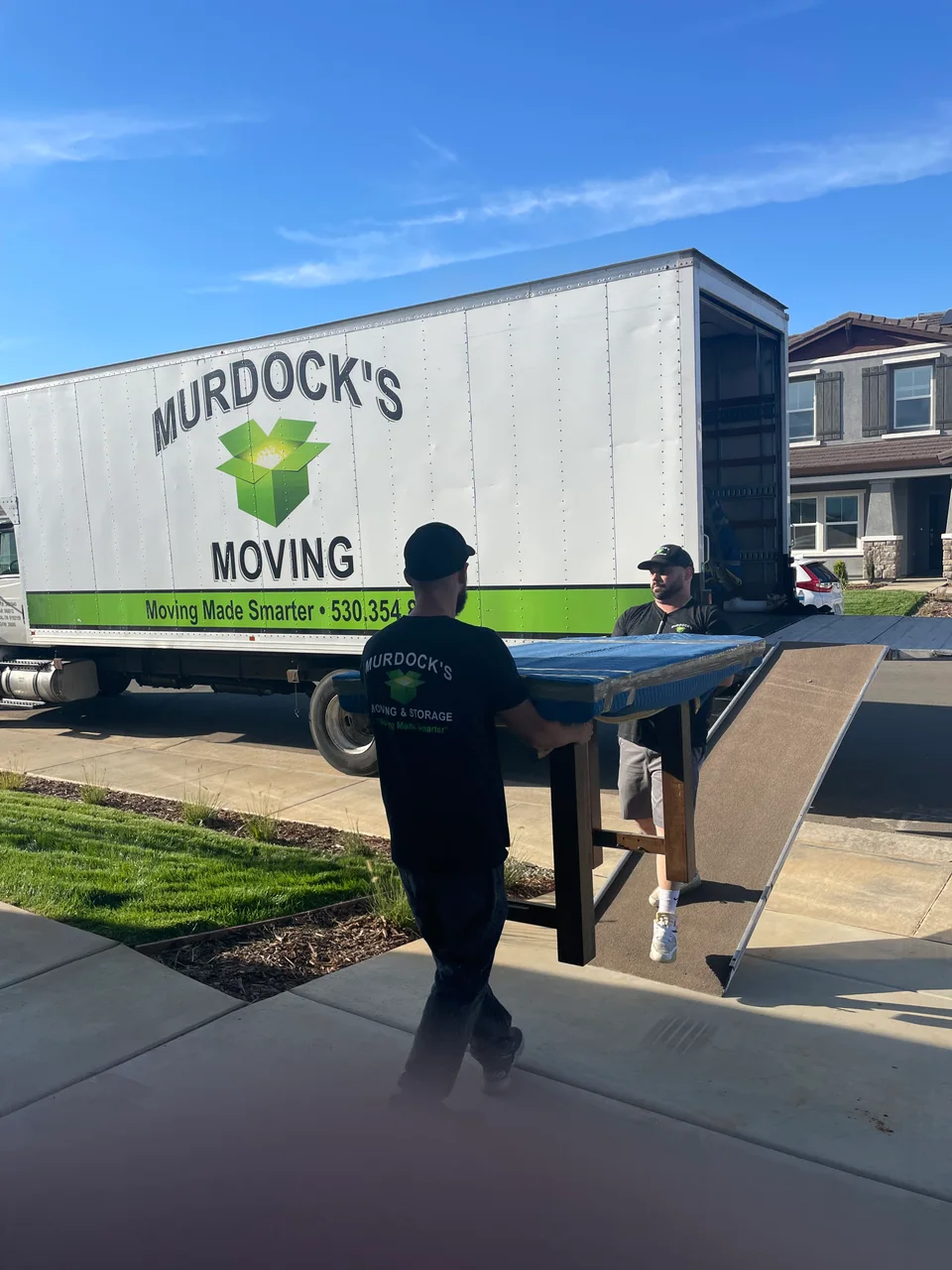
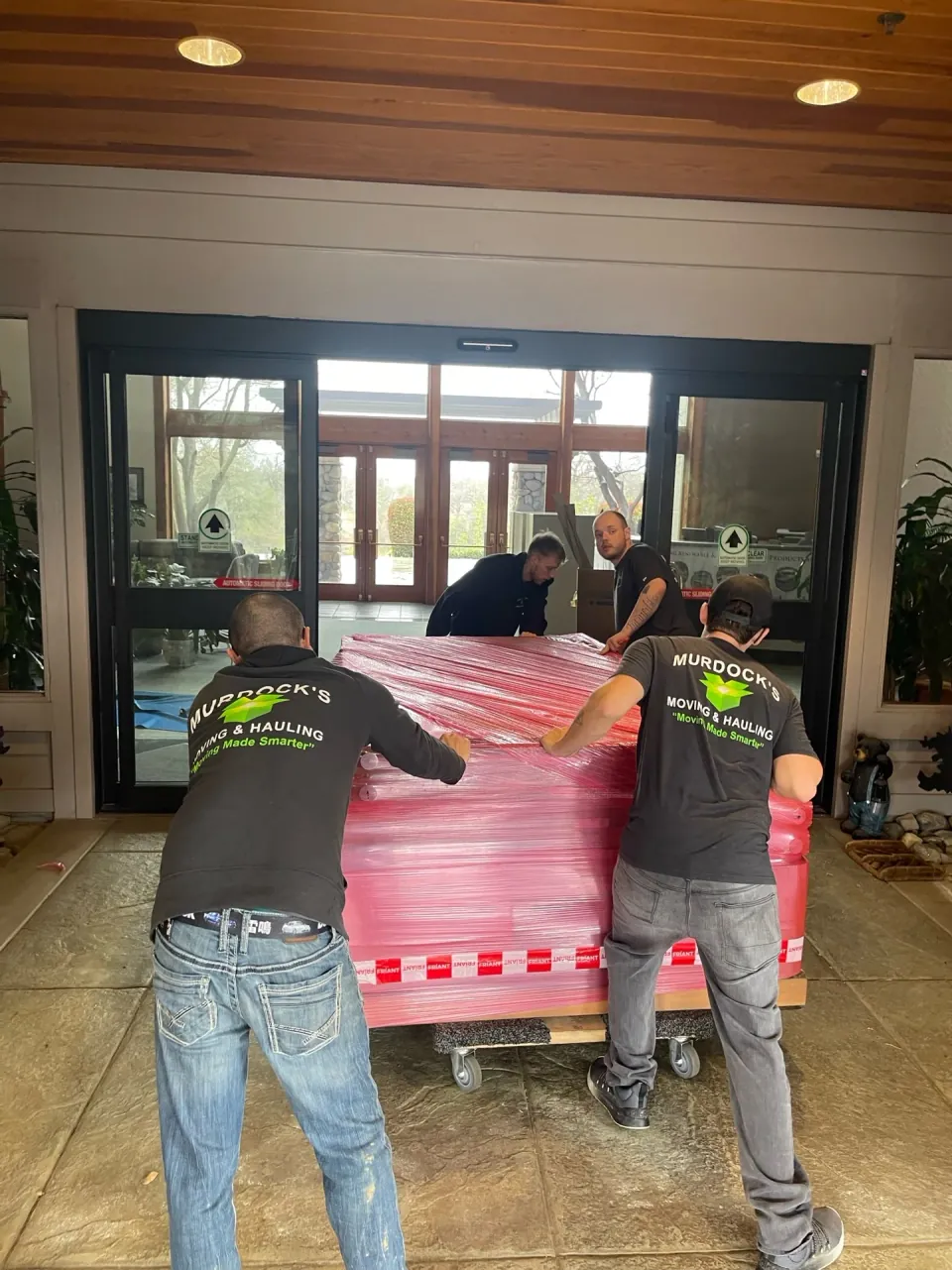
Murdock’s crew rolling a shrink-wrapped piece on dollies through a building lobbyThree Murdock’s crew members at the back of the box truckTwo Murdock’s movers carrying a pad-wrapped table up the truck ramp

Assisted Living Facility Moving FAQs

Another question? Call (530) 354-8089.

Can you move a resident from assisted living into memory care in the same building?

Yes. The distance is short but the change is large, since memory care rooms are usually smaller and more simply furnished. The family and the memory care team agree on what goes, we carry and place it, and staff pick the time of day that suits the resident. Whatever does not fit can go home with the family.

How do you keep the dining room usable while it is being refurnished?

We work between meals and in sections. Old tables leave and replacements come in one group at a time, so the room never drops below the seats the next meal needs. Your dining lead gives us that number. For a large refresh, the evening after dinner service gives the longest working stretch.

Our business office is moving to another wing. What should the administrator prepare?

Lock the record cabinets and keep the keys, back up anything saved on local computers, and sketch where each desk goes. Tell us which hallway the crew may use and when. We move the office as one group and set it up in the new room, so admissions and billing can restart there quickly.

Can several residents change rooms on the same day?

Yes, if each has its own plan. Every family gets its own list and room sketch, and every room is labeled separately. We finish one room completely before starting the next, so belongings never mix in a hallway. Staff set the order, often around which residents rest in the afternoon.

Plan your business move

Tell us both addresses, the building rules you know about, and the dates you cannot move. We will send back a written plan and estimate.

Call (530) 354-8089

Mon–Sat 8:00 AM–6:00 PM · Sun 10:00 AM–4:00 PM

Call Nowcall530-354-8089