Education, Civic & Community

Library Moving in the Sacramento Valley

Book trucks and cartons coded to your shelf map, timed to the shelving installer's releases, so staff reshelve each call-number span in order.

(530) 354-8089
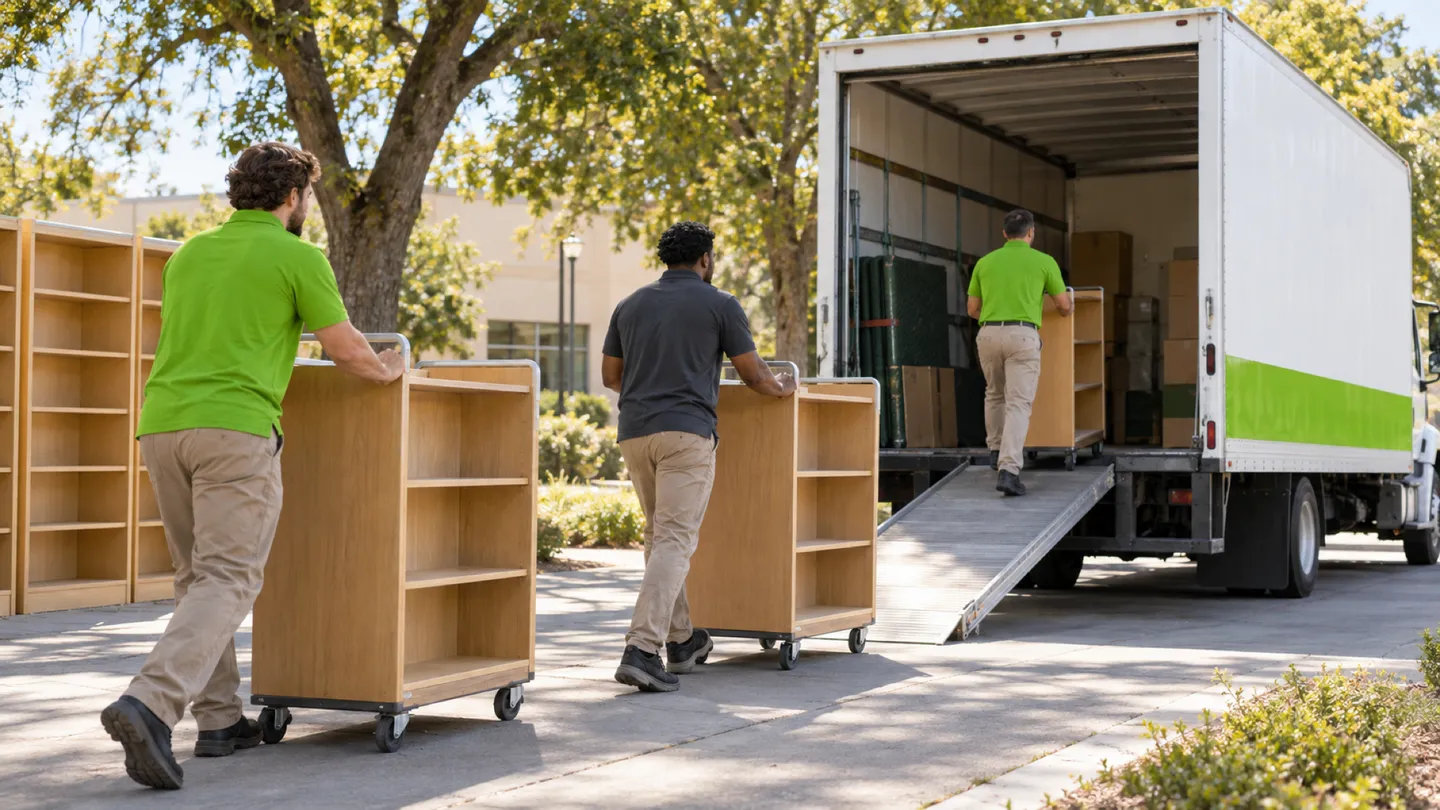
Library moving in the Sacramento Valley: Murdock's crew at work
  • Licensed & InsuredUSDOT 3421940 · MC 1416634
  • Locally OperatedChico + Yuba City
  • Sacramento ValleyChico · Yuba City · Sacramento

Start your library move quote

verifiedFor estimate purposes onlycredit_card_offNo credit card required

Planning a Library Move

For a library, the question that decides the move is space on the new shelves, not space on the truck. The collection lead measures the collection in linear feet, compares it with the new ranges, and decides where each call-number span will start so every shelf keeps a little room to grow. Once that shelf map exists, moving the books is mostly a matter of keeping them in order.

We keep that order with numbered book trucks and cartons. Each span on the map gets a code, each truck or carton carries the code plus a sequence number, and the load comes off in the sequence it went on. A Dewey run in a county branch and a Library of Congress run in a college library work the same way; only the labels change.

Steel ranges are usually taken down and put up by a shelving installer, and the RFID gates, self-checkout stations and catalog system belong to their vendors and your IT staff. Our crew moves the collection, book trucks, freestanding cases, circulation desk furniture, the workroom and the children's area.

Who usually signs off
Library director or branch manager, with the collection lead approving the shelf map
Timing that works
Set by the last day of public service, the book-drop closing date and the dates the shelving installer releases the new ranges.

What typically moves

  • Loaded book trucksWrapped, coded on both ends and staged beside their destination range in sequence.
  • Circulating collection cartonsFilled one span at a time and marked with the first and last call number inside.
  • Oversize folios, atlases and reference setsPacked flat in their own cartons and kept with their span code.
  • Freestanding wood bookcases and picture-book binsEmptied and padded, with shelves and pegs bagged to their case.
  • Map cases and microfilm cabinetsDrawers are taped shut or emptied, as your collection lead decides.
  • Circulation desk furniture, book-drop carts and sorting binsLabeled for the new desk and workroom so returns can resume quickly.
  • Children's area tables, story-time rugs and puppet stageGrouped as one load for the children's room.
  • Staff workroom desks and computersEach computer returns to its matching desk; the catalog system stays with your IT staff.

Access and scheduling

Most branches close to the public for the move, though the book drop often stays open a little longer. We pack in shelf-map order, starting with whatever part of the new building is ready first, often the children's area or the stacks rather than the front desk. When new ranges go in stages, we deliver only spans whose shelving the installer has released.

Books are heavy in bulk, so the route matters: loading doors, elevator size and rating, and floor protection from the dock to the stacks. A branch inside a city hall or county building books its dock through that building's facilities office, which may ask for our insurance certificate first. Summer library moves start early, before the lot and the truck bed heat up.
Protection and handling

A fully loaded book truck is the fastest way to move a collection and the easiest way to spill one. Trucks travel shrink-wrapped around the load, coded on both ends, with no more books than their shelves hold flat. Atlases, art folios and oversize books lie flat in their own cartons, and cartons are filled spine-down or flat in a single layer so bindings do not bend.

Freestanding wood cases are emptied, padded and moved with their shelves and pegs bagged to the case. The local history room, microfilm and archive boxes are set apart for your collection lead to decide how they travel. At the new building, trucks wait beside their range in sequence, and staff reshelve and check each span against the map before the next group rolls in.

Who does what

Some of this job belongs to other trades. The written plan names each one.

Steel cantilever and case-type shelving ranges
A library shelving installer takes them down, installs the new ranges and releases each one. We move loose shelves and freestanding wood cases.
RFID security gates, self-checkout stations and the integrated library system
The equipment vendors and your IT staff shut down, move and test them.
Rare books, archives and local history materials
Your collection lead or a conservator decides how they are packed and who carries them.

Not part of our work

  • Weeding, reclassifying or deciding where each call-number span goes; library staff make those calls.
  • Taking down or installing anchored shelving ranges.

Around Chico, Yuba City and Sacramento

Libraries here range from county branches in towns like Gridley, Orland and Colusa to larger city and suburban branches in Chico, Yuba City, Sacramento, Roseville and Elk Grove, plus campus libraries at Chico State, Sacramento State and the community colleges. A small-town branch often has one front door and street parking; a campus library books its dock through campus facilities.

The crew that shows up

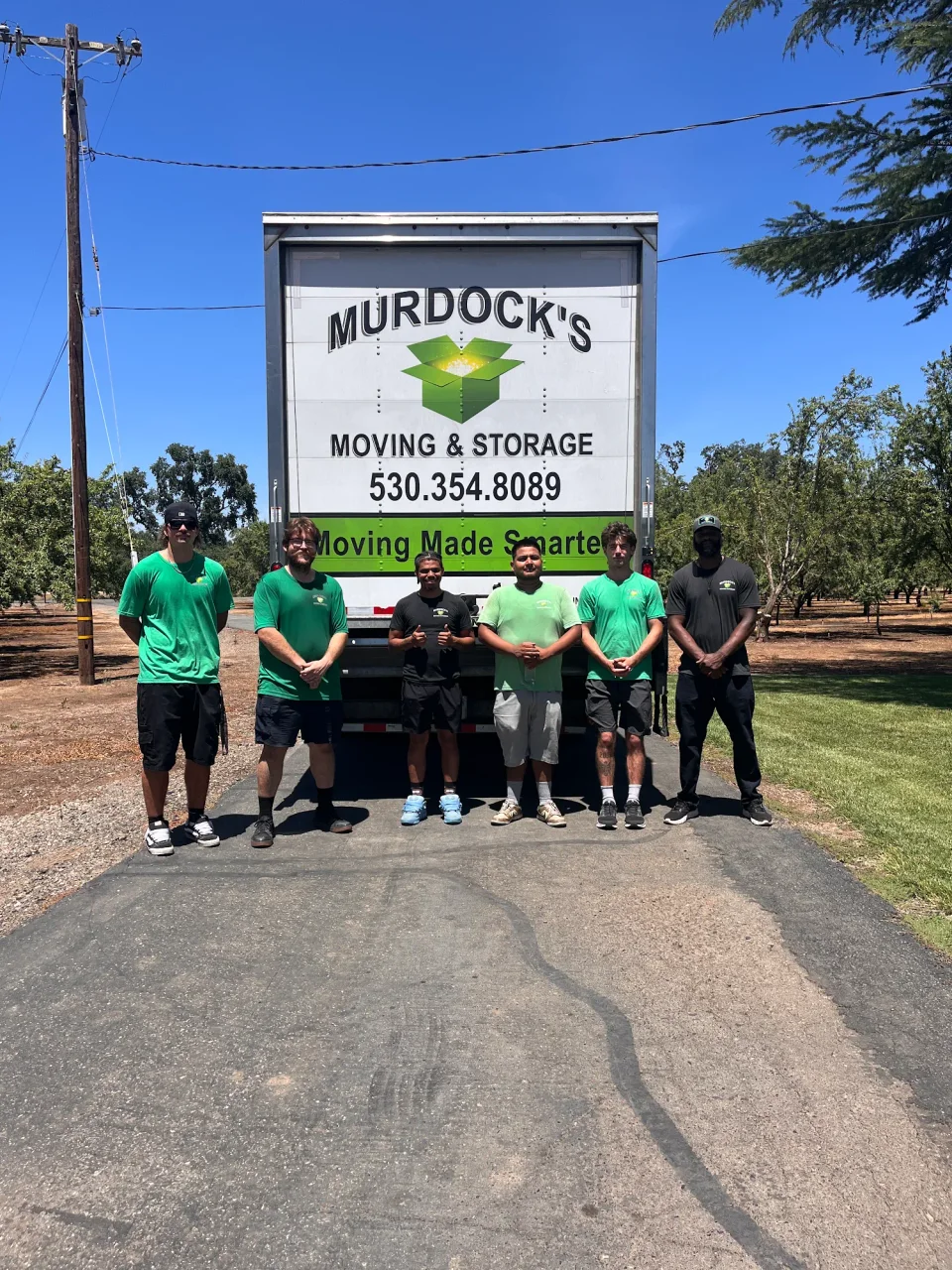
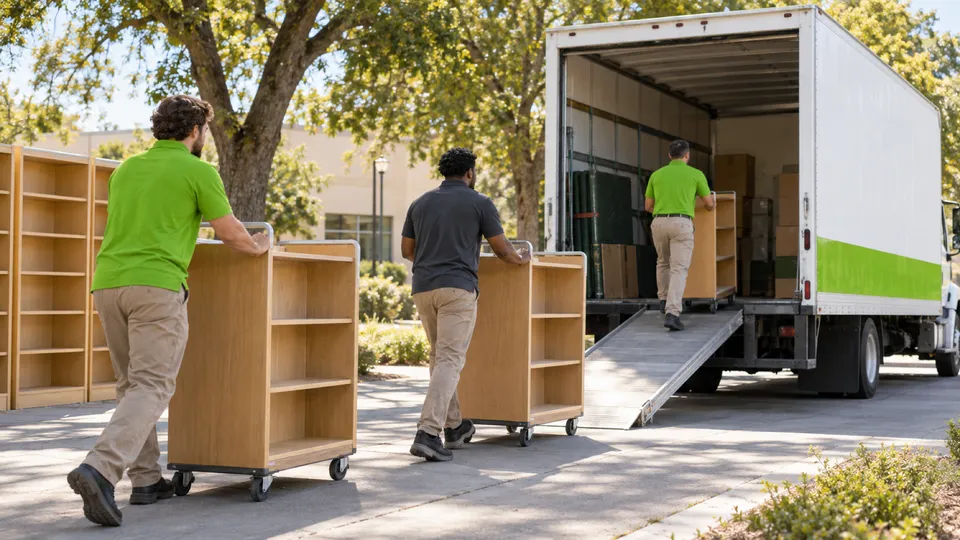
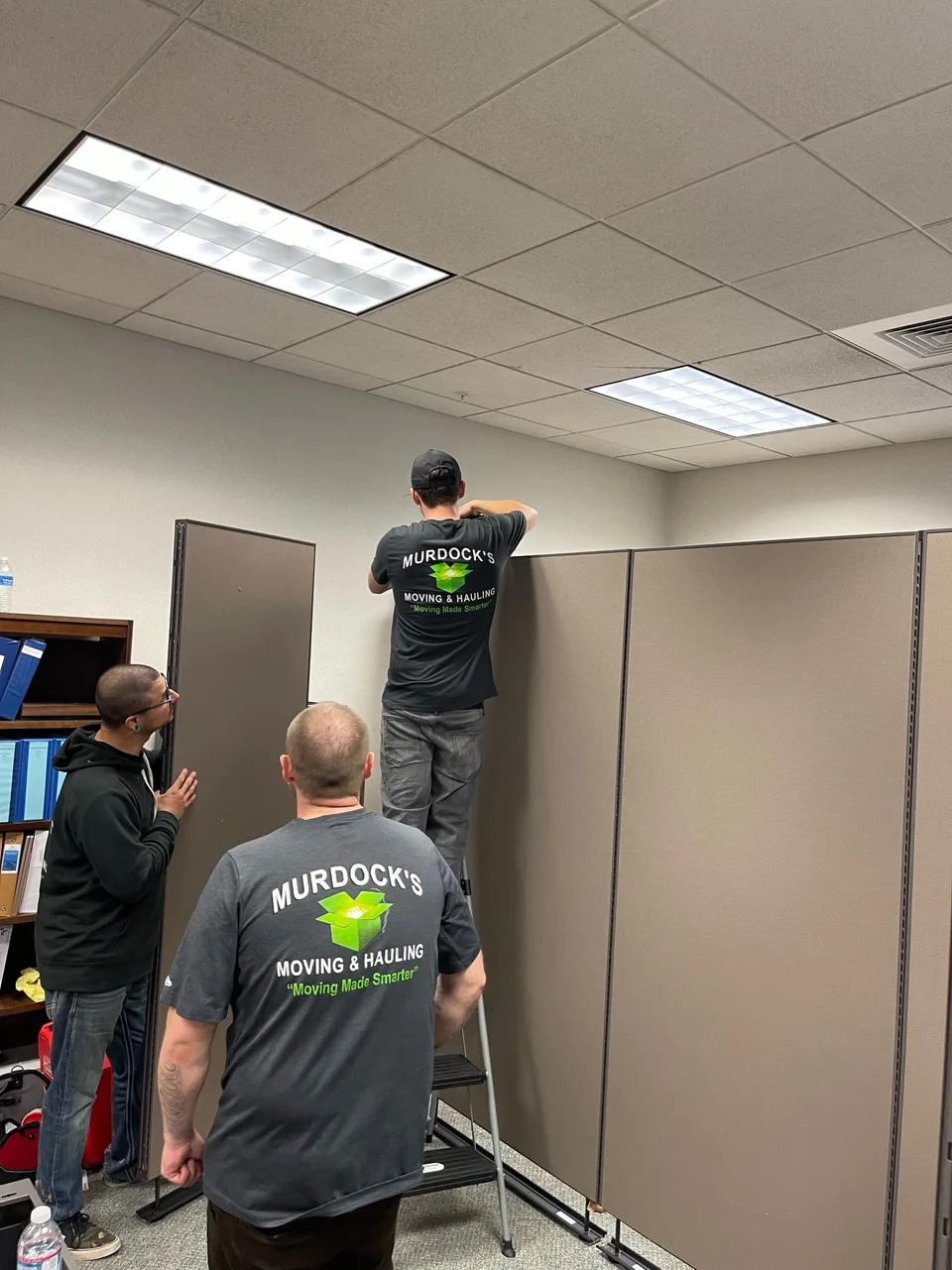
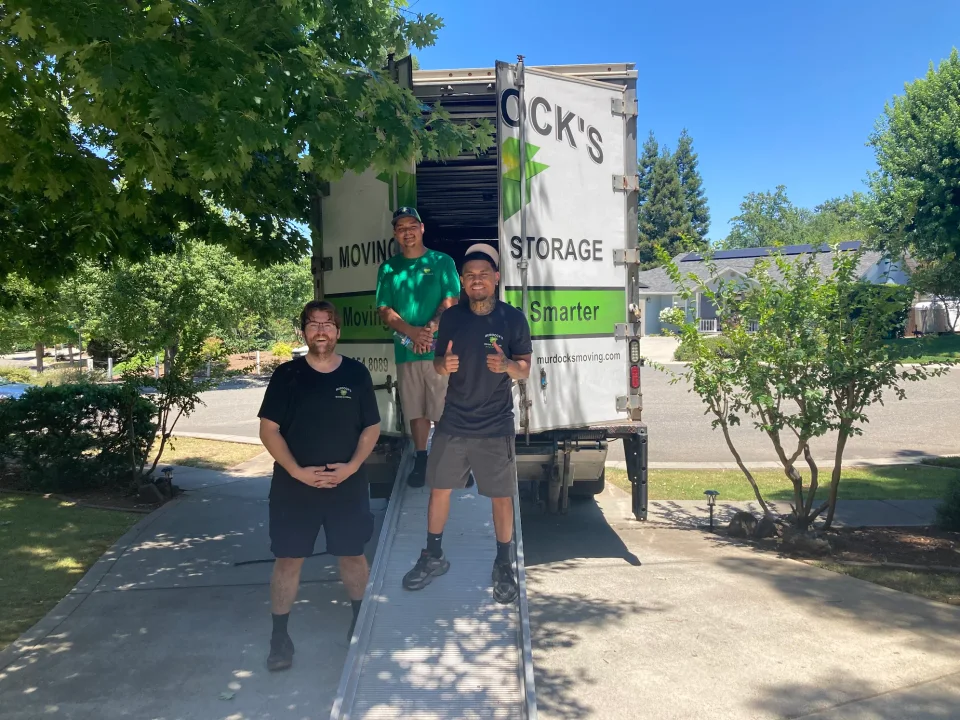
Murdock’s crew rebuilding cubicle panels in an office, one mover on a step ladderMurdock’s movers working the loading ramp of an open box truckThe Murdock’s crew lined up behind the truck on an orchard road in Butte County

Library Moving FAQs

Another question? Call (530) 354-8089.

Our new building has fewer shelves per range. How do we plan where each span lands?

That is a shelf-map question for your collection lead, and it is worth answering before anything is packed. Measure the collection in linear feet, compare it with the new ranges, and set where each span starts with some growth space per shelf. We code trucks and cartons to that map, so if one span runs long, only the ranges after it shift.

Can the book drop stay open while we pack?

Often, for a while. Returns that arrive during packing are sorted by staff and held on their own carts, apart from the coded move trucks. Once the last span is packed, staff either shelve those returns at the new building or add them to the final load. Pick a closing date for the book drop and post it for patrons.

Who takes down the steel shelving ranges?

A library shelving installer, not the moving crew. The installer removes the old ranges, puts up the new ones and releases each when it is level and anchored. We time the book loads to those releases, so full trucks never wait in an aisle with no shelves. Loose shelves and freestanding wood cases can travel with our crew.

Who decides whether local history materials ride with the regular collection?

Your collection lead. Pull fragile originals, photographs, archive boxes and anything on loan before regular packing starts, then decide whether staff carry them, a conservator packs them, or they ride with us in their own marked cartons. We pack the circulating collection to the shelf map and keep the special group apart until staff release it.

Plan your business move

Tell us both addresses, the building rules you know about, and the dates you cannot move. We will send back a written plan and estimate.

Call (530) 354-8089

Mon–Sat 8:00 AM–6:00 PM · Sun 10:00 AM–4:00 PM

Call Nowcall530-354-8089