Education, Civic & Community

Museum and Gallery Moving in the Sacramento Valley

Your registrar releases the objects; our crew moves cases, plinths, walls, the shop and offices, and builds crates to the registrar's specifications.

(530) 354-8089
Museum & Gallery moving in the Sacramento Valley: Murdock's crew at work
  • Licensed & InsuredUSDOT 3421940 · MC 1416634
  • Locally OperatedChico + Yuba City
  • Sacramento ValleyChico · Yuba City · Sacramento

Start your museum & gallery move quote

verifiedFor estimate purposes onlycredit_card_offNo credit card required

Planning a Museum & Gallery Move

Every museum move runs on two lists. The registrar's list covers the objects: accession numbers, condition reports, loan terms, and which pieces a lender says must travel with a courier or a fine-art shipper. The facilities list covers the rest: exhibit cases, plinths, wall panels, the gift shop, the education room and the offices. Our crew works from the second list and touches the first only when the registrar hands us a prepared piece.

That split shapes the calendar. Collections staff or the shipper deinstall, condition-check and pack the objects, and then the empty galleries are ours. Cases, plinths and panels go to the new installation drawing so they are standing before the art arrives. Works that need a custom crate go through our crating services, built to the measurements and support points your registrar supplies.

Smaller galleries in midtown Sacramento or downtown Chico run the same way on a smaller scale: the owner or the artist decides how each work travels, and we move the walls, pedestals, flat files and office around them.

Who usually signs off
Museum director or gallery owner, with the curator or collections lead approving object handling
Timing that works
Between the final public day and the next installation, with the registrar's deinstallation schedule setting when each gallery is released; evening or weekend work on request.

What typically moves

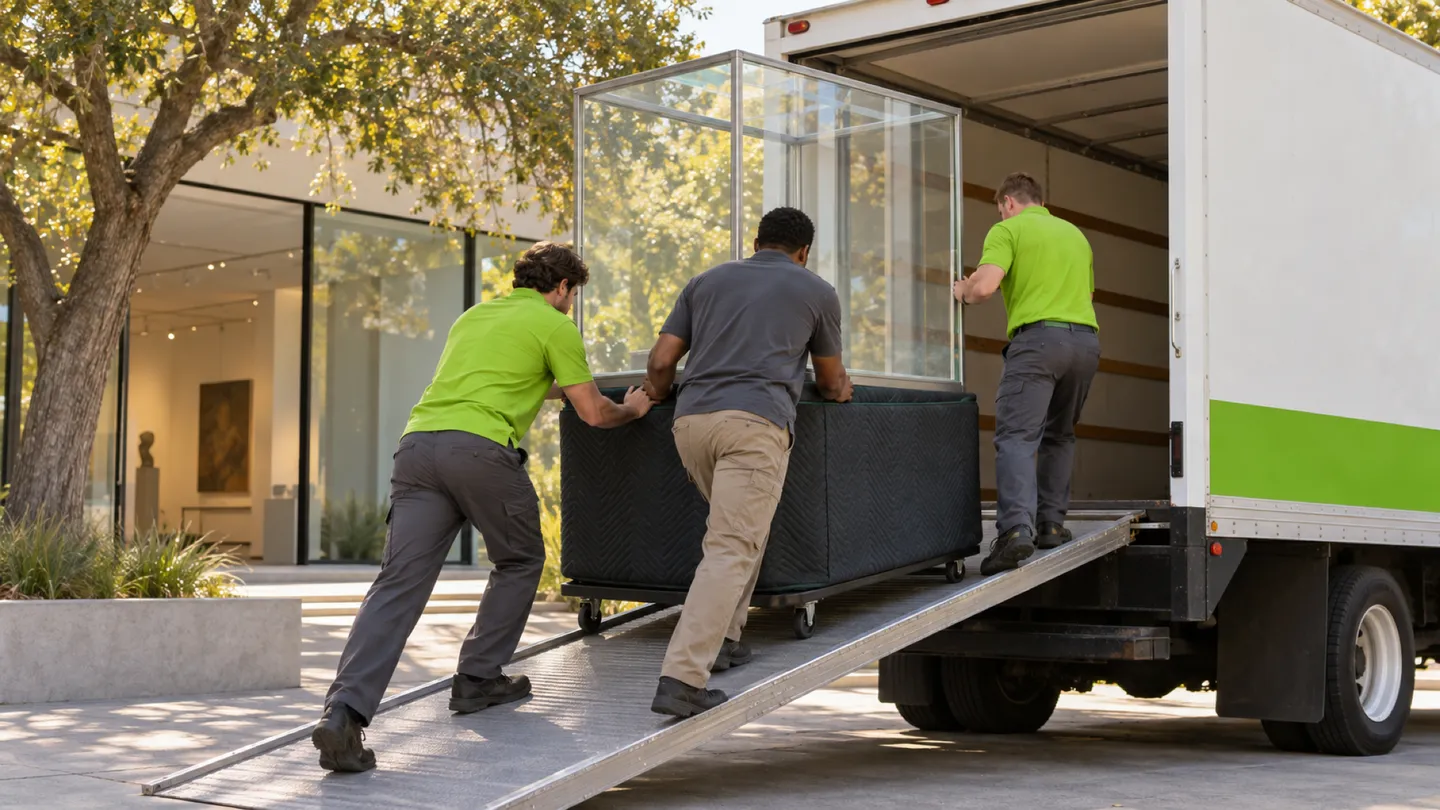
  • Emptied vitrines and glass-bonnet casesBonnets travel apart from bases in padded frames; each part carries its drawing position.
  • Painted plinths and pedestalsPadded on every face and delivered before the objects they will hold.
  • Movable exhibit walls and panel systemsMoved on edge, with connectors bagged to each panel.
  • Crated and pre-wrapped works released by the registrarCarried in the orientation marked on the crate and delivered to the inspection room.
  • Flat files and print cabinetsCollections staff choose whether drawers travel full and taped or empty.
  • Gift shop fixtures and stock cartonsDisplays are padded; shop staff pack merchandise by fixture.
  • Education room tables, easels and program suppliesGrouped for the new classroom or studio space.

Access and scheduling

We ask for the deinstallation schedule first. Galleries release one at a time, so cases from the first room cleared can be moving while objects are still being packed next door. Crates waiting for inspection need a staging room the registrar picks, away from the loading path and the building's exits.

Exhibit cases are often wider than an office door, so we measure the route from each gallery to the dock, including the freight elevator and the tightest turn, and check it against the biggest case on the list. If a case has to come apart to fit, the exhibit fabricator or installer decides what can be removed. Buildings in Old Sacramento and older downtowns share alleys and loading hours with neighbors, and a building owner there often wants a copy of our insurance before booking the alley.
Protection and handling

Empty cases still carry risk: a glass bonnet can shift on its base, and acrylic scratches under the wrong pad. Removable bonnets and shelves travel apart from their bases in padded frames or cartons the installer approves, hardware is bagged to its case, and each case keeps its position code from the installation drawing. Plinths and wall panels get pads over painted faces and ride on edge.

For art, we follow the registrar. A work that reaches us wrapped or crated rides in the orientation marked on the crate, strapped to the truck wall, and goes straight to the inspection room. We do not unwrap, open crates or choose materials for a surface we do not know. Condition checks on arrival, unpacking and hanging belong to your staff, the conservator or the installer.

Who does what

Some of this job belongs to other trades. The written plan names each one.

Deinstalling, condition-reporting and packing objects
Your registrar, collections staff or conservator, with a fine-art shipper when a lender requires one. We move works only after they are prepared and released.
Custom crates for individual works
Built through our crating services to the dimensions, support points and orientation your registrar specifies.
Case lighting, anchored cases and object mounts
The exhibit installer or fabricator, with an electrician for hard-wired case lighting.

Not part of our work

  • Handling loaned objects outside the lender's written instructions, or any object the registrar has not released.
  • Unwrapping works, opening crates or checking condition at the new building.

Around Chico, Yuba City and Sacramento

Museums and galleries in the Valley occupy historic buildings in Old Sacramento and in downtown Chico and Marysville, storefronts along J Street and the midtown side streets, campus spaces at Chico State, Sacramento State and UC Davis, and newer suburban spaces in Roseville and Folsom. Historic buildings tend to have narrow doors and shared alleys, which usually limits case size before anything else does.

The crew that shows up

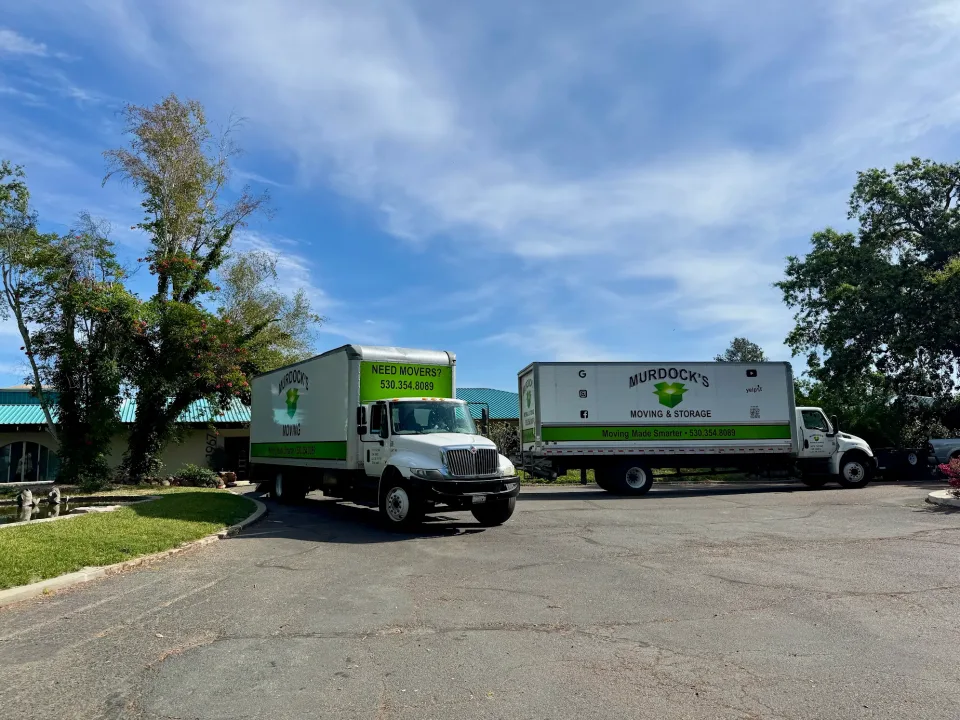
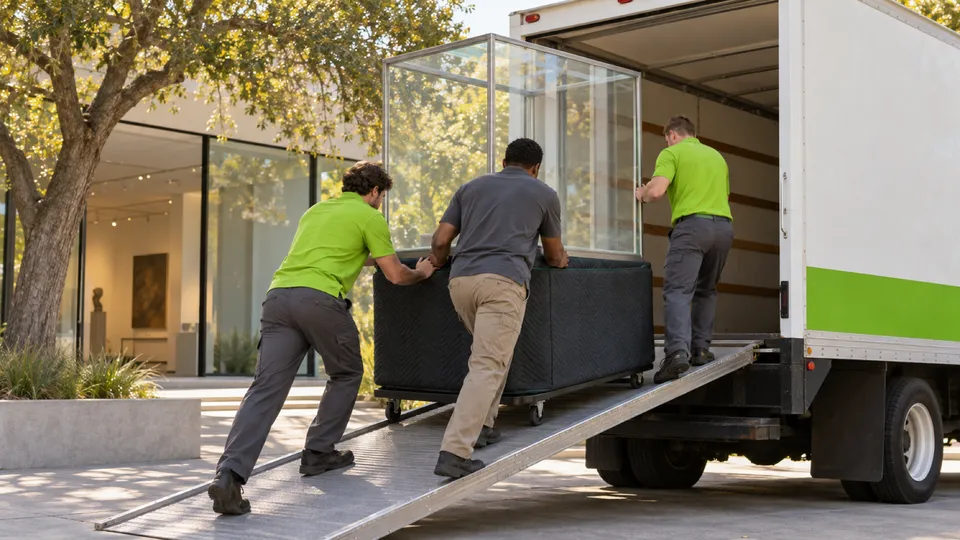
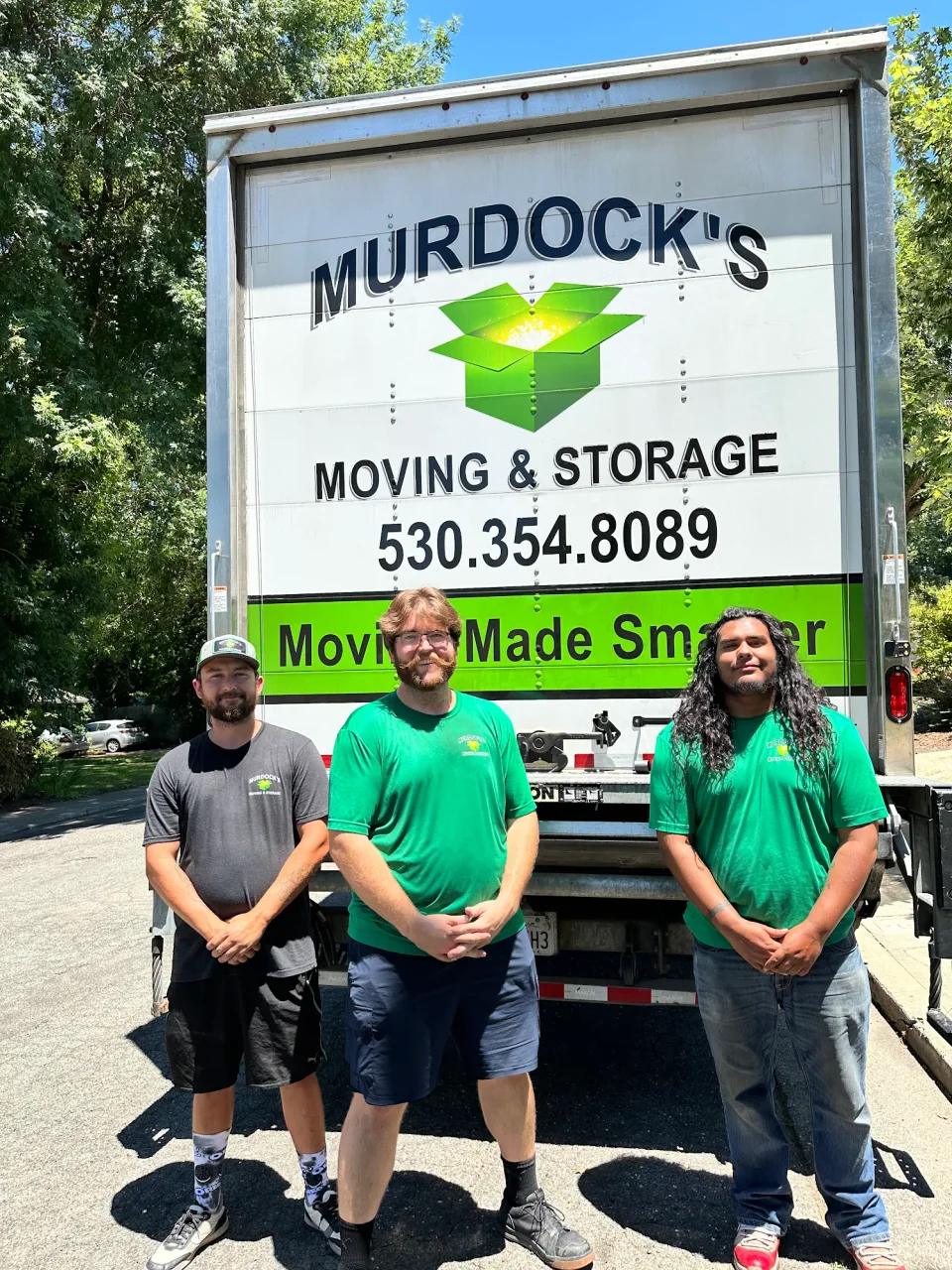
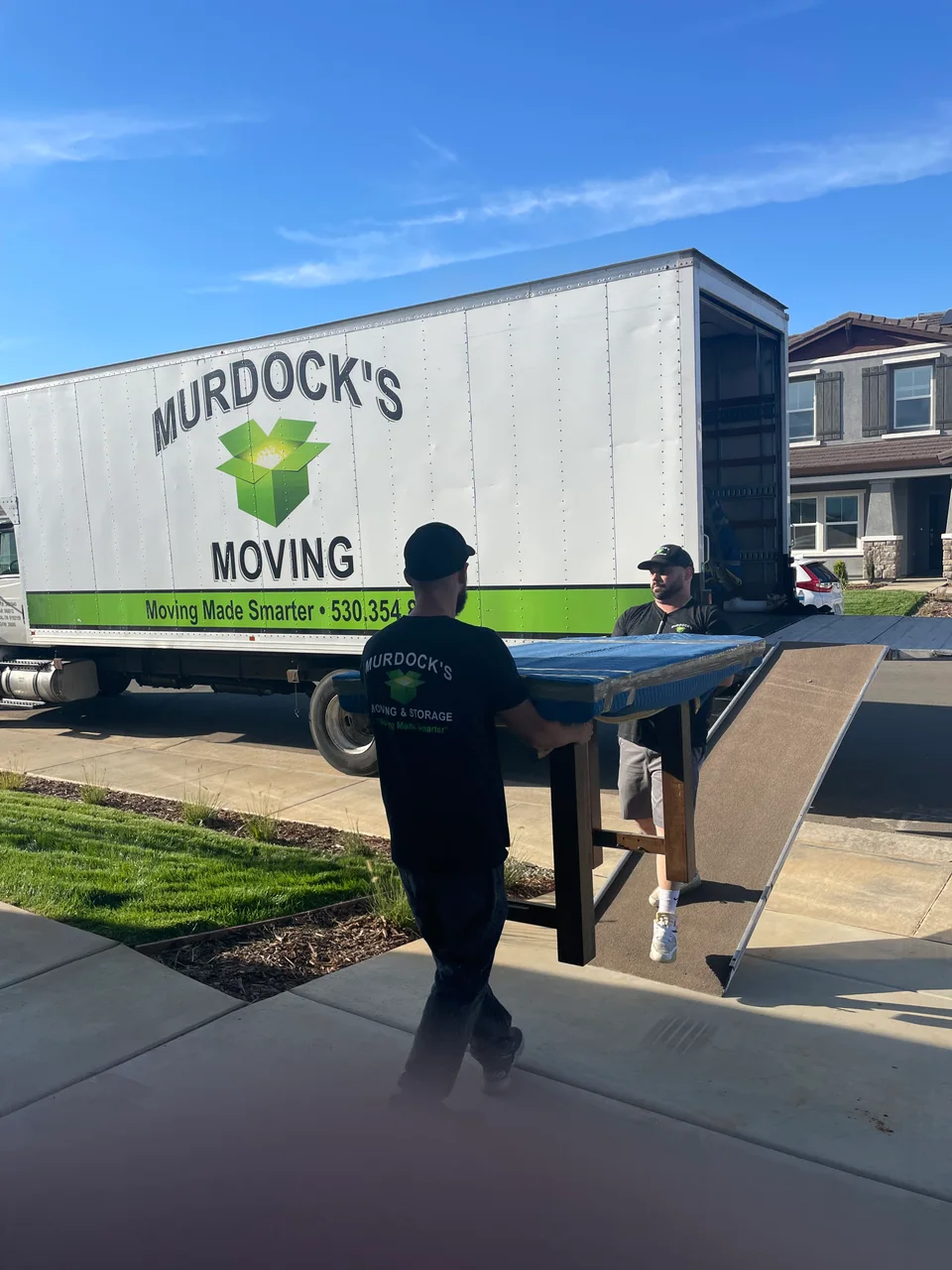
Three Murdock’s crew members at the back of the box truckTwo Murdock’s movers carrying a pad-wrapped table up the truck rampTwo Murdock’s box trucks staged outside a single-story building in the Sacramento Valley

Museum & Gallery Moving FAQs

Another question? Call (530) 354-8089.

A lender requires a courier for two of our loaned works. How does that fit your schedule?

Those works travel on the lender's terms, usually with a fine-art shipper and the courier riding along. We schedule around them: their gallery is cleared of cases only after the shipper has collected the works, and the new gallery's cases are set before the courier arrives. Share the loan travel dates early so both moves do not need the dock at once.

What do you need from our registrar to build a crate for a painting?

Outside dimensions with the frame, weight, photos of the back, where the work may be supported and which way it must stay upright, plus any wrapping the registrar wants against the surface. We also measure the exit and the receiving door, since the finished crate has to pass through both. The crate is built to those instructions and marked for orientation and destination.

Our cases are older and the new galleries use a different layout. Can they still be placed correctly?

Yes, as long as the installation drawing gives each case a position. We mark every base, bonnet and shelf with that code before the case leaves and set it on the matching spot at the new building. If a case needs repair, new hardware or a different base height for the new show, the fabricator handles that.

Can the gift shop and offices move while galleries are still being deinstalled?

Usually, yes. The shop, education room and offices do not depend on the registrar's schedule, so they often go first, which frees staff to focus on the collection. Shop staff pack merchandise by fixture, and we move the fixtures, desks and files to the new floor plan, keeping our route away from galleries where objects are being packed.

Plan your business move

Tell us both addresses, the building rules you know about, and the dates you cannot move. We will send back a written plan and estimate.

Call (530) 354-8089

Mon–Sat 8:00 AM–6:00 PM · Sun 10:00 AM–4:00 PM

Call Nowcall530-354-8089