Retail, Restaurant & Hospitality

Farm Equipment Dealership Moving in the Sacramento Valley

Parts department, service writers, sales offices and showroom moved around your harvest calendar; tractors, implements and lifts stay with your dealership.

(530) 354-8089
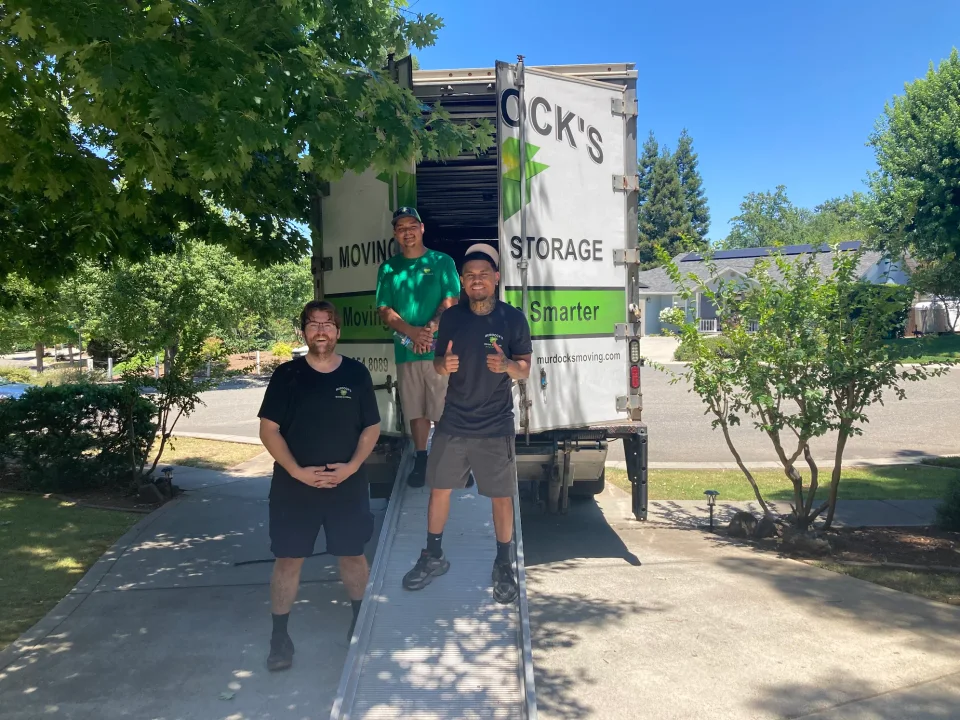
Farm Equipment Dealership moving in the Sacramento Valley: Murdock's crew at work
  • Licensed & InsuredUSDOT 3421940 · MC 1416634
  • Locally OperatedChico + Yuba City
  • Sacramento ValleyChico · Yuba City · Sacramento

Start your farm equipment dealership move quote

verifiedFor estimate purposes onlycredit_card_offNo credit card required

Planning a Farm Equipment Dealership Move

An ag equipment dealer on Hwy 99 or I-5 answers to the crop calendar. From August through November, almond shakers, rice combines and walnut harvesters break down in the field, and growers want the part that afternoon. A dealer that moves in the middle of that stretch loses the counter when it matters most, so most relocations are planned for the weeks after harvest, before pruning and spring planting pick up.

Inside the building, the work splits three ways. The parts department is the big one: bin shelving, drawer cabinets, a counter and a lot of heavy stock, all tied to bin numbers in your parts system. The service side has writer desks, work-order files and the technicians' own tool chests. The front has sales offices, a showroom and merchandise such as toys, apparel and parts displays.

Tractors, implements, combines and service lifts are the dealership's to move. Your drivers and lowboy haulers take the equipment, and our box truck works around the equipment yard.

Who usually signs off
Dealer principal or general manager, with the parts and service managers approving their department plans
Timing that works
Planned for the slower weeks after harvest parts demand drops, and rarely in the middle of almond, walnut or rice season, when the parts counter is busiest.

What typically moves

  • Parts-room shelving and drawer cabinetsEmptied by your staff, tagged by aisle, and standing at the new building ahead of the stock.
  • Heavy parts stock: filters, bearings, belts, knives and wear partsPacked by your parts staff in small cartons by bin number and loaded low.
  • Parts counter and catalog stationsGoes in ahead of the stock so growers calling in can be answered right away.
  • Service-writer desks and work-order filesMoved as one group; open repair orders stay with the service manager.
  • Sales offices and showroom furnitureDesks, chairs and customer tables marked to the new office plan.
  • Merchandise displays and freestanding signageToy and apparel fixtures, brochure racks and floor signs grouped by display area.
  • Office and counter computers, monitors and printersMoved to matching desks; the dealer business system stays with your IT provider.

Access and scheduling

Dealer yards have their own traffic: lowboys delivering and hauling equipment, growers pulling in with trucks and trailers, and service vehicles leaving for field calls. We agree with your general manager on a loading area clear of the equipment gate and the service bays, and a time when the equipment move is not using the same lane.

Most dealers keep the parts counter open until the last possible day. The usual sequence is overflow and slow stock first, then aisle by aisle, with the counter's most-requested bins last. Service can often keep writing orders from the old building until the shop itself moves.

Summer heat matters here too. Yard work in July and August in the Valley means early starts and a short midday, so large moves are easier after the first rains than in peak heat. Evening and weekend work is possible on request.
Protection and handling

Parts stock is dense and oily, and cartons fail from weight rather than rough handling. Small cartons, doubled tape and a low load keep boxes intact. Your staff writes both bin numbers, old and new, big on each carton. Long items such as sickle sections and knife backs should be bundled by your parts staff and tagged, since they will not fit a carton neatly.

Showroom and office furniture is pad-wrapped, and the path through the building is covered where the new floor is finished. Technicians' personal tool chests stay with the technicians unless you arrange for us to move them.

At the new building, shelving goes up in aisle order and stock is staged beside each aisle where your staff checks it in on the parts system. We do not reshelve by guesswork; a carton with a torn label is set aside for your parts team.

Who does what

Some of this job belongs to other trades. The written plan names each one.

Tractors, combines, implements and used equipment inventory
Your dealership drives them or books lowboy transport, and controls keys and titles.
Service lifts, overhead cranes, parts washers and air compressors
The installer or service company that maintains them disconnects, moves and reinstalls them.
Bulk oil tanks and lubricant dispensing equipment
Your fluid supplier or the installer, since they are plumbed and may need to be emptied first.

Not part of our work

  • Driving, towing or hauling any machinery or trailers.
  • Moving shop equipment bolted to the floor, plumbed to air or oil, or lifted by crane or forklift.

Around Chico, Yuba City and Sacramento

Farm equipment dealers here sit where the crops are: along Hwy 99 between Chico, Gridley and Yuba City, on I-5 near Orland and Willows, and in Colusa and Sutter counties where rice dominates. Almonds and walnuts drive late-summer and fall parts demand in Butte and Glenn, and rice harvest runs through September and October around Colusa and Sutter.

The crew that shows up

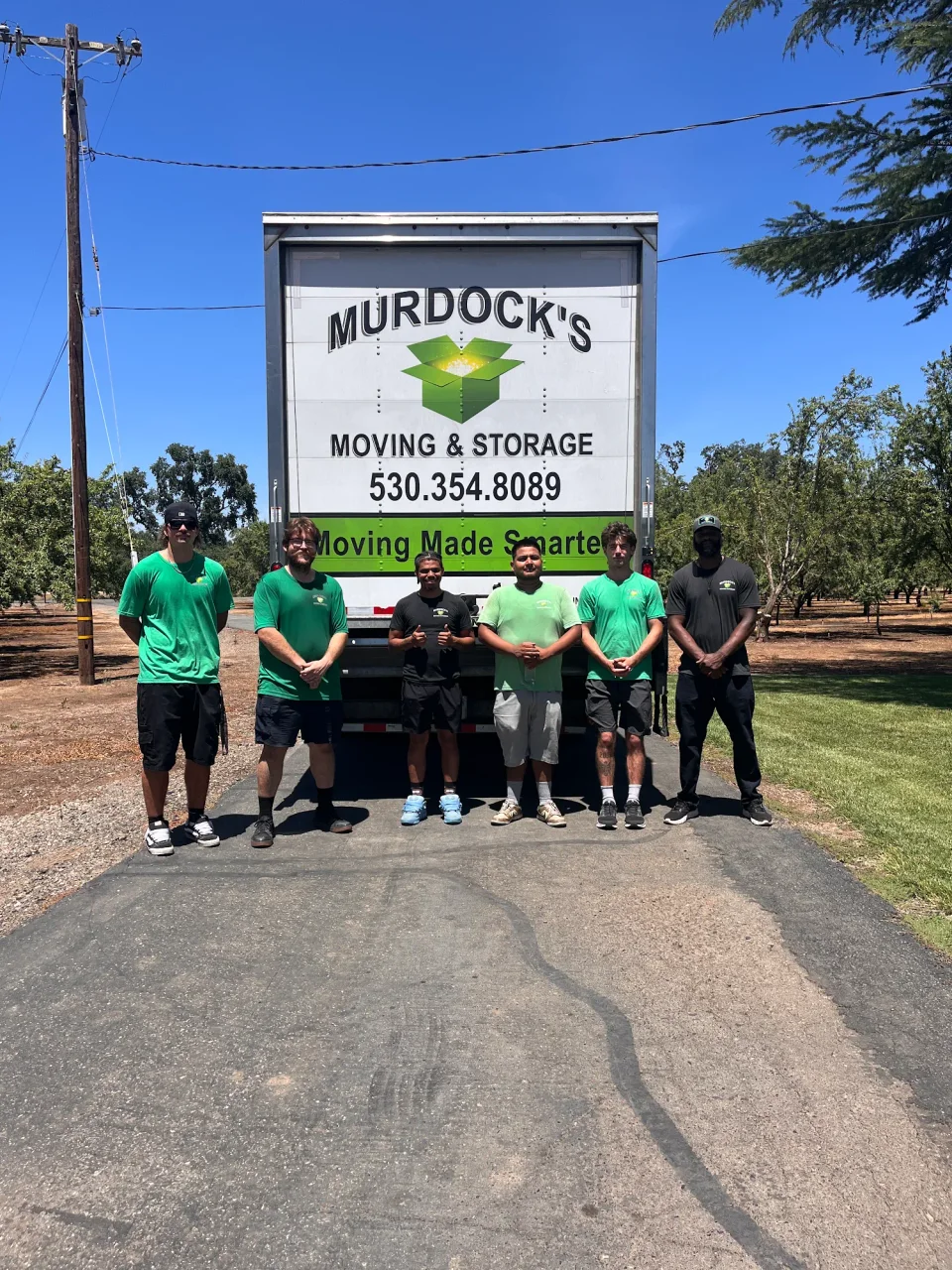
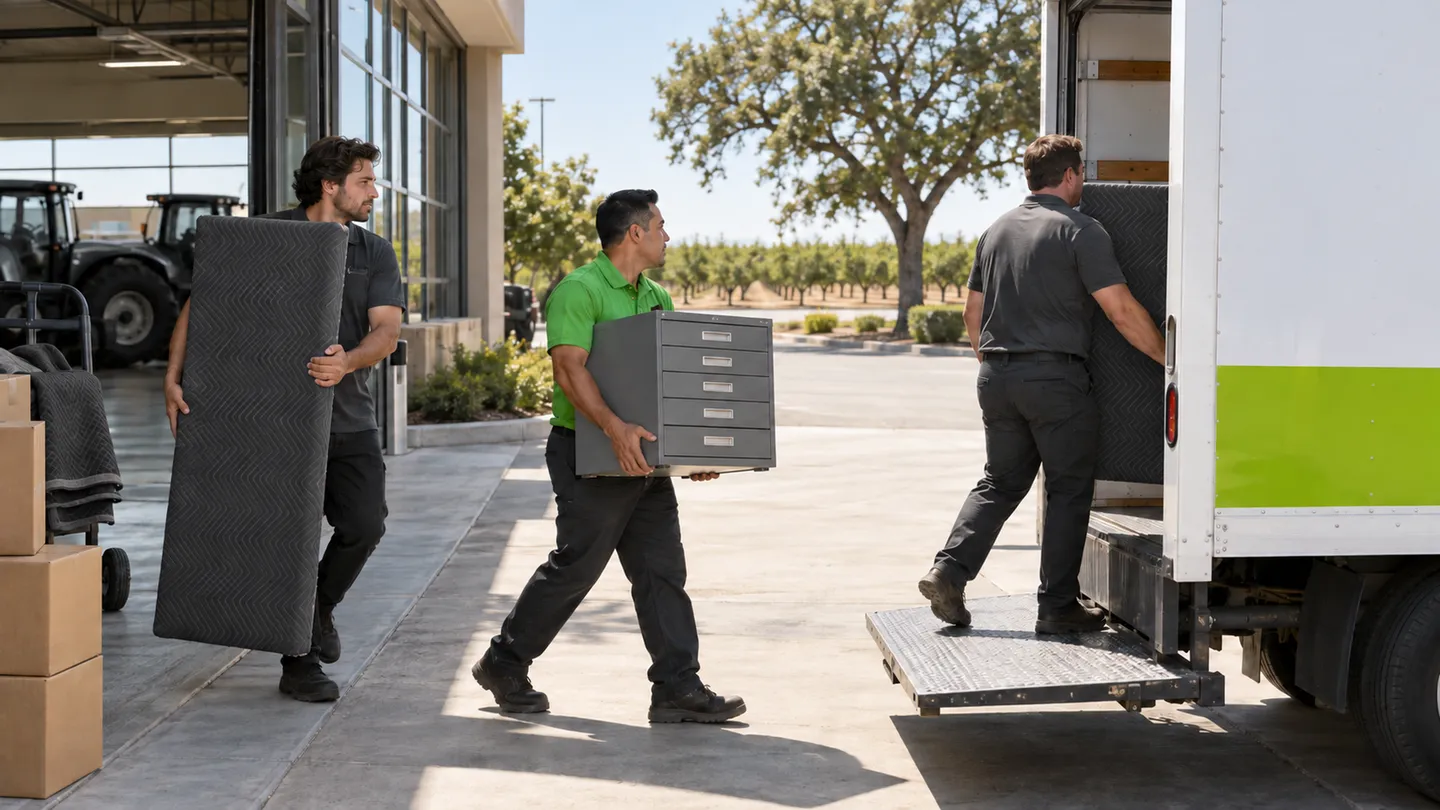
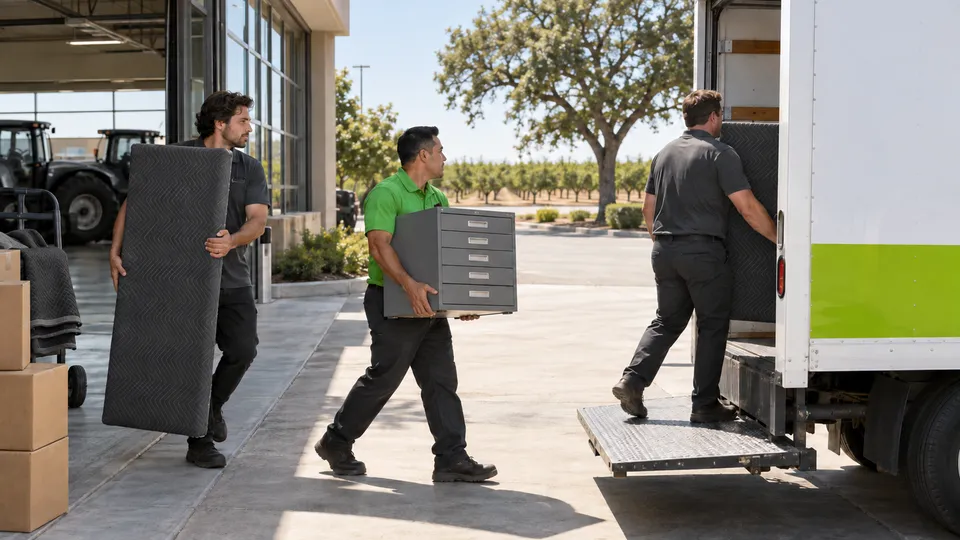
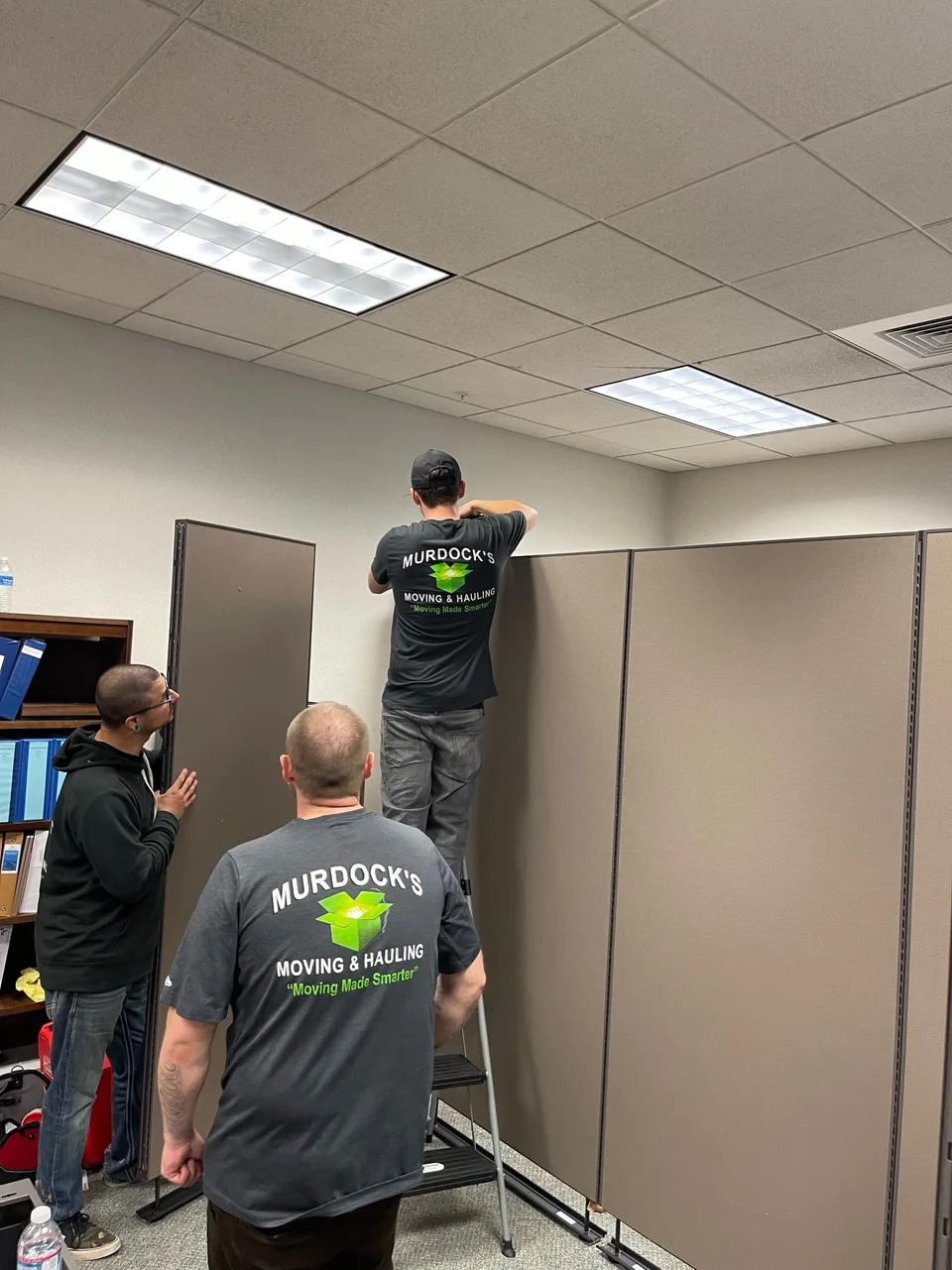
Murdock’s crew rebuilding cubicle panels in an office, one mover on a step ladderMurdock’s movers working the loading ramp of an open box truckThe Murdock’s crew lined up behind the truck on an orchard road in Butte County

Farm Equipment Dealership Moving FAQs

Another question? Call (530) 354-8089.

Which months make sense for an ag dealership to relocate?

For most Valley dealers, after the fall harvest parts rush eases and before spring work starts. Almond, walnut and rice harvests keep parts counters busy from late summer into November. Pick a window with your parts and service managers, then we plan the counter bins to move last.

Who moves our tractors and implements to the new yard?

Your dealership. Your drivers or a lowboy hauler you book move the equipment, and your staff controls keys and paperwork. Tell us the equipment schedule so our truck is not in the same lane, and we move the parts department, offices and showroom around it.

Can you move the parts department without losing track of bin numbers?

Yes, if your parts staff labels each carton with its old and new bin. We move shelving first, set it in aisle order at the new building, then stage cartons beside each aisle. Your team checks them in against the parts system before the counter opens.

What about the parts washer, compressor and lifts in the shop?

They stay with the service company or installer that maintains them. That company disconnects and moves them and sets them up at the new shop. Our crew can move freestanding workbenches, parts carts and shelving in the shop once those machines are out of the way.

Plan your business move

Tell us both addresses, the building rules you know about, and the dates you cannot move. We will send back a written plan and estimate.

Call (530) 354-8089

Mon–Sat 8:00 AM–6:00 PM · Sun 10:00 AM–4:00 PM

Call Nowcall530-354-8089