Commercial Service

Commercial Crating for Equipment, Exhibits and Art

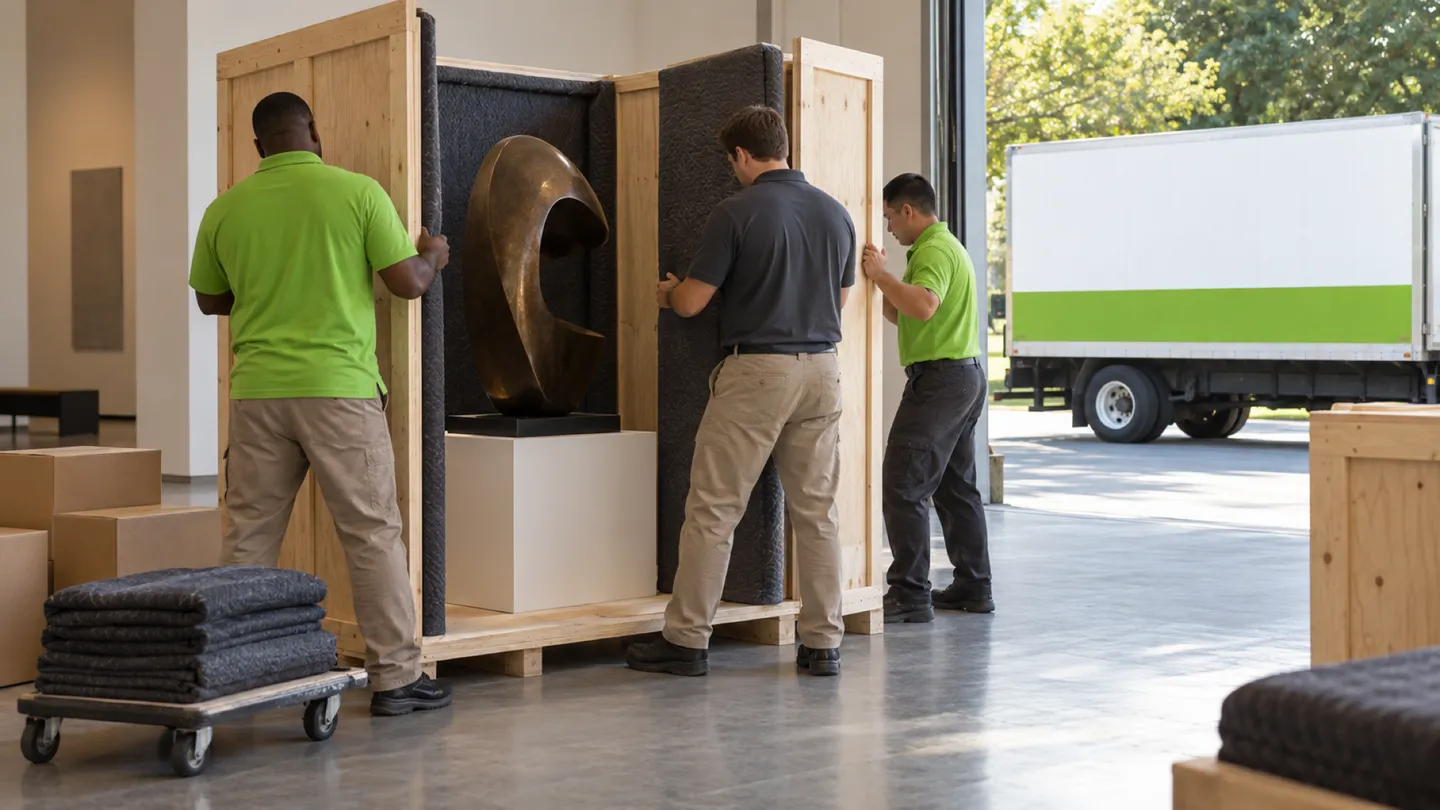
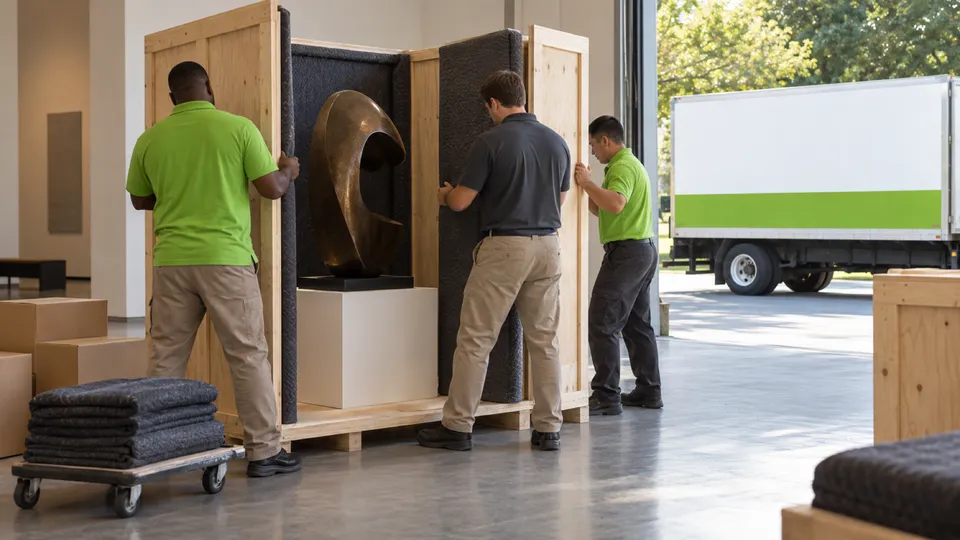
Wooden crates built to the object, for glass cases, stone tops, framed art, instruments and exhibit pieces, packed to the owner's or vendor's handling rules.

(530) 354-8089
Commercial Crating moving in the Sacramento Valley: Murdock's crew at work
  • Licensed & InsuredUSDOT 3421940 · MC 1416634
  • Locally OperatedChico + Yuba City
  • Sacramento ValleyChico · Yuba City · Sacramento

Start your commercial move quote

verifiedFor estimate purposes onlycredit_card_offNo credit card required

How We Plan Commercial Crating

Crating is for the pieces a pad and a dolly are not enough for: a glass display case, a stone or glass tabletop, a framed work behind glazing, a bench instrument with a delicate sensor head, an exhibit that has to arrive the way it left. For these, the crew builds a wooden crate to the object, with blocking and padding only where the object can take pressure.

The service runs in steps. We first collect dimensions, weight, photos and handling notes from whoever knows the piece, whether that is the equipment vendor, the curator or the owner. That person then prepares it by locking moving parts, taking it off its mount or writing a condition report. The crate is designed to fit both the object and the route out, built, packed and marked outside with orientation, destination and the side to open. It then travels with the rest of the job or on its own, and at the destination the receiving team chooses where it is opened.

Our crating services page covers crating in general; this one is for businesses, schools, galleries and exhibits around Chico, Yuba City and Sacramento.

Who usually signs off
Facilities manager, exhibit or collections manager, or lab manager, with the object's owner or vendor supplying handling instructions
Timing that works
Measure early, since crates take time to build, then pack after the vendor or curator prepares each piece and before the exhibit closing, changeover or relocation date.

What typically moves

  • Glass display cases and loose shelvesGlass comes out and travels in its own crate or cavity; the case frame is crated empty.
  • Stone and glass tabletopsCrated on edge, finished face padded and held off the crate walls.
  • Framed art behind glass or acrylicCrated to the frame with hanging hardware noted; the owner or curator says whether the surface may be touched.
  • Laboratory and test instrumentsCrated only after the manufacturer's technician locks or removes moving parts and names the lift points.
  • Sculpture and three-dimensional exhibit piecesSupported where the curator approves, on a cradle or blocking built to the base.
  • Trade-show and lobby display componentsEach part is numbered to its display and crated in the order the installer will want it.
  • Mirrors and large glass panelsCrated upright with corner protection; anything mounted to a wall is taken down by the glazier first.

Access and scheduling

A crate has to get out of the building, so we measure the route before building it: doorways, hall turns, elevator openings, the ramp or dock, and where the truck can stand. If a finished crate will not clear a door, it is built in panels and closed at a staging point near the exit. For heavy pieces, we ask the building about floor and elevator limits before the date is set.

Timing usually follows someone else's calendar, such as an exhibit closing, a gallery changeover, a lab relocation or a store reset. Crates take time to build, so measurements are needed well ahead of the move. Galleries and museums often change over while closed to visitors, and on request the crate crew can come in the evening or at the weekend.
Protection and handling

A good crate puts pressure only where the object can take it. For glass, that means edges and corners held in padded blocking with nothing resting on the face. For framed art, the frame touches the supports, never the glazing or canvas. For instruments, the load goes to the base and the lift points the manufacturer names, not a control panel or sensor. Loose parts are bagged or boxed and numbered to the main piece.

How a fragile object should be handled is not the crew's decision. The curator or conservator writes the condition report and sets wrapping rules for art, and the manufacturer's technician prepares equipment and brings it back into service afterward. The crew builds to those instructions, packs, closes and marks the crate, and keeps it upright as marked. At delivery, the receiving team opens it where it wants and checks the piece against the condition report.

Who does what

Some of this job belongs to other trades. The written plan names each one.

Condition reports and handling rules for art
The curator, conservator or collection owner writes the report and sets the rules; the crew builds and packs to them.
Equipment preparation and return to service
The manufacturer's service technician locks moving parts before crating and tests the unit after it is uncrated.
Wall-mounted pieces and powered displays
The installer or glazier takes down mounted pieces, and a licensed electrician disconnects hard-wired power.

Not part of our work

  • Condition reports, conservation treatment or appraisals.
  • Calibrating, testing or recommissioning equipment.
  • Removing wall-mounted glass or disconnecting powered displays.

Around Chico, Yuba City and Sacramento

Crating work around the Valley ranges from gallery and museum pieces in Old Sacramento and downtown Chico to lab instruments in college and research buildings and display fixtures in Roseville retail. Summer heat inside a closed truck matters for some finishes and adhesives, so owners of sensitive pieces should say so and ask about an early start or a direct run.

The crew that shows up

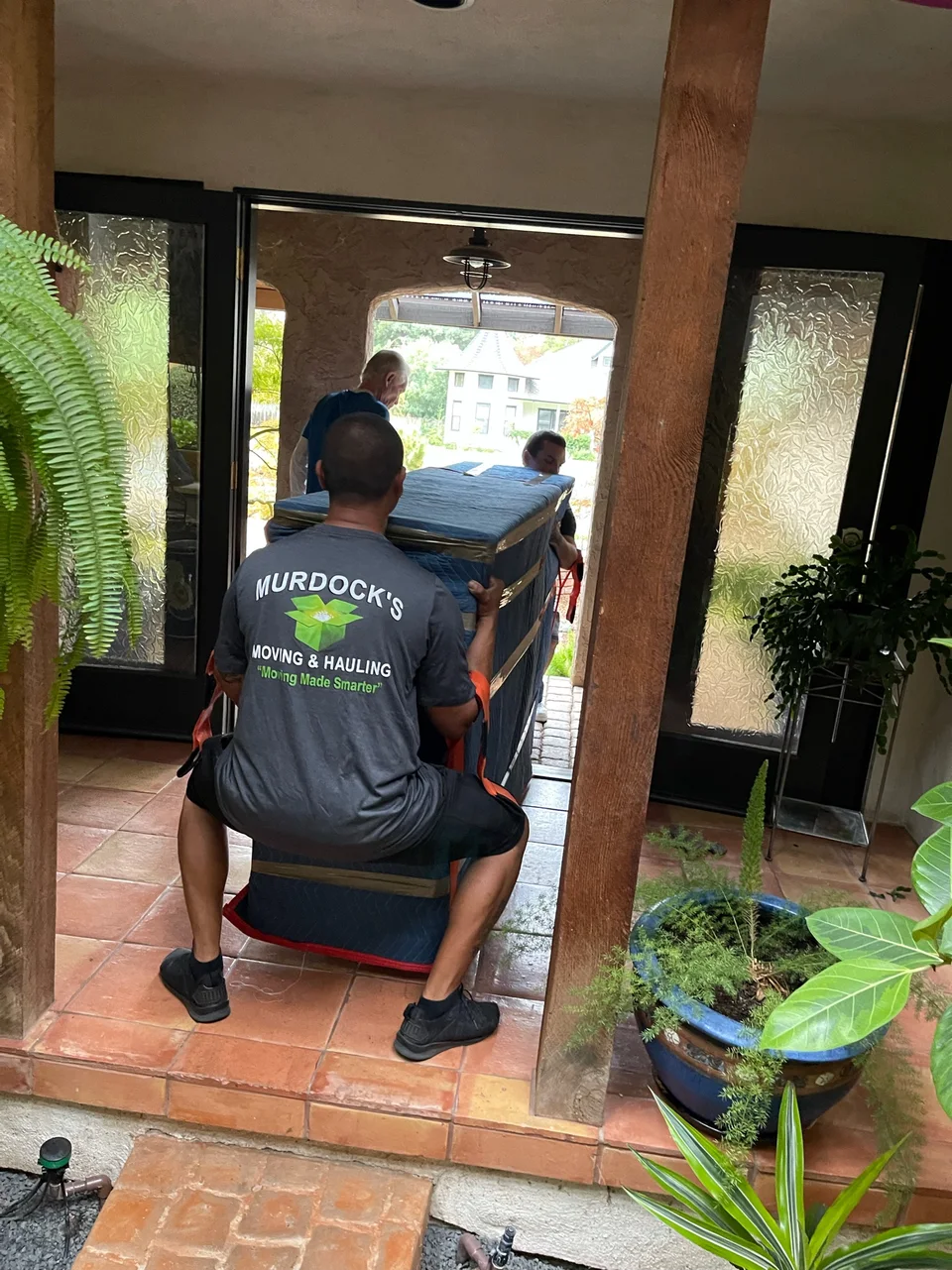
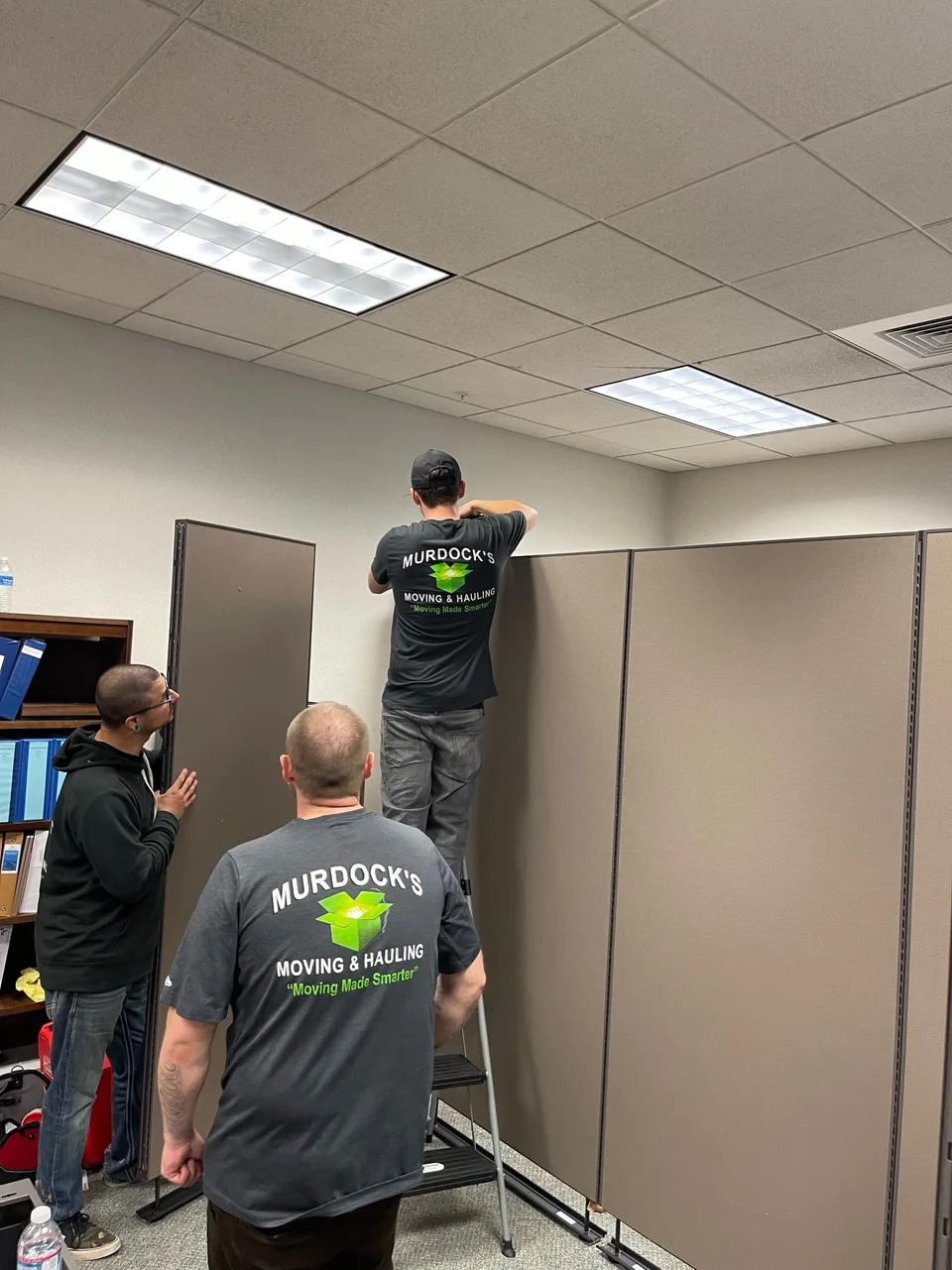
Murdock’s crew carrying a pad-wrapped piece through a tiled entrywayMurdock’s crew rebuilding cubicle panels in an office, one mover on a step ladderMurdock’s movers working the loading ramp of an open box truck

Commercial Crating FAQs

Another question? Call (530) 354-8089.

What should we send before a crate is designed?

Outside dimensions, weight if you know it, photos from every side and a note on anything that projects, detaches or must stay upright. Add the route: door widths, elevator size and the loading point at both ends. If a vendor or curator has handling instructions, send those too, since the crate is built around them.

Can a glass display case and its contents share one crate?

Usually not. The objects inside follow the curator's or owner's handling rules and often travel in their own crates or cavities. Glass shelves and panels come out of the case and are crated separately, so nothing loose rides against the frame. The empty case is then crated on its own.

Who writes the condition report before artwork is crated?

Your curator, conservator or the collection owner. The report records the state of the piece before it moves and is checked again when the crate is opened. The crew does not assess artwork; it builds and packs the crate to the handling rules in the report and places it where the receiving team directs.

What if the finished crate is too big for our door?

Then the crate is built in panels and assembled at a staging point near the exit, after the object has been carried there on padded dollies under its handling rules. We find this out when measuring the route, before any wood is cut, so the plan is set ahead of move day.

Plan your business move

Tell us both addresses, the building rules you know about, and the dates you cannot move. We will send back a written plan and estimate.

Call (530) 354-8089

Mon–Sat 8:00 AM–6:00 PM · Sun 10:00 AM–4:00 PM

Call Nowcall530-354-8089