Commercial Service

Moving Benching and Sit-Stand Workstations

Benching runs and electric sit-stand desks taken down in the order they were built, moved, rebuilt level, and height-checked before staff sit down.

(530) 354-8089
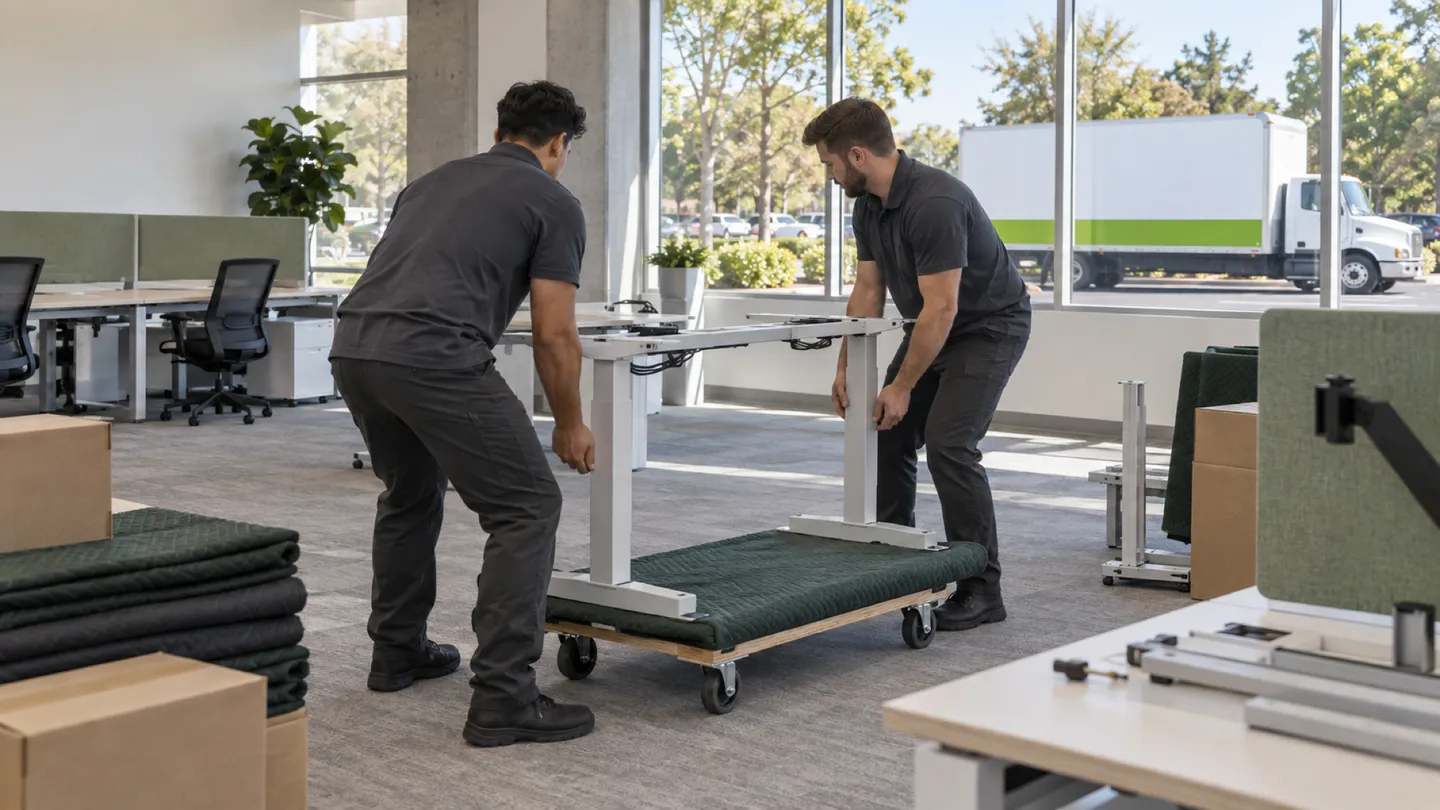
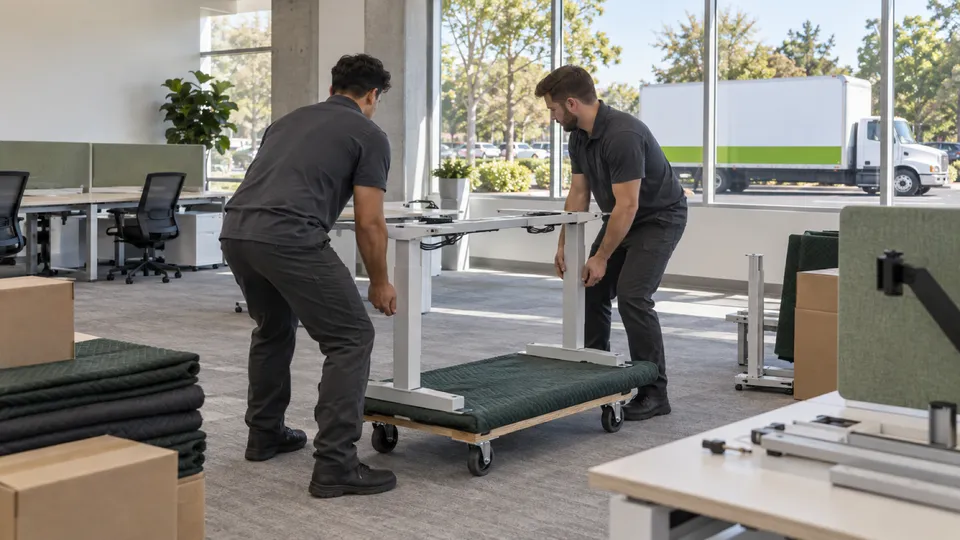
Modular Workstations moving in the Sacramento Valley: Murdock's crew at work
  • Licensed & InsuredUSDOT 3421940 · MC 1416634
  • Locally OperatedChico + Yuba City
  • Sacramento ValleyChico · Yuba City · Sacramento

Start your commercial move quote

verifiedFor estimate purposes onlycredit_card_offNo credit card required

How We Plan Modular Workstations

Open offices in Roseville, Rocklin, Natomas and downtown Sacramento have moved away from panel cubicles toward freestanding benching and electric sit-stand desks. They look simpler because there are no walls, but they move differently. Adjacent bench desks often share a leg and a beam, so one desk cannot leave the run without the next one coming apart too. Sit-stand desks carry lifting columns, a control box and a hand switch that do not like being carried at full height.

The crew works in a set order. Every sit-stand desk is run down to its lowest height and unplugged. Privacy screens, monitor arms and whatever is sitting in the cable trays come off next. Then each bench run is taken apart from one end: tops lifted off, beams and spines released, shared legs taken out last. Parts are labeled by run and bay, and hardware is bagged per bay.

At the new floor, runs are rebuilt from the same end, leveled, and the tops reattached. Each sit-stand desk is plugged back in and run through its height range once. For cubicles with panels, see our separate panel-system scope. For the wider move, see office moving.

Who usually signs off
Facilities lead or office manager approving the seating plan, with the furniture dealer confirming the desk configuration
Timing that works
After staff clear the desks and devices are unplugged, often after hours or across a weekend when the office asks, with the dealer booked if the layout or desk count changes.

What typically moves

  • Electric sit-stand desks with lifting columnsLowered fully before unplugging. Short same-floor moves can go assembled; longer moves separate the top from the frame.
  • Control boxes, hand switches and motor cablesLeft mounted where the maker intends, with loose leads secured so nothing snags when the desk is tipped.
  • Benching tops and shared legsTaken out in sequence because neighbors share a leg; labeled by run and bay so they rebuild in order.
  • Beams, spines and cable traysEmptied first. Staff or IT clear the tray contents; the crew releases the tray and bundles it with its run.
  • Desk-mounted privacy screens and clamp-on dividersUnclamped, wrapped face to face, and bagged with their brackets under the bay label.
  • Monitors and desk computers on the benchesTaken off before the bench is touched and plugged back in once the desk is rebuilt and leveled.

Access and scheduling

Benching moves are floor-space moves. The receiving floor needs clear room to lay out each run end to end before tops go on, so we ask for the new layout and check it against column spacing, floor boxes and door swings. If the new plan changes the number of seats per run, the dealer needs to confirm it first, because a shorter or longer run needs different beams and end legs.

On the loading side, long bench tops often fit the freight elevator only on edge, so we measure the cab against the biggest top. Staff clear their desks and unplug personal items on the last afternoon. The crew usually works through an evening or a Saturday, when the floor is empty and shared corridors are quiet. The building sets the elevator block, and its manager may want a COI from us on file first. An electrician is booked for the rebuild day only if runs are fed from floor boxes.


Protection and handling

Most damage to sit-stand desks happens when someone lifts them by the top at full height, which strains the columns and the joints between frame and top. The crew moves them lowered, lifts by the frame, and never carries a desk by its cable tray. Tops get edge guards and ride on edge, padded.

At rebuild, each run is laid out and leveled on its feet before the tops go back on, and connectors are checked for bends. After a sit-stand desk is plugged in, the crew runs it to full height and back once, listening for a column that lags or a control that does not respond. Some models need a reset routine after being unplugged; the crew follows the maker's procedure if it is on the desk or in the dealer's notes, and flags any desk that will not reset to the dealer.

Who does what

Some of this job belongs to other trades. The written plan names each one.

Motor, controller and column faults
The furniture dealer or maker diagnoses and replaces lifting parts. The crew moves, rebuilds and height-checks the desks.
Changed run lengths or added seats
The dealer confirms the new configuration and supplies beams, legs and connectors. The crew builds to the approved drawing.
Floor-box feeds and power whips to a bench run
A licensed electrician disconnects and reconnects any run wired to a floor box or building circuit. Desks on a standard plug are the crew's to unplug and replug.

Not part of our work

  • Repairing lifting columns, control boxes or hand switches.
  • Designing a new bench layout or ordering new components.

Around Chico, Yuba City and Sacramento

Benching and sit-stand floors are most common in the Roseville and Rocklin tech and office parks along I-80 and Hwy 65, the Natomas office parks and newer office floors in downtown Sacramento. In Chico and Yuba City they show up more often as a few sit-stand desks mixed into a traditional office, which usually move assembled on a dolly.

The crew that shows up

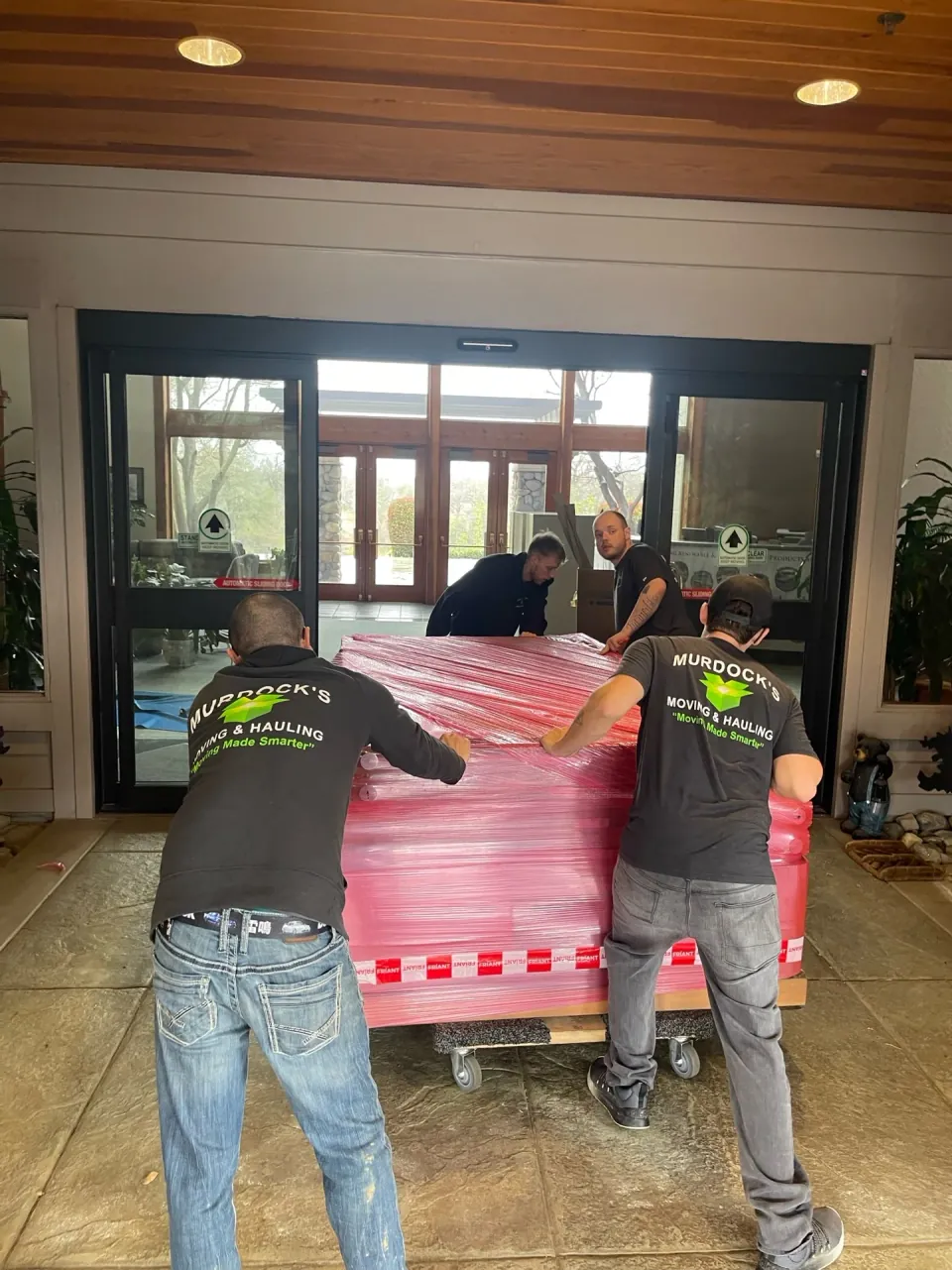
Murdock’s movers working the loading ramp of an open box truckThe Murdock’s crew lined up behind the truck on an orchard road in Butte CountyMurdock’s crew rolling a shrink-wrapped piece on dollies through a building lobby

Modular Workstations FAQs

Another question? Call (530) 354-8089.

Can our sit-stand desks move without taking the tops off?

Often, for a move on the same floor or within one building, if the desk is fully lowered and fits the doors and elevator on a dolly. For a move across town, the top usually comes off the frame so neither travels with the other's weight on it.

Our bench desks share legs. Can we move just one desk out of a run?

Usually not without taking apart its neighbor too, because the shared leg holds both. The crew can split a run at a bay if the dealer has an end leg to finish the shortened run. Ask the dealer before the move, so the extra end leg is on site on rebuild day.

Will our electric desks work when they are plugged back in?

The crew plugs each desk in and runs it to full height and back once. Some models need a short reset routine after losing power, which the crew follows where the procedure is available. A desk with a lagging column or dead controller is tagged, and the dealer handles the repair.

Who handles the power that feeds our benching from the floor?

If a bench run is fed by a whip from a floor box or wired to a building circuit, a licensed electrician disconnects it before teardown and reconnects it after rebuild. Desks that simply plug into a wall or a power strip are unplugged and replugged by the crew.

Plan your business move

Tell us both addresses, the building rules you know about, and the dates you cannot move. We will send back a written plan and estimate.

Call (530) 354-8089

Mon–Sat 8:00 AM–6:00 PM · Sun 10:00 AM–4:00 PM

Call Nowcall530-354-8089