Healthcare & Medical

Veterinary Clinic Moving in the Sacramento Valley

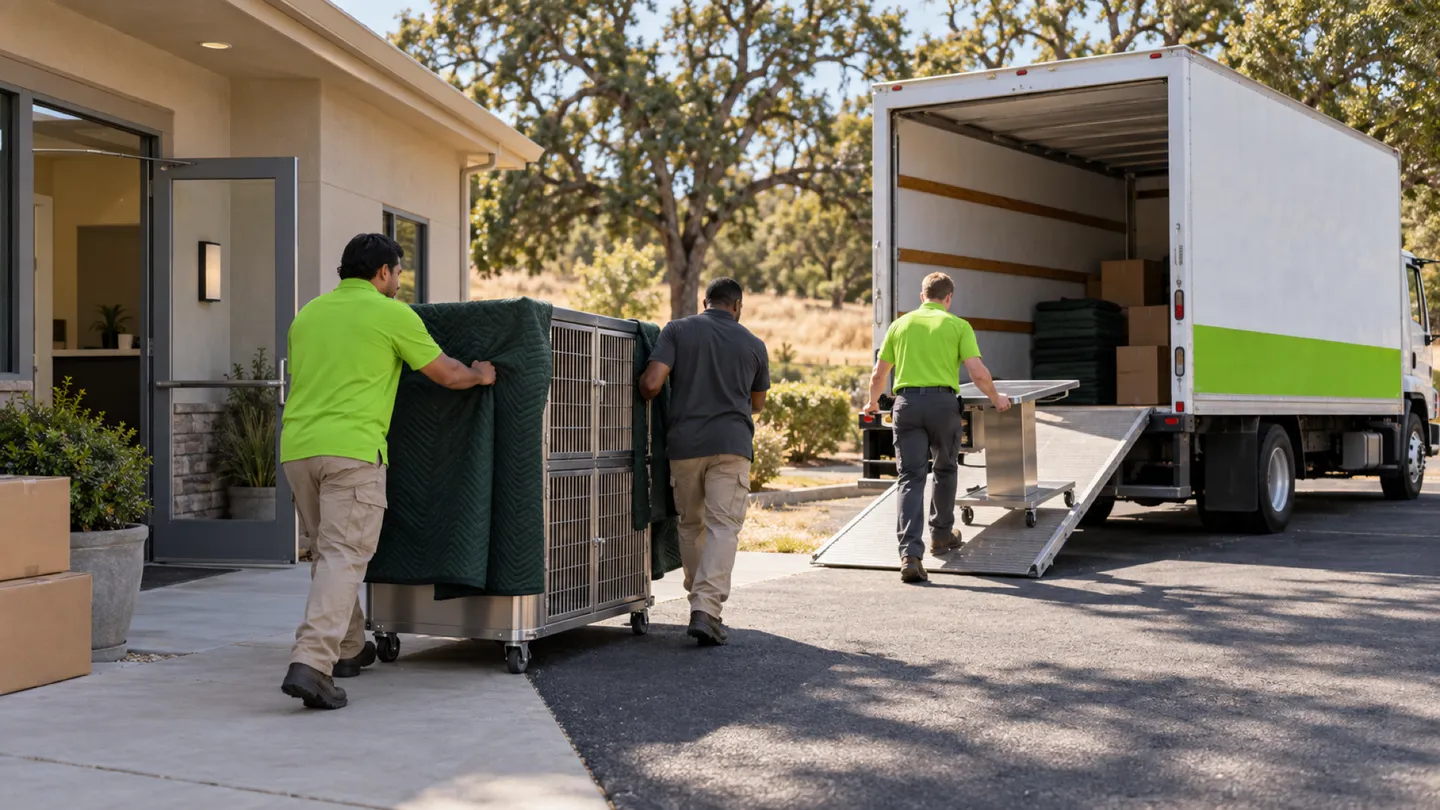
Staff move the animals, drugs and vaccines. We move emptied cage banks, exam tables, shelving and the front desk around boarding and surgery days.

(530) 354-8089
Veterinary Clinic moving in the Sacramento Valley: Murdock's crew at work
  • Licensed & InsuredUSDOT 3421940 · MC 1416634
  • Locally OperatedChico + Yuba City
  • Sacramento ValleyChico · Yuba City · Sacramento

Start your veterinary clinic move quote

verifiedFor estimate purposes onlycredit_card_offNo credit card required

Planning a Veterinary Clinic Move

Veterinary hospitals keep animals overnight, so the first planning question is not the truck. It is where every boarder and hospitalized patient will be on moving day. Most practices in Chico, Yuba City and Roseville stop taking new boarders a week or two out, finish surgeries before the closing day, and discharge or transfer anyone still in the ward. Only then can the kennel room be emptied.

The second question is the drugs. Controlled drugs, their logs, and the vaccine and medication refrigerators are the veterinarian's responsibility, and the DVM moves them, along with the registration changes the new address needs. Our crew handles the building around them: stainless cage banks and freestanding runs, exam tables, treatment-room shelving, the in-house pharmacy shelving once it is empty, the reception counter and the grooming or boarding supply room.

Mixed and large-animal practices in the rural parts of Sutter, Glenn and Butte counties add a barn office, a truck-bay supply room and a lot of heavy chutes and panels that usually stay with the property. We sort what moves at the walkthrough.

Who usually signs off
Practice owner or hospital manager, with the DVM of record deciding how patients, drugs and vaccines move
Timing that works
Pick a gap with no boarders and no surgeries on the books, often a Saturday afternoon to Sunday on request, with hospitalized patients discharged or transferred first.

What typically moves

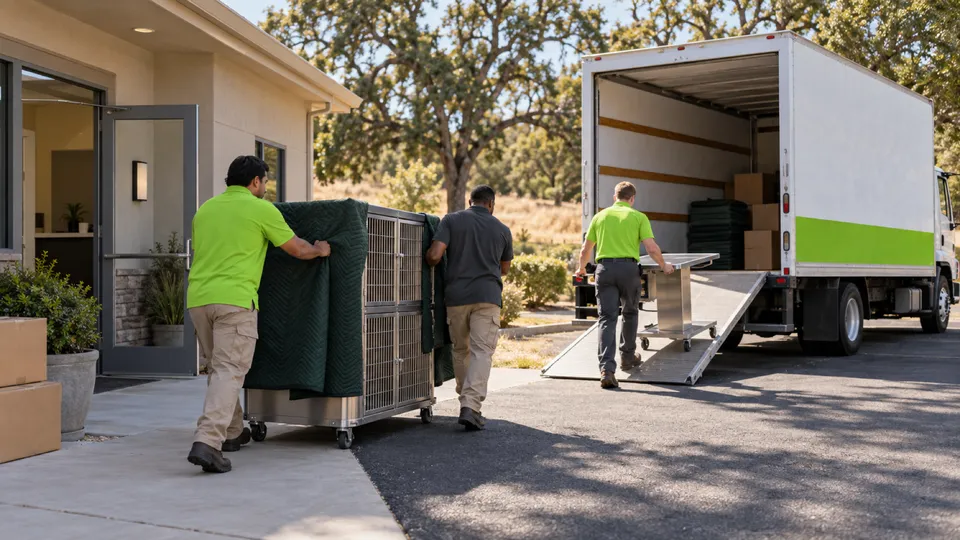
  • Stainless cage banks and freestanding runsEmptied and washed by staff, then padded, doors zip-tied shut, and loaded in the order the new ward is laid out.
  • Freestanding exam tables and scalesTables stay intact where the doorway allows. Scale platforms travel flat; your team re-zeroes them at the new room.
  • Treatment-room and pharmacy shelvingMoved empty after staff has transferred every medication, bottle and syringe.
  • Reception counter, lobby benches and retail food displaysCounter sections padded and set first so check-in works on reopening day.
  • Boarding and grooming supply shelvingBedding, bowls and grooming stock boxed by room; heavy food bags loaded on pallets or carts by staff choice.
  • Front-desk and doctor-office computersMoved with their desks and plugged back in at the same stations; practice-management software stays with your vendor.

Access and scheduling

Most veterinary hospitals here are standalone buildings with a parking lot, which makes truck access simple and the inside the hard part. Wards, isolation rooms and treatment areas have narrow doors and floor drains, and cage banks are often wider than the path to the back door. We measure those turns at the walkthrough and decide which banks can travel whole.

Moving day avoids animals entirely. Staff take any remaining patients, drugs and vaccine stock to the new site or a partner practice before the crew starts, and a tech or manager stays to answer questions. Weekend moves fit most practices, since many close Sunday. For summer moves in Chico or Yuba City we load early, because an empty metal cage bank sitting in July sun gets too hot to carry by noon.
Protection and handling

Stainless cage fronts dent and their latches bend, so every bank is padded on all faces, doors are tied shut, and each bank is loaded standing, strapped against the side of the box. Exam tables with hydraulic or electric lifts are lowered fully before they are carried. Loose parts such as cage floor grates, bowl holders and card holders are bagged by bank number.

Staff clean and disinfect cages and tables before the crew touches them, and we ask the hospital to mark anything from isolation so it is wrapped separately. Nothing that holds drugs, needles, sharps or medical waste goes on our truck. At the new building each bank is placed to your ward drawing with room left for the plumber and electrician who connect wet tables and fixed equipment.

Who does what

Some of this job belongs to other trades. The written plan names each one.

Controlled drugs, drug logs and vaccine refrigerator contents
The DVM and staff transfer them, and the practice handles the registration and licensing changes the new address needs. Our crew moves only emptied refrigerators and shelving.
Digital X-ray, dental units and anesthesia machines
Each equipment vendor disconnects, moves and recalibrates its own system. We can carry a released unit if the vendor says so.
Wet tables, tub tables, oxygen and gas lines
A plumber, medical-gas contractor or electrician disconnects and reconnects them. Our crew does not touch utility connections.

Not part of our work

  • Handling, crating or transporting any animal, patient or boarder.
  • Moving sharps containers, medical waste, or any drug or vaccine stock.

Around Chico, Yuba City and Sacramento

Small-animal hospitals line the main roads of Chico, Yuba City, Roseville and the Sacramento suburbs. Mixed and large-animal practices serve the ranch and orchard country around Gridley, Colusa, Orland and Wheatland, with longer runs on Hwy 99 and Hwy 20 between the old site and the new one.

The crew that shows up

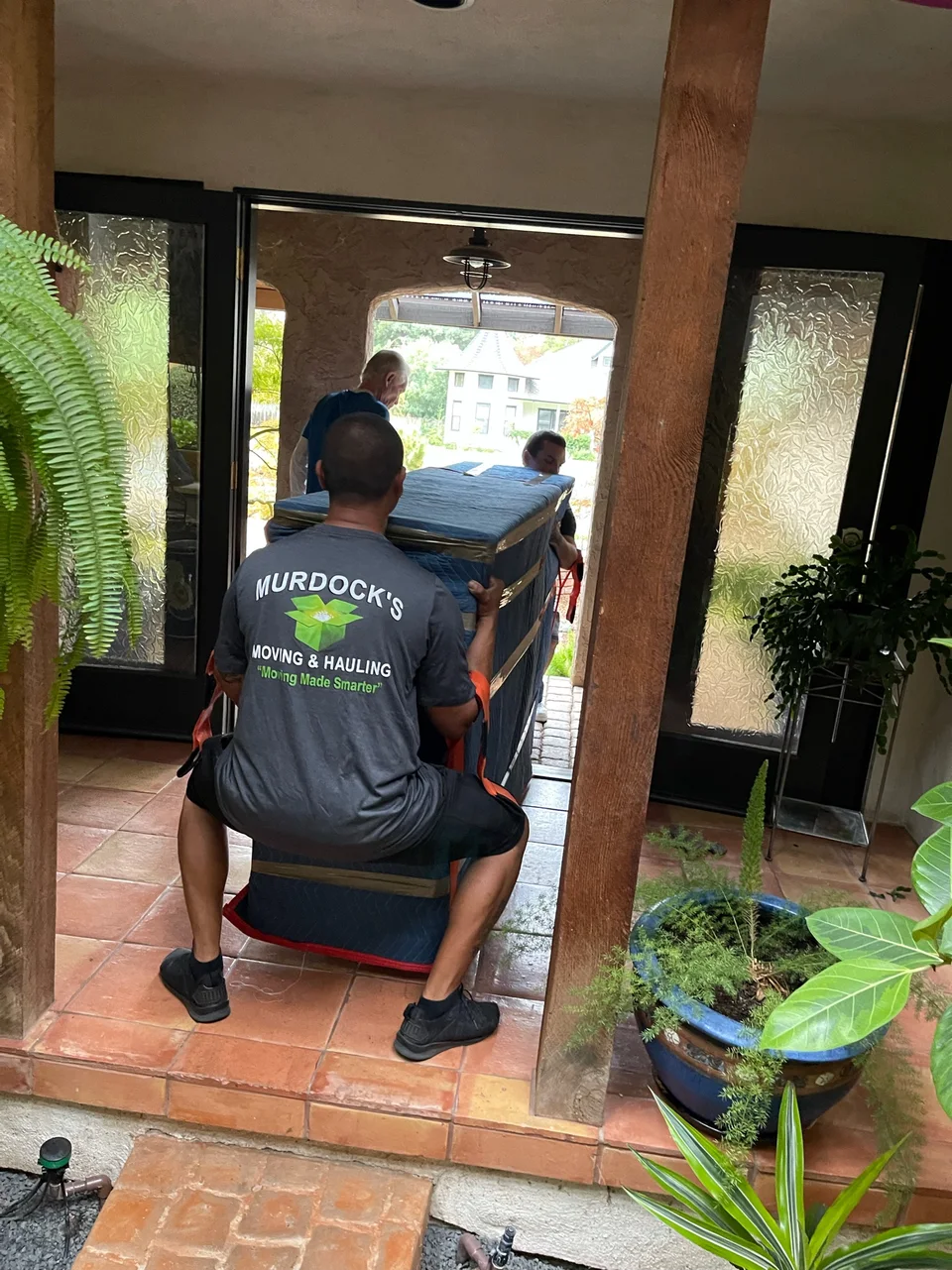
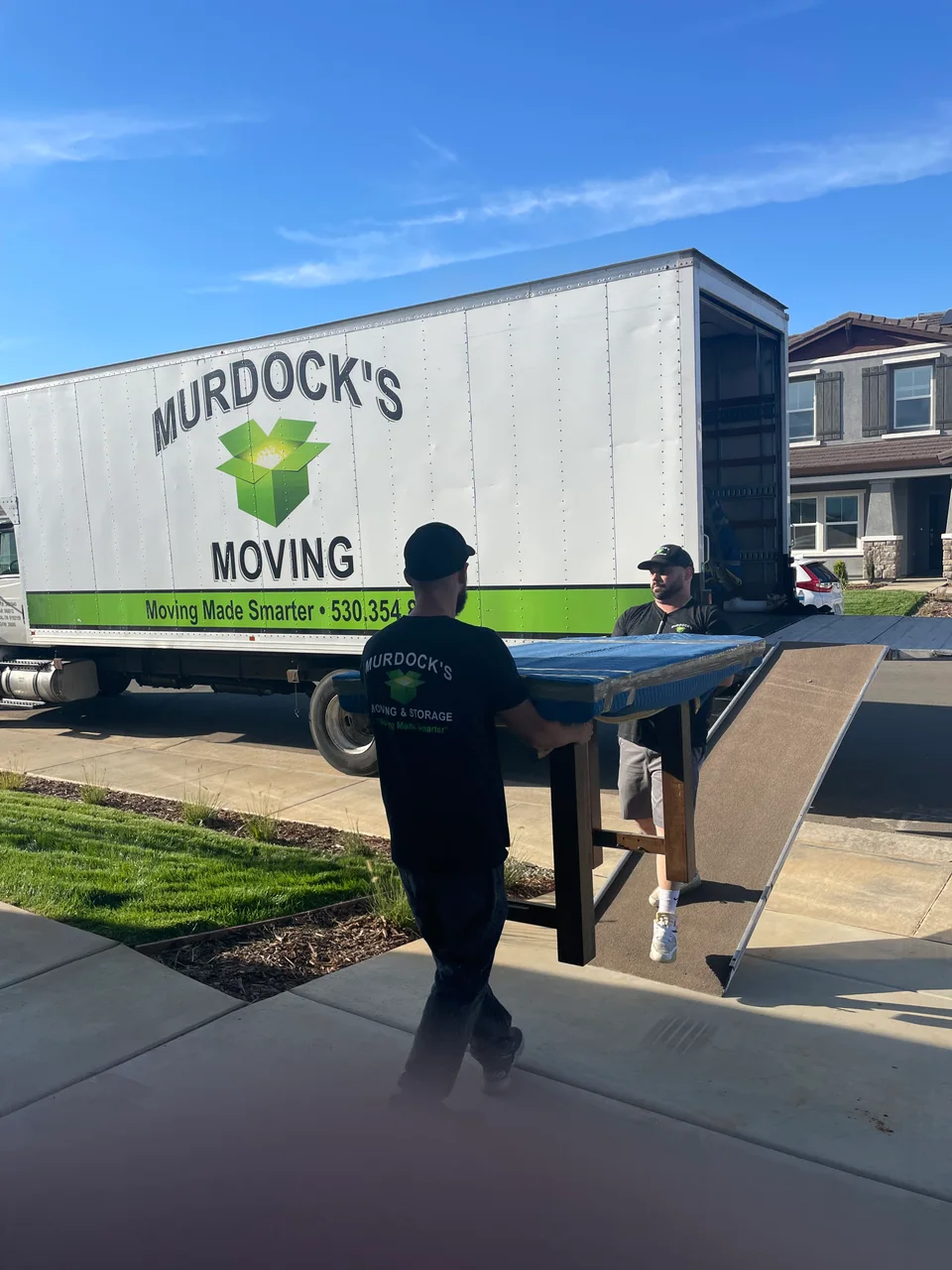
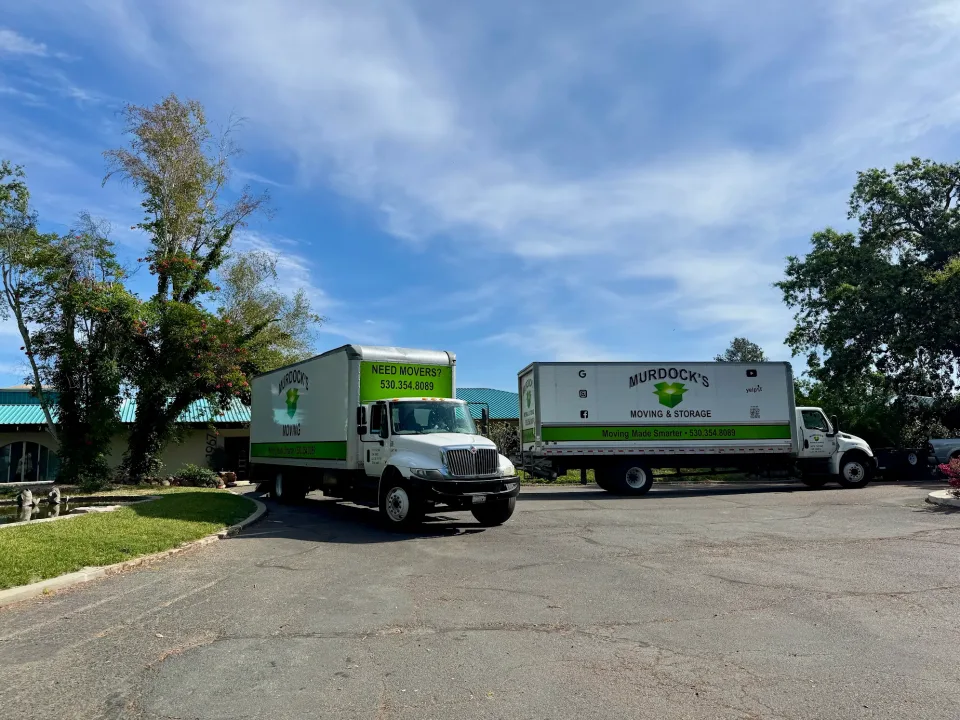
Two Murdock’s movers carrying a pad-wrapped table up the truck rampTwo Murdock’s box trucks staged outside a single-story building in the Sacramento ValleyMurdock’s crew carrying a pad-wrapped piece through a tiled entryway

Veterinary Clinic Moving FAQs

Another question? Call (530) 354-8089.

How far ahead should we stop booking boarders?

That is your call, but most practices close the kennel to new bookings early enough that the last boarder goes home before the final day. The cage banks cannot be emptied, cleaned and taken apart while animals are in them. Once you know that date, we build the rest of the moving plan from it.

Who moves the controlled drugs and the vaccine fridge?

The veterinarian and staff. Controlled drugs and their logs stay under the DVM's control, and the practice handles any registration change for the new address. Vaccines and refrigerated medications go with staff as well. We move the refrigerator only after it is empty, and the hospital decides when it is ready to stock again.

Can our cage banks travel in one piece?

Often, if the ward door and the path to the truck are wide enough. We measure at the walkthrough. Banks that are too wide are unbolted where the manufacturer designed them to separate, with hardware bagged by bank, and rebuilt in the new ward before staff sets them up.

Our wet table is plumbed in. Who disconnects it?

A plumber. Tub and wet tables tie into water and drains, and many also have electric lifts, so a licensed trade disconnects them at the old building and hooks them up at the new one. Our crew carries the table between those two visits, drained, padded and upright.

Plan your business move

Tell us both addresses, the building rules you know about, and the dates you cannot move. We will send back a written plan and estimate.

Call (530) 354-8089

Mon–Sat 8:00 AM–6:00 PM · Sun 10:00 AM–4:00 PM

Call Nowcall530-354-8089