Business & Professional Offices

Call Center Moving in the Sacramento Valley

Map every agent seat, clear station furniture by shift, and give your telecom team a matching plan for headsets and phones.

(530) 354-8089
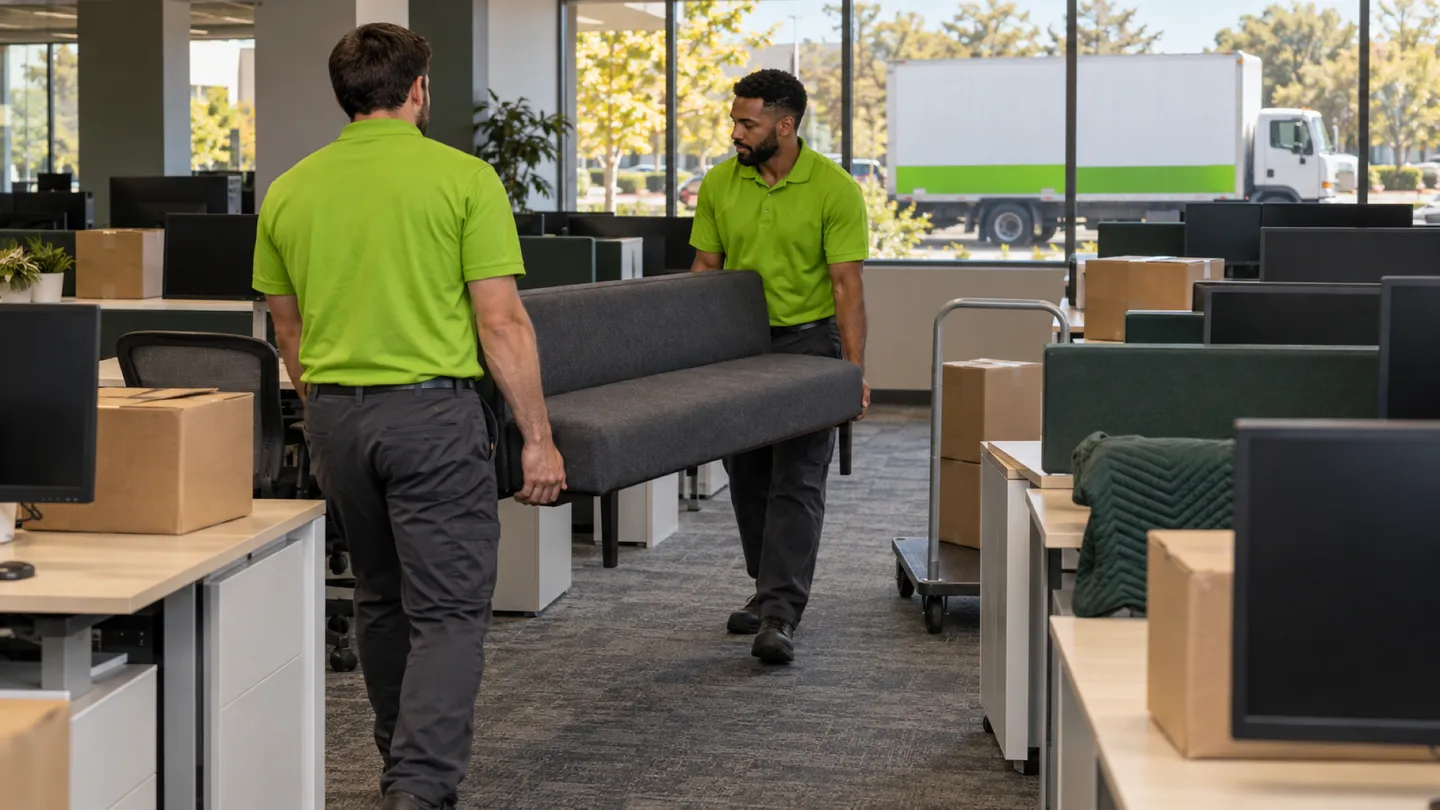
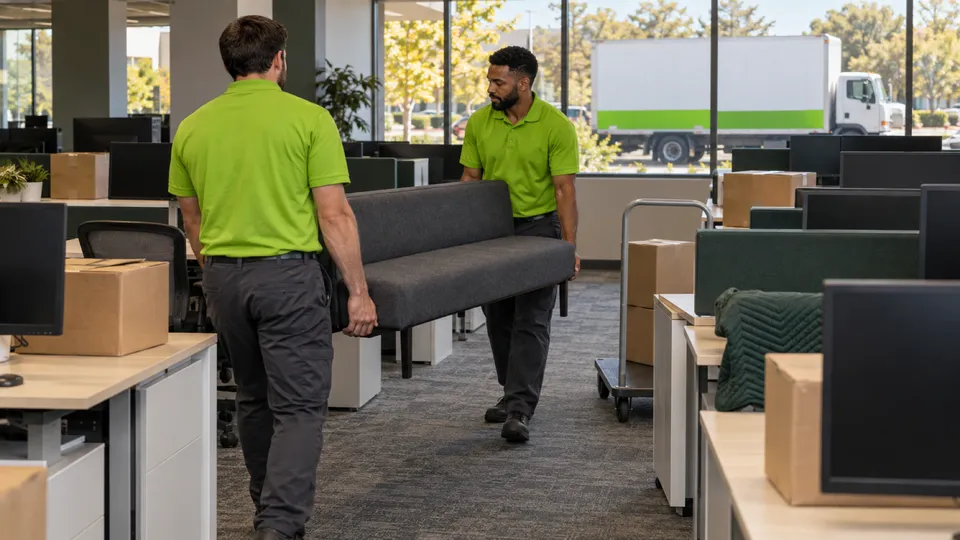
Call Center moving in the Sacramento Valley: Murdock's crew at work
  • Licensed & InsuredUSDOT 3421940 · MC 1416634
  • Locally OperatedChico + Yuba City
  • Sacramento ValleyChico · Yuba City · Sacramento

Start your call center move quote

verifiedFor estimate purposes onlycredit_card_offNo credit card required

Planning a Call Center Move

A contact center cannot close for a day the way a law office can. Queues stay open, the workforce planner has already built next week's schedule, and every empty seat is a service level somebody has to explain. So the move is cut into shifts. One bank of rows goes dark after the evening shift logs off, moves, and stands ready for the first agents the next morning, while the other rows keep answering.

What sets this sector apart is density. An agent floor is mostly repeats: the same bench, the same pedestal, the same chair, the same headset base. Mix two rows and a supervisor spends the morning chasing extensions. Every piece is tagged with the seat code it will sit under, so a station, its chair and its pedestal ride and land together.

Your telecom administrator owns the part that actually routes calls: extensions, softphone profiles, queue assignments and any temporary rerouting to another site or to agents at home. We work from their cutover list, so each group's furniture is standing before they flip it.

Who usually signs off
Operations director or site manager approving the shift plan, with facilities and telecom leads confirming the seating map
Timing that works
One row group per night after the last shift logs off, or a weekend on request when volume is lowest, with the telecom cutover booked into the same window.

What typically moves

  • Agent bench and pod workstationsTaken apart by row; worksurfaces, privacy screens and hardware bags all carry the seat code from your new map.
  • Agent task chairsThey look identical until someone has adjusted one for a long shift, so each carries its seat tag and rides with its row.
  • Headset bases, desk phones and amplifiersBagged per seat and taped to the matching worksurface. Agents who keep a personal headset carry it themselves.
  • Seat computers and dual monitorsUnplugged, padded and plugged in again under the same seat code; logins, softphones and queue profiles belong to your telecom and IT staff.
  • Supervisor pods and team-lead desksUnloaded first, so leads are seated before their agents and can walk the rows during cutover.
  • Wallboards and queue display screensYour AV contact takes them off the wall; we pad and move the screens and mounts once they are down.

Access and scheduling

Contact centers in the Valley tend to sit in large single-tenant or flex buildings: Natomas and McClellan Park in Sacramento, the office parks along Hwy 65 in Roseville and Rocklin, and back-office space near the Chico Municipal Airport business park. They usually have a dock and wide corridors, but the lot fills with agents' cars at shift change, so the truck window follows the schedule rather than the other way round.

We ask for three things early: the new seat map with codes, the shift roster showing which rows empty first, and the telecom cutover plan. From those we build a night-by-night sequence, each group loaded in reverse seat order so it unloads front to back. If the landlord wants an insurance certificate or after-hours door access arranged ahead, that paperwork is settled before the first night.
Protection and handling

At teardown the crew notes any cracked screen, loose worksurface or failed chair cylinder on a seat sheet, so replacements can be ordered before agents sit down. Worksurfaces travel on edge in pads; privacy panels stack in carts with their corners covered, and chairs are wrapped in row groups.

Small parts are the real risk on a dense floor. Headset bases, power bricks, monitor stands and cable clips are bagged by seat and taped to the matching surface, never poured into a shared bin. Screens ride in padded cartons labeled with the seat code on two sides. At the new floor the crew sets each station in code order and leaves phone and login checks to the telecom team walking the rows behind them.

Who does what

Some of this job belongs to other trades. The written plan names each one.

Extensions, softphone profiles, queue routing and temporary call rerouting
Your telecom administrator or phone-system provider, working from the same seat map. Each night's furniture is scheduled so their cutover can start as soon as a row is standing.
Network drops, switches and the wiring closet
Your IT contact or cabling contractor. Our crew works at the desk and goes no further.
Wall-mounted displays and hardwired benching feeds
An AV installer takes screens off the wall, and an electrician handles any benching wired into building power.

Not part of our work

  • Configuring phones, headsets, softphones or call-routing software.
  • Emptying agents' lockers or personal drawers; agents clear their own space before their last shift at the old site.

Around Chico, Yuba City and Sacramento

Larger contact centers cluster where parking and floor plates are big: Natomas and McClellan Park, the Roseville and Rocklin office parks off Hwy 65 and I-80, and flex buildings near the Chico airport. Smaller answering services and dispatch offices fill suites in Yuba City and midtown Sacramento. In July, an early start keeps the heavy loading off those wide open lots before the afternoon heat.

The crew that shows up

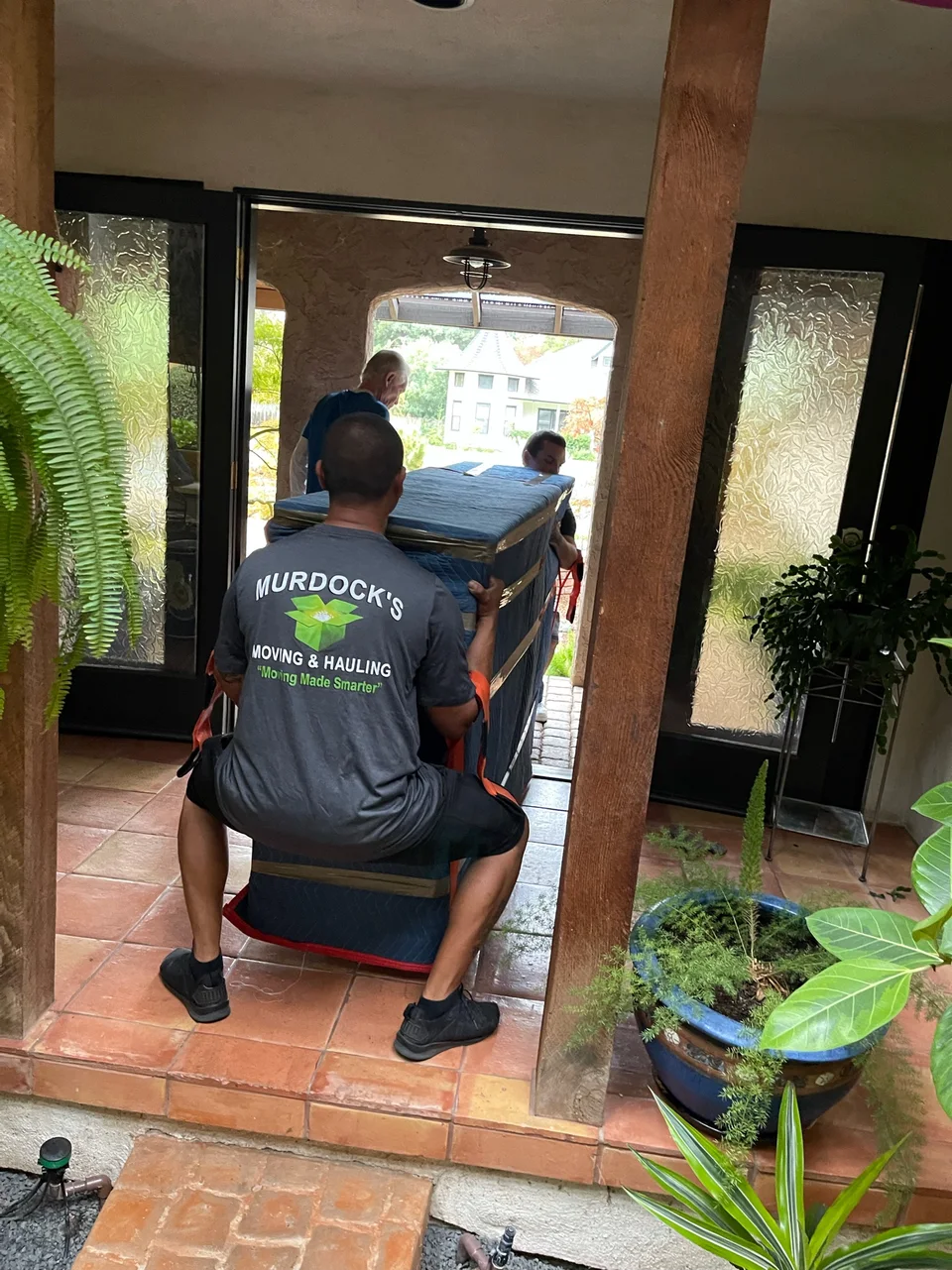
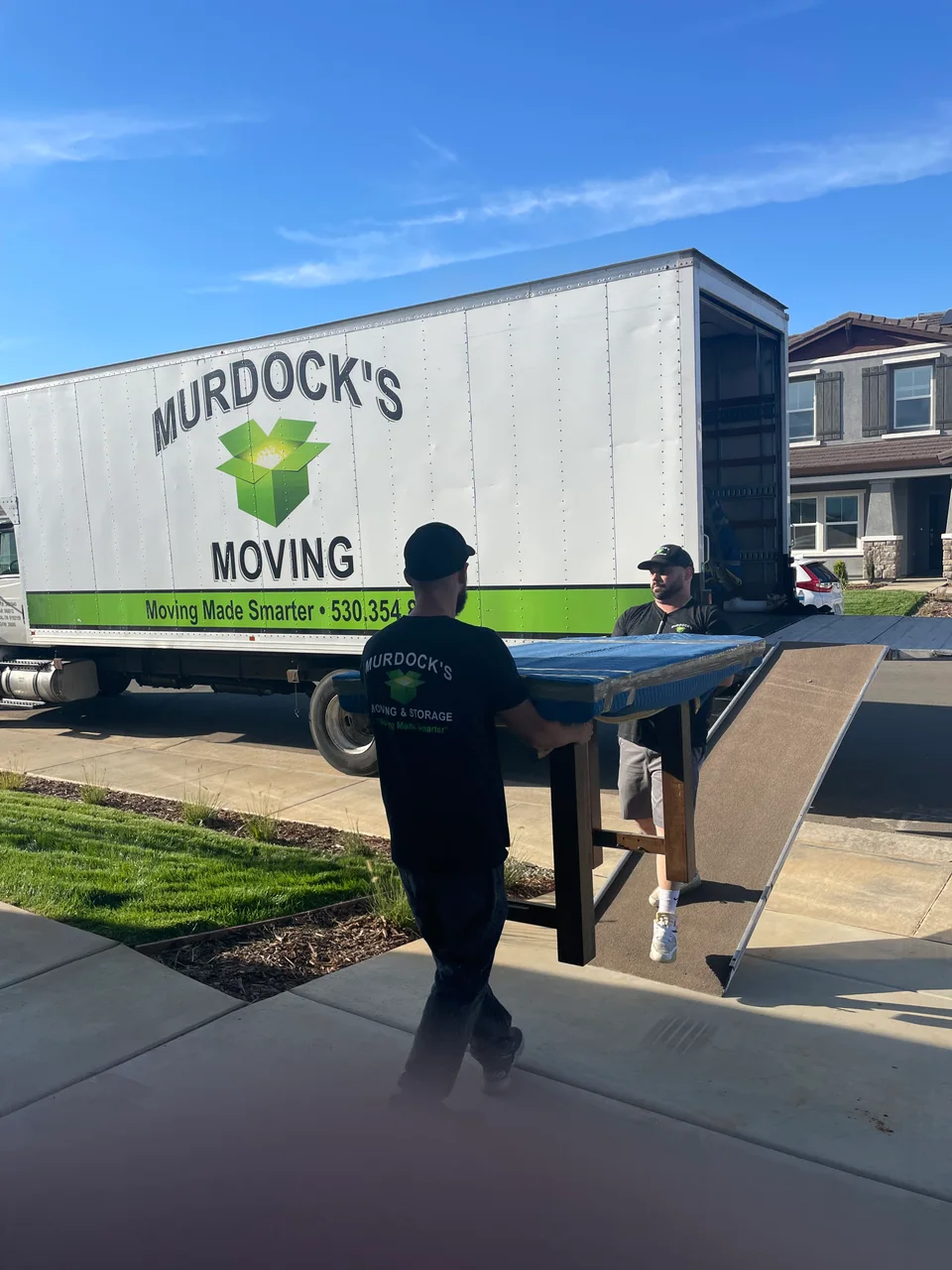
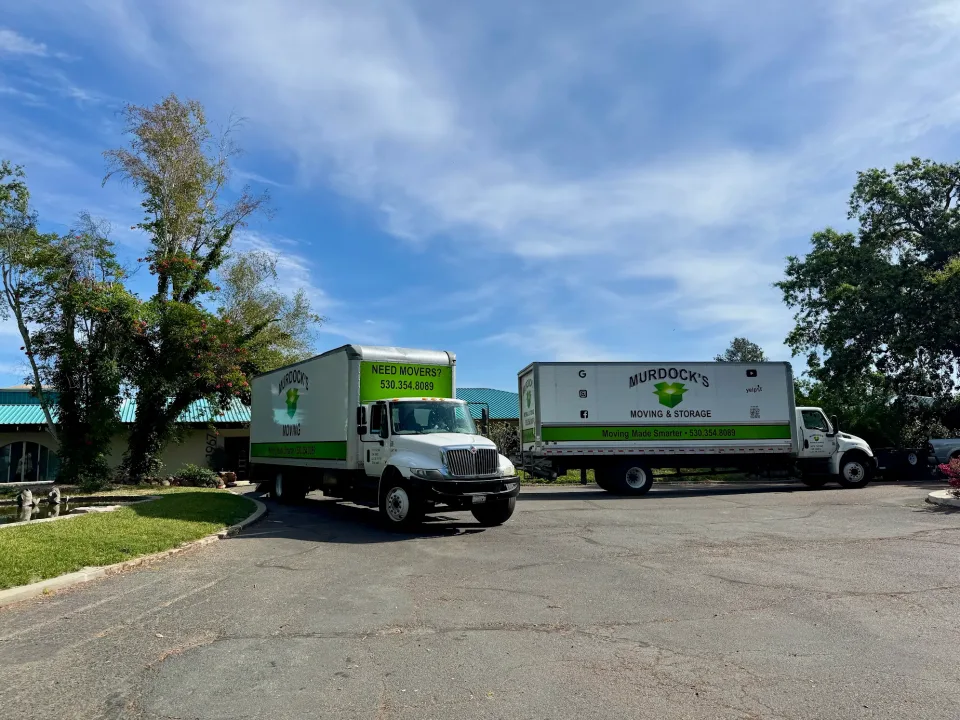
Two Murdock’s movers carrying a pad-wrapped table up the truck rampTwo Murdock’s box trucks staged outside a single-story building in the Sacramento ValleyMurdock’s crew carrying a pad-wrapped piece through a tiled entryway

Call Center Moving FAQs

Another question? Call (530) 354-8089.

Our workforce planner needs to know how many seats we lose each night. How do you work that out?

We start from your seat map and the doorways at both buildings. A row group is sized so it can be torn down, moved and standing again inside one night's window, and your planner gets the list of seat codes that will be offline and when. If a night runs short, that row stays at the old site rather than sitting half-built at the new one.

Agents have their own headsets. Should those go on the truck?

Usually not. Many centers have agents carry personal headsets themselves, which keeps them clean and accounted for. Headset bases, desk phones and amplifiers that belong to the station go in seat-coded bags on the truck. Tell us which way your center works and we pack the stations to match.

Who matches each new seat to the right phone extension?

Your telecom administrator. The seat code on the furniture should be the same code they use for the extension or softphone assignment, so ask them to build their list from the same floor map. We set furniture and desk equipment by that code; they make each seat ring.

We are opening a second site rather than moving the whole floor. Can you split it?

Yes. Mark on the seat map which rows, supervisor pods and training tables go and which stay. The departing stations get new-site codes and move as their own groups, and the remaining floor is left alone. Surplus pieces can be set aside for donation or pickup if facilities decides that before move night.

Plan your business move

Tell us both addresses, the building rules you know about, and the dates you cannot move. We will send back a written plan and estimate.

Call (530) 354-8089

Mon–Sat 8:00 AM–6:00 PM · Sun 10:00 AM–4:00 PM

Call Nowcall530-354-8089