Commercial Service

Move Your Business Out of California

Inventory and keep-or-sell decisions at the California site, a receiving contact out of state, and one load packed for the road and unloaded by room.

(530) 354-8089
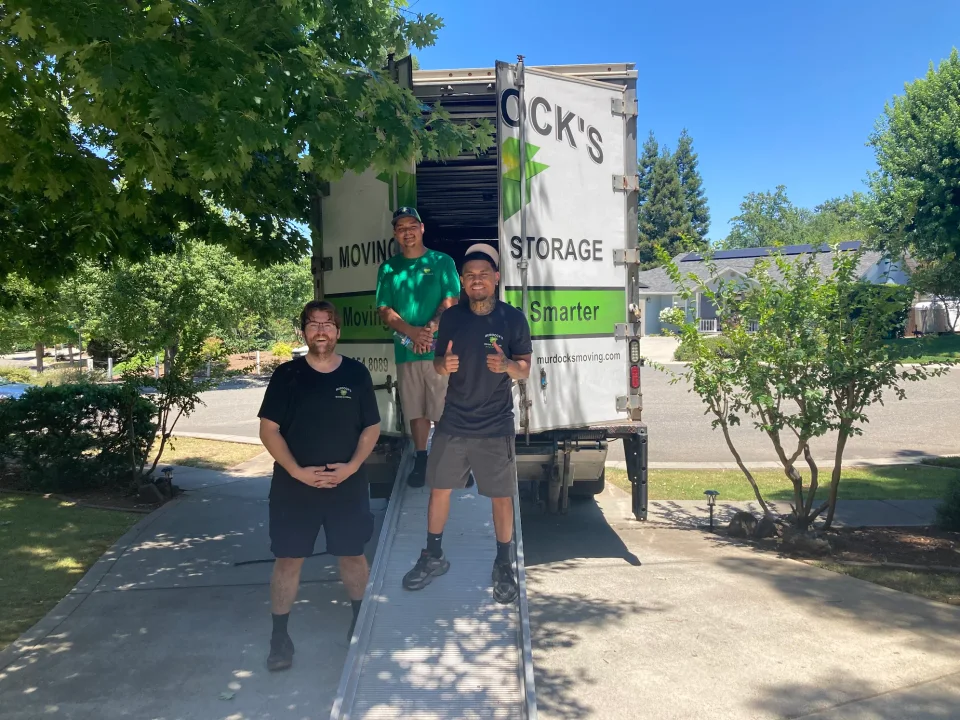
Interstate Business Relocation moving in the Sacramento Valley: Murdock's crew at work
  • Licensed & InsuredUSDOT 3421940 · MC 1416634
  • Locally OperatedChico + Yuba City
  • Sacramento ValleyChico · Yuba City · Sacramento

Start your commercial move quote

verifiedFor estimate purposes onlycredit_card_offNo credit card required

How We Plan Interstate Business Relocation

When a business leaves California, the move is no longer an afternoon on Hwy 99. A Sacramento firm opening in Reno, a Chico company heading to Boise, or a Roseville office relocating to Phoenix or Portland is putting its contents on a truck for one or more days, handing them to a building it may never have loaded into, and closing a California lease at the same time.

The work starts with an inventory walk at the California site. Your operations lead decides what travels, and it is worth deciding before packing: older furniture that costs more to haul than to replace often gets sold or donated here instead. What travels is packed for a long haul, not a cross-town trip, and listed on an inventory that goes with the bill of lading. At the destination, a receiving contact with keys and the new floor plan directs every piece to its room.

The interstate leg runs under federal rules for interstate carriers, and the paperwork follows them. Our long-distance moving page covers the route planning.

Who usually signs off
Business owner or operations lead who approves the departure inventory and the receiving floor plan
Timing that works
Worked backward from the California lease exit and the new building's access date, with an agreed delivery window rather than a set hour; winter mountain crossings can add time.

What typically moves

  • Workstation desks, returns and task chairsTaken down to tops and bases, hardware bagged per station, and labeled with the new building's room and seat.
  • Lateral file cabinets and records cartonsDrawers emptied into sealed cartons for a long haul; your staff decide which records ride with the load and which travel separately.
  • Conference and reception furnitureBlanket-wrapped and stretch-wrapped for days on a truck, with glass tops crated or cartoned apart from their bases.
  • Desktop computers, monitors and printersPacked in cartons after your IT contact backs them up, then set and plugged in at the labeled desk out of state.
  • Supply rooms, marketing stock and sample inventoryPacked by shelf with a contents list, since receiving staff out of state will not know where the old shelves were.
  • Breakroom appliances that plug into a standard outletEmptied, defrosted and dried by your staff at least a day ahead so nothing leaks in transit.

Access and scheduling

Two buildings, two sets of rules, often in two states. At the California site, the property manager sets dock hours, elevator time and move-out conditions. At the destination, a different landlord sets its own, and you usually learn them by phone. Ask the new building early whether a large truck can reach its dock or needs a shuttle, and whether it wants our certificate of insurance before the delivery date.

The lease exit and new occupancy date set the calendar. Pack and load at the California site in the last days of the lease, leaving room for your landlord's walkthrough after the truck leaves. Delivery comes within an agreed window, not at a promised hour, because distance and road conditions matter. From November through March, I-80 over Donner Summit toward Reno and I-5 over the Siskiyou pass toward Portland can go under chain control, and a load may wait for a pass to open.
Protection and handling

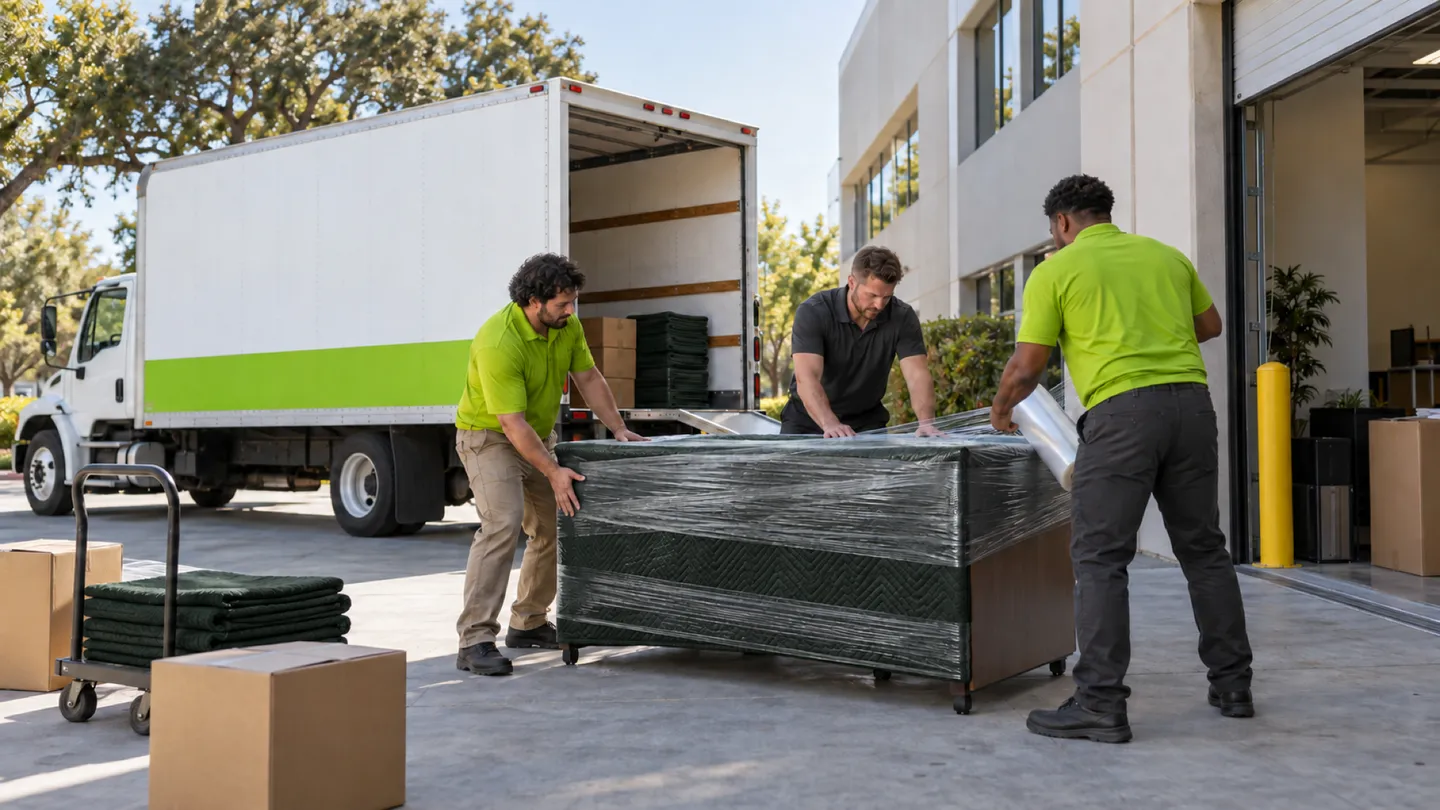
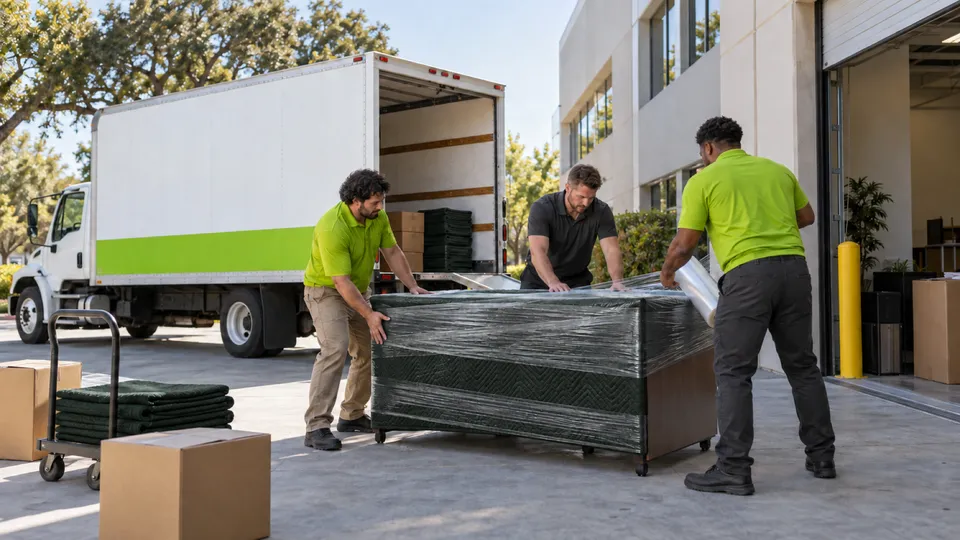
Long-haul packing is heavier than local packing. Furniture is blanket-wrapped and then stretch-wrapped so pads stay put over hundreds of miles of vibration. Desk tops travel on edge, strapped to the truck wall. Glass, framed art and anything with a screen goes in a carton or crate built for it. Cartons are packed full so they do not crush when stacked for a long ride.

Every piece carries two labels: an inventory number that matches the list, and its destination room and seat from the new floor plan. At delivery, the crew checks pieces off the inventory as they come off, reassembles desks and tables, and sets them by room. Your receiving contact signs the inventory and notes any exception before the crew leaves. Sensitive records and anything your staff choose to carry by car stay off the list.

Who does what

Some of this job belongs to other trades. The written plan names each one.

Network, phones and account access at the destination
Your IT and telecom providers set up service in the new state and test it. Physical cartoning, transport and plugging in of desk equipment is the crew's part.
California lease exit and repairs
Your landlord sets move-out conditions and your contractor handles any repairs. The crew removes what you have listed as traveling.
Surplus furniture left behind
Your team chooses a buyer, donation partner or hauler for what does not travel. The crew keeps it off the load.

Not part of our work

  • Business licensing, tax registration or employee relocation in the new state.
  • Promising an arrival hour for the interstate leg.

Around Chico, Yuba City and Sacramento

Businesses leaving the Valley start from very different doors: offices along the Capitol Mall in Sacramento with booked freight elevators, suites off the Esplanade in Chico, and ground-floor space on Colusa Avenue in Yuba City. The routes out are just as specific: I-80 east toward Reno and Salt Lake City, I-5 north toward Portland, and I-5 or Hwy 99 south toward Phoenix.

The crew that shows up

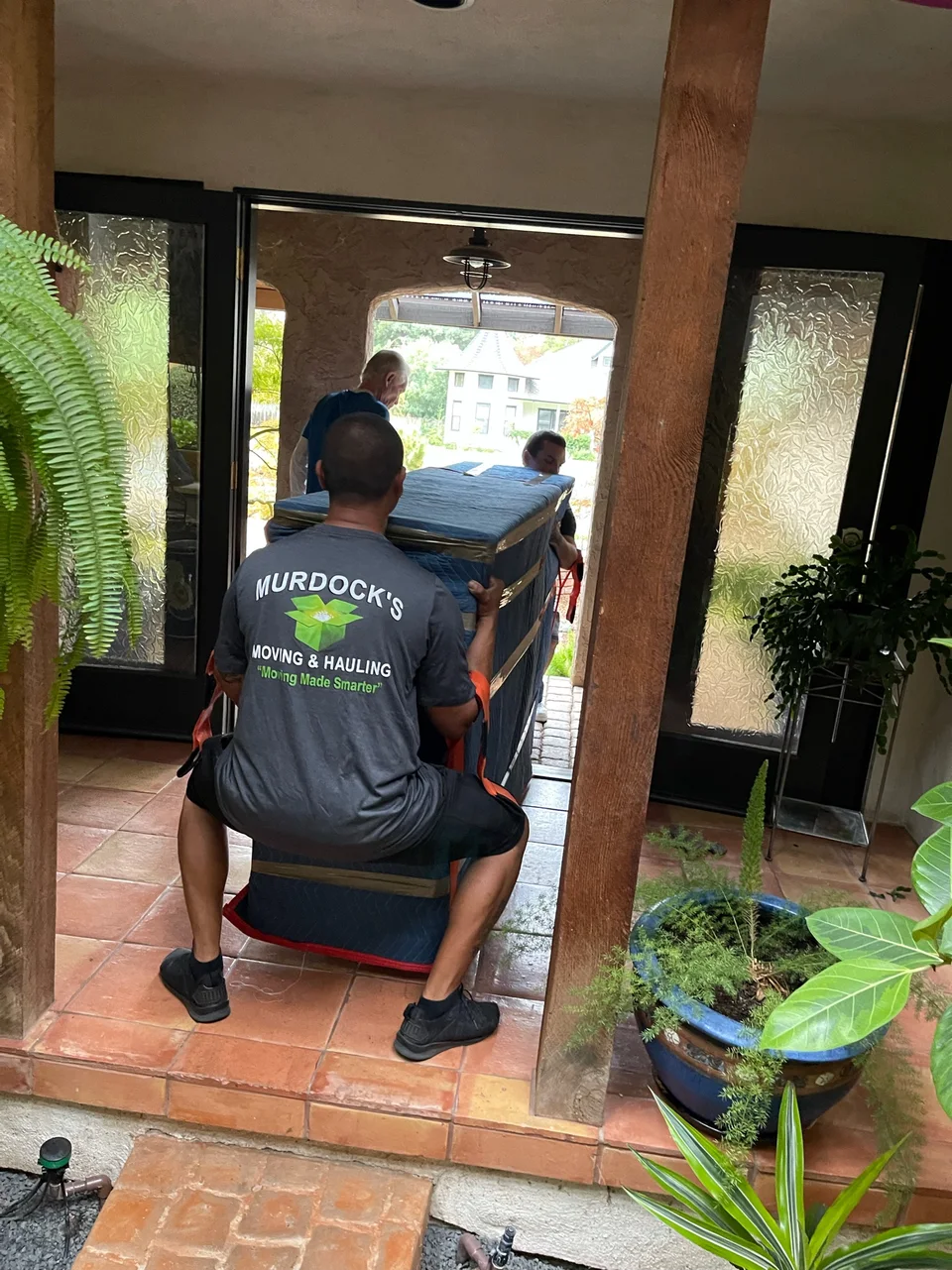
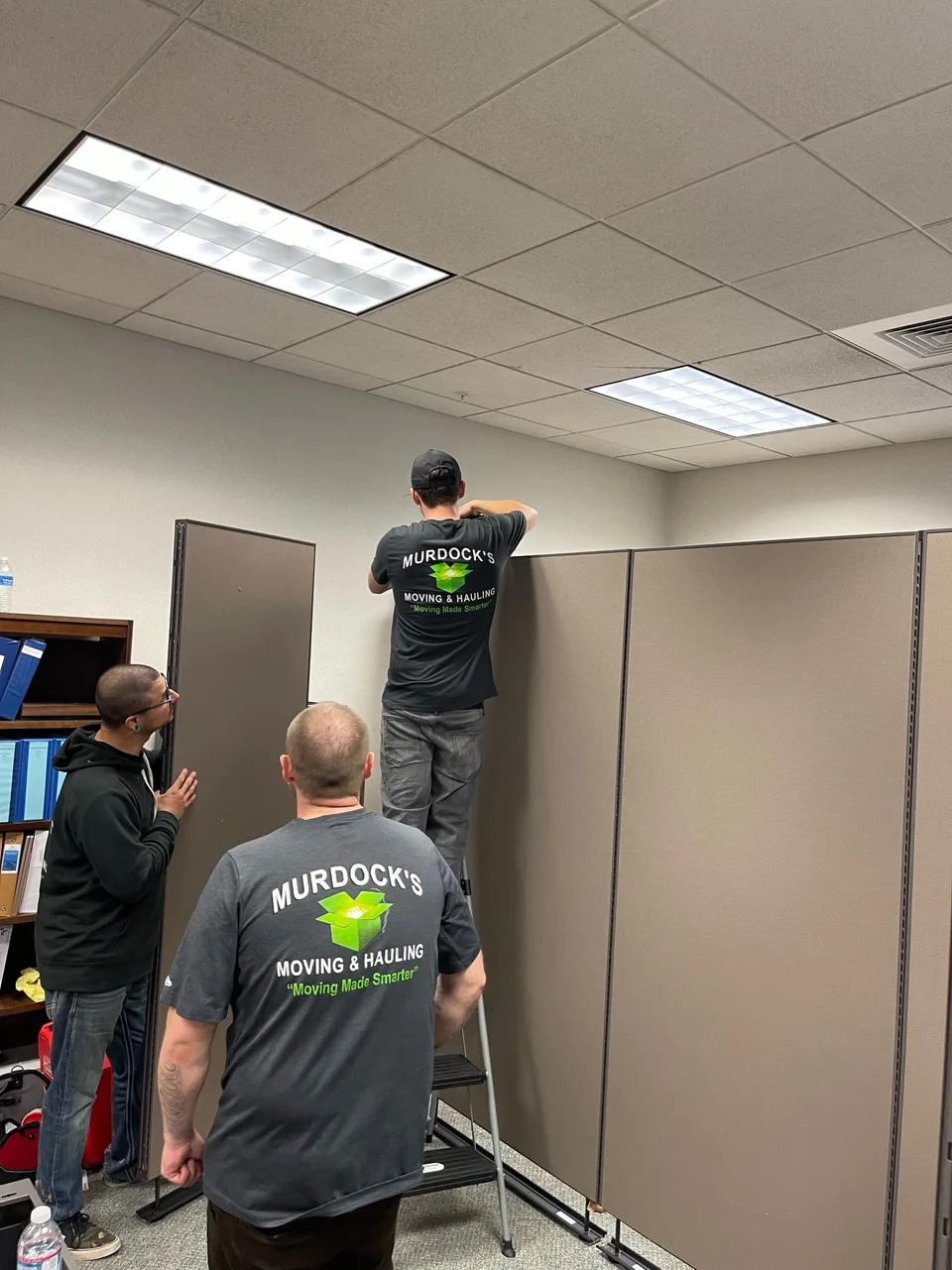
Murdock’s crew carrying a pad-wrapped piece through a tiled entrywayMurdock’s crew rebuilding cubicle panels in an office, one mover on a step ladderMurdock’s movers working the loading ramp of an open box truck

Interstate Business Relocation FAQs

Another question? Call (530) 354-8089.

Is it worth moving our office furniture out of state or should we buy new?

Walk the inventory with that question in mind. Newer workstations, good seating and anything expensive to replace usually earn their space on the truck. Tired desks and old filing cabinets often cost more to haul than to replace at the destination. Decide before packing starts, so the crew packs only what travels.

Who receives our load at the new office if our staff are still in California?

Name a receiving contact with keys, the new floor plan and the authority to direct placement. That person checks pieces off the inventory, tells the crew which room each goes to, and signs for the delivery. It can be a new local hire, a landlord's representative you trust, or someone flying ahead.

Can winter weather delay a move from Sacramento to Reno?

It can. I-80 over Donner Summit goes under chain control during winter storms and occasionally closes. A load may wait until the pass opens, which is why the delivery is quoted as a window. If your opening date is fixed, plan the move with a few days of slack from November through March.

How should we prepare our computers for a long-distance business move?

Have your IT contact back up every machine and confirm what is stored locally before anything is unplugged. The crew then cartons the computers, monitors and printers, labels each for its new desk, and plugs them in at the destination. Network setup and logins in the new office stay with your IT provider.

Plan your business move

Tell us both addresses, the building rules you know about, and the dates you cannot move. We will send back a written plan and estimate.

Call (530) 354-8089

Mon–Sat 8:00 AM–6:00 PM · Sun 10:00 AM–4:00 PM

Call Nowcall530-354-8089